


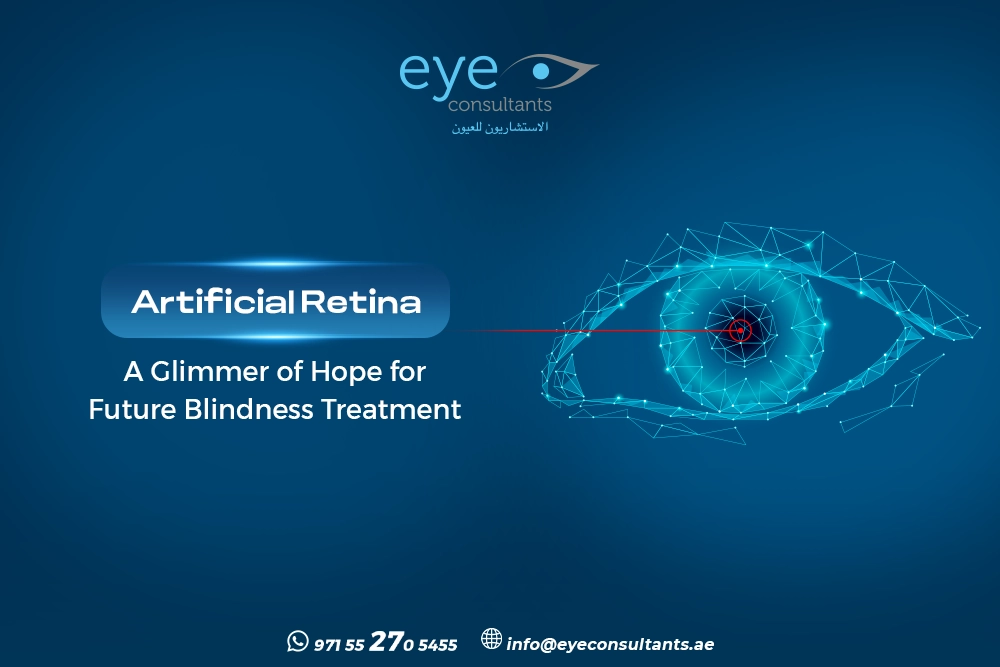
Artificial retina future of blindness, sounds like science fiction until a patient with severe central vision loss realizes they can no longer read a message, recognize a face, or navigate a familiar hallway safely. For many people, vision loss doesn’t arrive all at once; it tightens life slowly, day by day. That is why future-focused solutions are gaining attention, alongside practical care that supports patients today.
Here’s what to know, clearly and realistically.
Artificial retina future of blindness: What an artificial retina is (retinal prosthesis) and who it’s for
An artificial retina (retinal prosthesis) is a device designed to restore some visual function by stimulating retinal cells or the visual pathway when natural photoreceptors are severely damaged.
In simple terms, it may be considered when:
- Vision loss is advanced, and standard treatments no longer offer improvement
- The patient meets strict medical criteria based on diagnosis and retinal structure
- A specialist team confirms that a prosthesis pathway is appropriate and safe
Historically, one well-known example is Argus II, an implanted retinal prosthesis that received FDA approval for advanced retinitis pigmentosa
Conditions that may benefit
Not every retinal disease qualifies. Artificial retina future of blindness technologies are typically discussed for selected severe vision loss cases, depending on clinical criteria and device availability.
Examples where prosthesis concepts have been studied or considered:
- Retinitis pigmentosa (RP) in advanced stages (historically linked to earlier devices)
- Advanced dry AMD (geographic atrophy) in selected trial settings using newer implant concepts
- Other profound retinal degeneration cases may be evaluated on a case-by-case basis by a vitreoretinal specialist
How the technology works
To understand the artificial retina future of blindness, it helps to think of it as a system, not a single chip.
Many modern approaches use:
- A tiny implanted retinal device placed under or near the retina
- Special glasses with a camera that capture the scene
- A processing unit that converts images into signals the implant can use
- Stimulation signals that help the brain receive patterned visual input
In recent trials of an implant often reported as PRIMA, the system uses camera-equipped glasses that project information to a wireless retinal implant, aiming to restore some central visual function.
What outcomes to realistically expect
It’s important to keep expectations realistic. Artificial retina future of blindness, does not mean natural sight restored.
What patients may gain (varies by device and case):
- Improved ability to detect shapes, contrast, letters, or objects (in selected cases)
- Better support for orientation and daily tasks, with training
- A structured rehabilitation process (learning how to use the new visual input)
Common limitations:
- Vision is often partial, not detailed like normal sight
- Progress depends on training and adaptation, not surgery alone
- Eligibility is strict, and availability may be limited while approvals progress
Alternative options
Even while artificial retina future of blindness evolves, many patients benefit from options available now.
Supportive alternatives include:
- Low vision aids (magnifiers, contrast tools, smart devices)
- Rehabilitation and mobility training to improve independence
- Clinical trials (including gene therapy trials in selected inherited retinal diseases), when relevant and appropriate
- Ongoing monitoring for Vitreoretinal Disease conditions, because tailored planning can preserve usable vision and function as long as possible
Why choose Eye Consultants Center in Dubai?
When decisions involve Vitreoretinal Disease and advanced diagnostic planning, patients benefit from a structured, specialist-led approach. Eye Consultants Center highlights a patient-first model and care aligned with international standards, with clear communication and privacy as part of the experience.
At Eye Consultants Center, patients benefit from:
- 14 years of dedicated eye care in Dubai (center experience)
- 30+ years of senior clinical expertise across retina and vitreous conditions
- A diagnostic pathway that may include retina imaging and structured assessments, supporting confident decision-making
Book a consultation today call
or visit Al Razi Building 64, Block C, 1st Floor, Unit 1017 – Dubai Healthcare City – Dubai – United Arab Emirates.
FAQ
Is artificial retina future of blindness available for everyone with vision loss?
No. It is considered only for selected severe cases, and eligibility depends on the diagnosis, retinal status, and device pathway availability.
Does an artificial retina cure blindness?
No. It may restore limited functional vision in selected cases, but it does not return vision to normal.
Do patients need training after implantation?
“Yes. Rehabilitation and practice are often essential to learn how to use the new visual signals.
Is this mainly for AMD or retinitis pigmentosa?
Historically, devices like Argus II were approved for advanced RP, and newer implants are being studied for advanced dry AMD in selected trials.
In conclusion, while breakthroughs continue to evolve, the real promise of artificial retina future of blindness lies in careful patient selection, realistic expectations, and specialist-guided planning, turning hope into structured, science-based progress rather than uncertainty.
✆ Whatsapp