


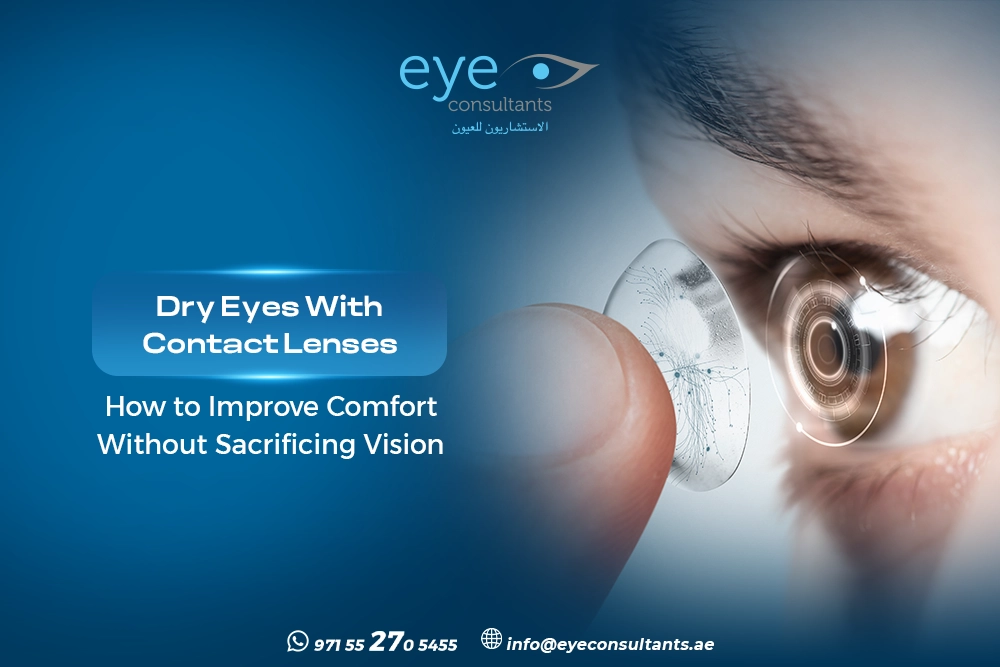
Dry eyes with contact lenses are one of the most common reasons people start wearing lenses with confidence, then gradually begin removing them earlier each day. A lens that felt fine in the morning may feel dry, irritated, or unstable by afternoon. For many wearers, the issue is not simply “sensitive eyes,” but a combination of tear-film quality, lens design, fit, and ocular surface health. That is why the right evaluation matters before giving up on contact lenses completely.
✆ WhatsappDry eyes with contact lenses: what patients should know
This issue affects comfort, wearing time, and sometimes long-term lens tolerance.
- Dry eyes with contact lenses are closely linked to contact lens dryness and reduced wearing comfort later in the day.
- Contact lenses can interact with the tear film and ocular surface in ways that increase friction, instability, and symptoms of dryness.
- Contact lens discomfort is a major reason patients reduce wear time or stop lens wear altogether.
- The answer is not always to stop lenses immediately; sometimes the problem is modifiable with the right clinical plan. (Watch this video)
Why contact lenses can worsen dryness in some eyes
The effect is often multifactorial rather than caused by one issue alone.
Contact lenses sit directly on the tear film, so they can alter tear stability and surface wetting. In some wearers, this contributes to dry eye from contact lenses, especially if there is pre-existing dry eye, meibomian gland dysfunction, blepharitis, or ocular surface irritation.
This is why dry eyes with contact lenses can develop even in patients who previously tolerated lenses well. TFOS reports also describe ocular surface disease and tear-film interaction as central contributors to contact lens discomfort.
Lens material, fit, and wearing time: what matters most
Comfort depends on more than prescription power alone.
Important factors include:
- lens material and surface wettability
- whether the fit is appropriate for the cornea and tear film
- daily wearing time and end-of-day fatigue
- deposits, cleaning solution reaction, or poor replacement habits
Some patients do better with different materials or with comfortable contact lenses for dry eyes, chosen specifically for surface performance and shorter replacement cycles.
This is especially important for patients dealing with dry eyes with contact lenses, where small changes in lens type or wear schedule can significantly improve comfort.
This is one reason customized fitting matters in Contact Lenses & Low Vision services rather than relying only on a routine prescription.
How doctors assess the tear film and ocular surface in contact lens wearers
A proper assessment looks beyond “the lens feels dry.”
Doctors may evaluate:
- tear-film stability
- eyelid margin and gland function
- corneal and conjunctival surface health
- lens fit and movement
- wearing habits and symptom timing
Eye Consultants Center’s dry-eye pages highlight structured dry-eye assessment, and its broader services include dry eye care plus Contact Lenses & Low Vision fitting.
The center also references tear-film analysis, meibography, and ocular-surface evaluation in its dry-eye content, which is directly relevant for contact lens wearers with persistent discomfort, especially those experiencing dry eyes with contact lenses. (Watch also this video)
Treatment options: drops, lid hygiene, lens changes, and daily disposables
Management depends on the cause of the dryness pattern.
Possible options include:
- lubricating drops selected for lens wear when appropriate
- lid hygiene if blepharitis or meibomian dysfunction contributes
- changing lens material or replacement schedule
- trying daily disposables in suitable cases
- reducing excessive wearing time when symptoms are end-of-day dominant
This is often how contact lens intolerance is approached: by treating the surface, improving the lens environment, and adjusting the lens strategy rather than forcing the same lens to keep working.
When specialty lenses or dry-eye treatment are better than forcing regular lenses
Not every patient should keep trying standard soft lenses indefinitely.
If symptoms persist despite basic changes, specialty fitting or targeted dry-eye treatment may be more useful than continuing uncomfortable routine lenses. Eye Consultants Center offers both Dry Eye Treatment and Contact Lenses & Low Vision services, which makes this kind of crossover evaluation particularly relevant. Newer dry-eye content from the center also discusses punctal plugs and advanced dry-eye procedures in selected cases.
Why choose Eye Consultants Center?
Choosing the right center can make a real difference, because contact lens discomfort is rarely just about the lens itself. It often requires a combined approach that addresses both the ocular surface and the precision of lens fitting.
At Eye Consultants Center in Dubai Healthcare City, Dry Eye Treatment and Contact Lenses & Low Vision are integrated as part of a structured care pathway, allowing each patient to be assessed from both comfort and vision perspectives.
The center provides comprehensive eye care supported by advanced diagnostic tools and specialist ophthalmologists, with consultants bringing more than 30 years of experience across subspecialties.
If your contact lenses are becoming uncomfortable or your wearing time is getting shorter, this is the right moment to act.
Book your assessment today at Eye Consultants Center.
Contact us at:
or visit Al Razi Building 64, Block C, 1st Floor, Unit 1017 – Dubai Healthcare City – Dubai – United Arab Emirates.
to find a solution that restores both comfort and clear vision.
FAQ’S about dry eyes with contact lenses
Can dry eye make contact lenses uncomfortable?
Yes. Dry eyes with contact lenses can cause irritation, fluctuating vision, and shorter comfortable wearing time.
Are daily disposables better for dry eye?
They can be helpful in some patients, but the best choice depends on tear film, lid health, fit, and daily wear pattern.
What is contact lens intolerance?
It refers to ongoing inability to wear lenses comfortably despite wanting to, often because of dryness, surface irritation, deposits, or poor lens compatibility.
When should someone book an assessment?
When contact lenses become uncomfortable, wearing time keeps shrinking, or dryness affects vision quality, a proper dry-eye and fitting review is worth arranging.
Dry eyes with contact lenses do not always mean the end of contact lens wear. In many cases, better comfort comes from understanding the tear film, choosing the right lens strategy, and treating the ocular surface properly. With the right assessment, many wearers can move toward clearer vision with better comfort and better long-term tolerance.
✆ Whatsapp