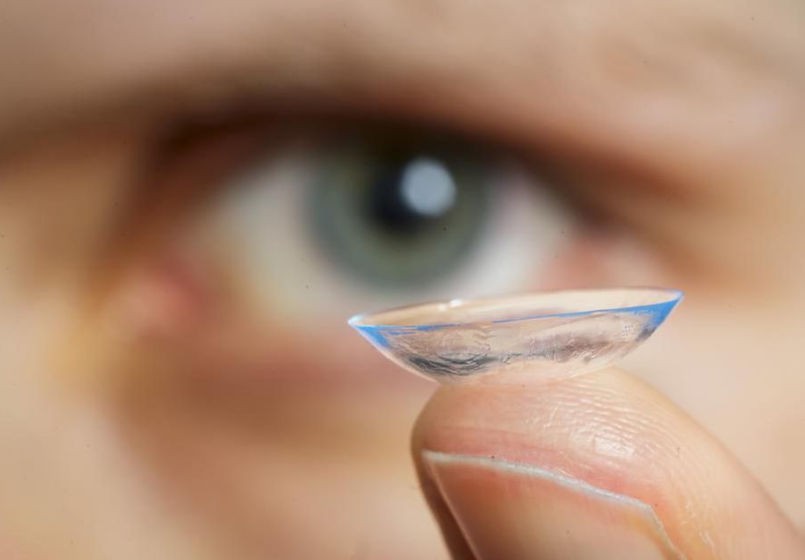



Gas-Permeable Lenses are an advanced type of contact lenses designed to provide sharper vision and long-term eye health for individuals seeking an alternative to soft lenses. While they may require an adjustment period, their optical precision and durability make them a preferred choice for many patients with specific visual needs or corneal conditions.
Gas-Permeable Lenses: What Are They?
Gas-permeable (GP) contact lenses, also known as rigid gas-permeable lenses, are made from firm, oxygen-permeable materials that allow adequate oxygen to reach the cornea. Unlike soft contact lenses, GP lenses maintain their shape on the eye, which helps correct vision more precisely, especially in cases where the cornea has irregular curvature.
These lenses are custom-designed to fit each eye and are commonly prescribed for patients who require high-quality visual correction beyond what standard soft lenses can offer.
Advantages of Gas-Permeable Lenses
Gas-permeable lenses offer several clinical and practical benefits that make them suitable for daily use in selected patients:
- Sharper vision: Their rigid structure provides clearer and more stable vision, particularly for astigmatism or irregular corneas.
- Better oxygen transmission: GP lenses allow more oxygen to reach the cornea, supporting long-term corneal health.
- Durability: They are more resistant to protein buildup and tearing compared to soft lenses.
- Long-term cost efficiency: With proper care, GP lenses typically last longer than soft lenses.
- Reduced risk of infections: Less moisture retention means a lower likelihood of bacterial growth.
These advantages make gas-permeable lenses a strong option for patients prioritizing visual clarity and eye health.
Disadvantages to Consider
Despite their benefits, gas-permeable lenses may not be ideal for everyone. Potential drawbacks include:
- Adaptation period: Initial discomfort is common, and it may take days or weeks for full adaptation.
- Sensitivity to dust or wind: Because GP lenses are smaller, foreign particles may cause irritation.
- Handling challenges: They require careful handling and cleaning routines.
Understanding these limitations helps patients set realistic expectations and improves overall satisfaction.
Ideal Candidates for Gas-Permeable Lenses
Gas-permeable lenses are particularly beneficial for individuals who:
- Have moderate to high astigmatism
- Suffer from keratoconus or irregular corneal surfaces
- Require precise visual correction not achieved with soft lenses
- Experience discomfort or dryness with soft contact lenses
- Prefer lenses with longer lifespan and durability
A comprehensive eye examination is essential to determine whether GP lenses are the most suitable option.
Fitting Process and Daily Care
Proper fitting is critical to the success of gas-permeable lenses. An eye care specialist will measure corneal curvature, assess tear film quality, and customize the lens design for optimal comfort and vision, Daily care includes:
- Cleaning and disinfecting lenses with recommended solutions
- Proper storage in clean lens cases
- Gradual wearing schedule during the adaptation phase
- Regular follow-up visits to monitor fit and eye health
Adhering to these steps ensures comfort, safety, and long-term effectiveness.
Conclusion
Gas-Permeable Lenses offer exceptional visual clarity, durability, and corneal health benefits for patients who need more precise vision correction. While they require an initial adaptation period and careful care, their long-term advantages make them a valuable option for many individuals. With professional fitting and proper follow-up, gas-permeable contact lenses can provide reliable comfort and superior vision for daily use.
Contact Information (NAP)
Name: Eye Consultants Center
Address: Al Razi Bldg No. 64, Block C, 1st Floor, Unit 1017, Dubai Healthcare City, Dubai, UAE
Phone: +971 4 4211 299