


Keratoconus in teenagers can begin with a complaint that sounds familiar to many parents: My glasses stopped working again. A teen may start squinting in class, struggle with night vision, or notice glare around lights, yet assume it is just another prescription change. In reality, keratoconus often starts around puberty and can progress during the teenage years, making early diagnosis especially important. That is where timely corneal imaging and the right specialist input can change the path forward.
Keratoconus in Teenagers: Early Signs Families Should Not Ignore
This condition can appear gradually, so subtle changes in vision deserve attention.
Common signs of keratoconus in teenagers may include:
- Blurred or distorted vision
- Frequent changes in glasses prescription
- Increasing short-sightedness or astigmatism
- Glare, halos, or light sensitivity
- Poorer night vision
- Double or ghost images in one eye
The reason keratoconus in teenagers matters is that the cornea becomes thinner and more cone-shaped, which affects how light focuses in the eye. Teenagers may progress faster than adults, so repeated visual changes should not be dismissed as routine. (Watch this video)
Why Early Diagnosis Matters More in Teen Years
The teenage years are often the stage when keratoconus first becomes noticeable.
A proper assessment may include:
- Detailed refraction and slit-lamp examination
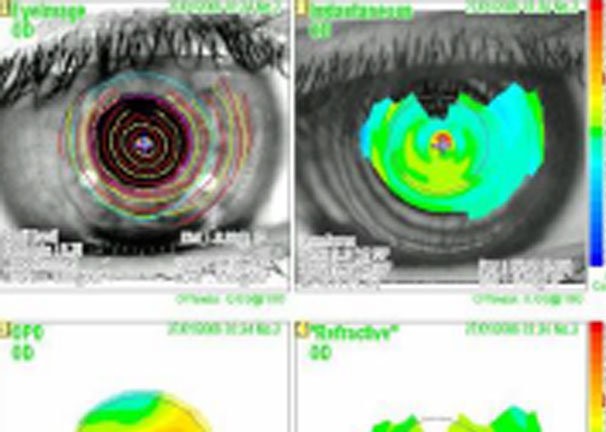
- Corneal topography to map the shape of the cornea
- Monitoring for progression over time
- Evaluation of how much vision is being affected in daily life
Eye Consultants Center states that corneal topography is one of the common ways to diagnose keratoconus by measuring the shape of the cornea in detail. When keratoconus in teenagers is caught early, specialists can monitor progression and discuss treatment before advanced corneal changes develop.
When to Consider Cross-Linking
Cross-linking is considered when there is evidence that keratoconus is progressing.
This option may be discussed when a teen has:
- Increasing corneal steepness on imaging
- Worsening vision despite updated correction
- Progressive thinning or shape change of the cornea
- A diagnosis at an age where progression risk is higher
The goal of corneal cross-linking is not to reverse the cornea back to normal, but to help stop keratoconus from getting worse. The American Academy of Ophthalmology describes it as a treatment for a weakened or warped cornea, while NHS and hospital guidance note that it is used to stabilize progression and may reduce the need for more serious surgery later. For many families facing keratoconus in teenagers, that makes the timing of referral especially important.
Why Choose Eye Consultants Center for Corneal Keratoconus Treatment in Dubai?
Choosing the right center matters when keratoconus in teenagers needs close follow-up and cornea-focused expertise.
Eye Consultants Center offers:
- A dedicated Corneal Keratoconus Treatment service on its official website
- Corneal topography as part of the keratoconus diagnosis information provided by the center
- A specialist team in cornea, refractive surgery, retina, glaucoma, pediatric ophthalmology, and more
- Senior corneal expertise delivered by highly experienced specialists with more than 30 years of clinical experience and thousands of advanced refractive procedures.
- Consultant-level leadership in corneal and refractive care, ensuring precise diagnosis and personalized treatment for complex corneal conditions.
Call us:
or visit Al Razi Building 64, Block C, 1st Floor, Unit 1017 – Dubai Healthcare City – Dubai – United Arab Emirates.
FAQ’S
Can keratoconus start in the teenage years?
Yes. Keratoconus often begins around puberty and may progress during adolescence.
Does cross-linking improve vision immediately?
Not necessarily. Its main aim is to slow or stop progression, not to restore the cornea to a normal shape.
Is every teen with keratoconus a candidate for cross-linking?
No. The decision depends on progression, corneal findings, and specialist evaluation.
What test is especially important in keratoconus?
Corneal topography is commonly used to measure the shape of the cornea and support diagnosis.
Keratoconus in teenagers should never be left to repeated glasses changes alone. If your teen has worsening vision, more glare, or frequent prescription shifts, book a specialist consultation with Eye Consultants Center