



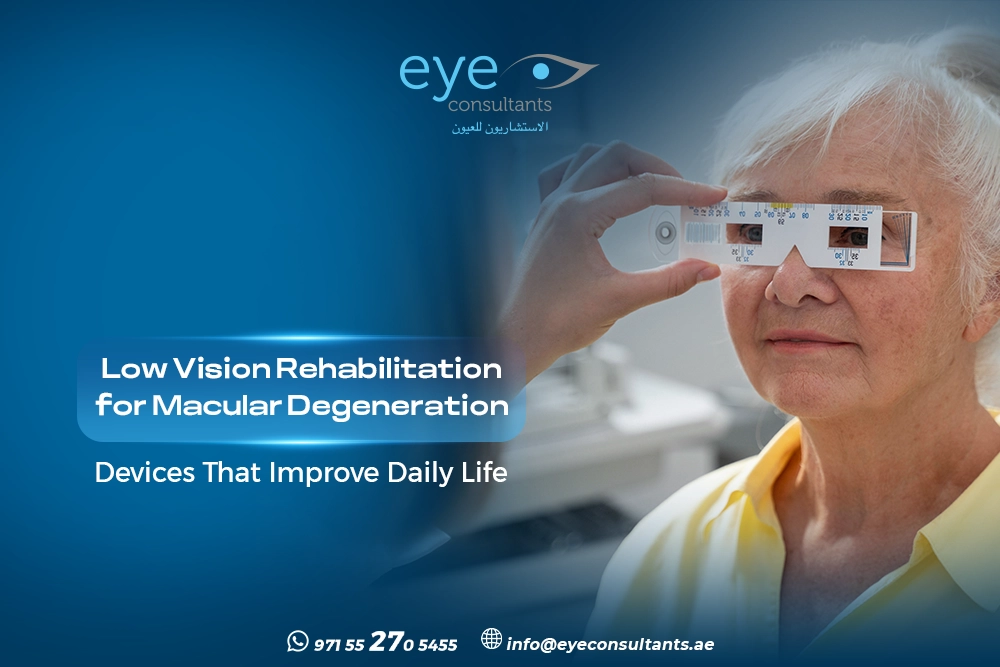
Low vision rehabilitation macular degeneration often becomes important when patients notice that everyday tasks are no longer as easy as before. A person may still recognize faces or move around the house, but reading messages, checking medication labels, or managing bills can suddenly become difficult. In macular degeneration, the challenge is often the loss of fine detail rather than complete vision loss. With the right visual aids and rehabilitation support, many daily activities can become easier and more comfortable again.
Low Vision Rehabilitation Macular Degeneration: What Does It Actually Include?
This pathway focuses on helping patients use their remaining vision more effectively in daily life.
- Low vision rehabilitation macular degeneration does not cure macular degeneration, but it helps patients improve how they read, cook, use phones, manage medications, and perform other routine tasks.
- Vision rehabilitation is considered an important part of care for people whose sight cannot be fully restored with standard glasses, contact lenses, medicine, or surgery. (Watch this video)
- A low vision assessment usually looks at functional goals, not only visual acuity, so the support plan can match the patient’s real-life needs.
Which Devices May Improve Daily Life?
The best device depends on the task the patient wants to do more easily.
- Hand magnifiers and stand magnifiers may help with short reading tasks such as labels, receipts, and medicine instructions.
- Electronic magnifiers, larger digital displays, and screen-based tools can support longer reading, writing, and computer use.
- Phones, tablets, and computers can often be adjusted with larger text, higher contrast, or read-aloud functions, which are especially useful in macular disease.
- Better lighting, glare control, and selected high-powered visual aids may also improve comfort and function during daily activities.
Why Is Rehabilitation More Than a Device List?
A successful plan depends on training, goals, and regular adjustment.
- Low vision rehabilitation macular degeneration works best when the device is matched to a specific task, such as reading, cooking, mobility, or screen use.
- Many patients benefit from demonstration and training, because even useful magnifiers may be difficult without guidance.
- Early referral matters. Major ophthalmology and public-health sources recommend starting rehabilitation when vision loss begins to interfere with daily life, not only when the condition becomes severe.
Why Choose Eye Consultants Center for This Evaluation?
When vision loss from macular degeneration begins to affect daily independence, choosing the right clinic becomes a key part of successful rehabilitation. At Eye Consultants Center, patients benefit from specialized programs in Contact Lenses and Low Vision, designed to evaluate functional vision and introduce practical solutions that go beyond traditional glasses or routine prescriptions.
Located in Dubai Healthcare City, the center combines advanced ophthalmic technology with a patient-focused approach that prioritizes comfort, clarity, and long-term visual support. With 14 years of clinical excellence and ophthalmologists bringing more than 30 years of experience across multiple eye-care subspecialties, the clinic has developed a strong reputation for delivering precise diagnoses and personalized visual rehabilitation plans.
Modern facilities, highly trained teams, and a comprehensive range of ophthalmology services allow Eye Consultants Center to support patients with complex visual challenges, including those seeking effective low vision rehabilitation macular degeneration. (Watch this video)
If macular degeneration is making reading, phone use, or household tasks more difficult, book a low vision assessment at Eye Consultants Center.
Call us:
or visit Al Razi Building 64, Block C, 1st Floor, Unit 1017 – Dubai Healthcare City – Dubai – United Arab Emirates.
FAQ About Low vision rehabilitation macular degeneration
Can low vision rehabilitation help if macular degeneration cannot be cured?
Yes. Rehabilitation is designed to help patients use their remaining vision more effectively in daily life, even when the underlying eye disease remains.
Are magnifiers the only option?
No. Many patients also benefit from electronic magnifiers, better lighting, screen settings, contrast adjustments, and read-aloud technology.
When should someone ask for low vision support?
The best time is when everyday tasks start becoming difficult, not only when vision loss becomes advanced.
For many patients, low vision rehabilitation macular degeneration is not only about devices, but about restoring function in the moments that shape everyday independence. When assessment is personalized, and the right aids are introduced early, daily life often becomes safer, easier, and more manageable.