



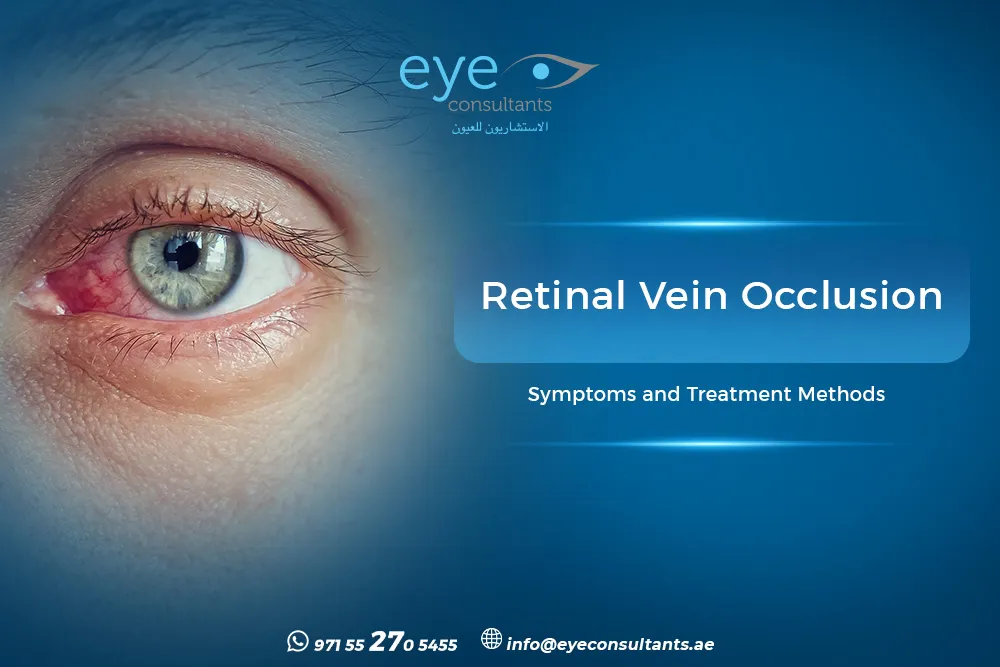
Retinal vein occlusion symptoms often show up without warning. One day, vision feels normal, and the next, you notice a sudden blur in one eye or a “hazy patch” that won’t clear. Many people assume it’s fatigue or dry eyes, but retina circulation problems can progress quietly. The reassuring part is that early retina imaging can confirm the cause and guide a clear plan. Let’s break it down in a simple, practical way.
✆ WhatsappWhat is retinal vein occlusion?
To understand retinal vein occlusion symptoms, it helps to know what RVO is. Retinal vein occlusion happens when a vein draining blood from the retina becomes blocked, leading to back-pressure, swelling, and sometimes bleeding.
Main types:
- CRVO (Central Retinal Vein Occlusion): affects the main retinal vein.
- BRVO (Branch Retinal Vein Occlusion): affects one smaller branch vein.
Why it matters:
- The retina needs stable blood flow to support sharp vision.
- Swelling in the macula (center of the retina) is a common reason vision drops.
Symptoms and urgency
Retinal vein occlusion symptoms can be mild at first or very noticeable from the start. Seek prompt evaluation if any of these appear, especially if sudden:
Common symptoms:
- Sudden blurred or reduced vision (often in one eye)
- Hazy vision or “foggy” central detail
- Distorted lines or reading becoming harder
- Dark spots/floaters (can happen with bleeding)
Urgency note:
- A same-day or next-day retina assessment is wise if retinal vein occlusion symptoms appear suddenly, because imaging can confirm the cause and protect the best possible outcome.
Causes & risk factors
Many patients discover RVO after a routine check because retinal vein occlusion symptoms can correlate strongly with vascular risk factors. Common contributors include:
- High blood pressure (hypertension)
- Diabetes
- Glaucoma / high eye pressure
- High cholesterol and other vascular risks
- Smoking and older age (risk increases over time)
Controlling these factors supports the retina and helps reduce recurrence risk.
Diagnosis (retina exam, OCT, OCT-A, angiography)
When retinal vein occlusion symptoms are suspected, diagnosis usually combines a focused exam with imaging that shows both structure and circulation:
Core diagnostic steps:
- Dilated retina exam to assess swelling, hemorrhage, and retinal findings
- OCT to measure macular swelling and retinal layer changes
- OCT-A / widefield OCTA (wfOCTA) to assess nonperfusion and vascular detail in selected cases
- Fluorescein angiography (FA) is used when circulation detail is needed, or the diagnosis is uncertain
These tests may turn into a clear plan, especially when retinal vein occlusion symptoms feel confusing.
Treatment pathway
Treatment depends on what imaging shows (especially macular edema and ischemia). Managing retinal vein occlusion symptoms is often a combination of eye treatment + systemic risk control.
Common treatment pathway:
- Anti-VEGF injections or steroid implant (case-based) are recommended options for macular edema related to CRVO/BRVO, depending on patient and clinician choice and risk profile.
- Laser treatment may be considered in selected BRVO macular edema scenarios and specific criteria (not for every case).
- Systemic risk control (BP/diabetes/lipids) with your physician is part of standard care planning.
- Retinal vein occlusion symptoms don’t have a single one-size treatment; imaging findings decide the safest path.
Follow-up plan – preventing recurrence
Follow-up isn’t optional; it’s how your retina specialist tracks response and prevents complications.
Typical follow-up focus:
- Repeat OCT to track swelling and response
- Monitor for new vascular activity (when relevant)
- Keep systemic risks controlled (BP, diabetes, cholesterol)
- Report any new retinal vein occlusion symptoms immediately (don’t wait for the next appointment)
Why Choose Eye Consultants Center?
When your vision involves delicate retina conditions, experience and precision matter. At Eye Consultants Center in Dubai, patients benefit from 14 years of specialized eye care, supported by retina specialists with over 30 years of senior clinical expertise in managing complex Vitreoretinal Disease cases.
The center combines advanced diagnostic technologies such as OCT, OCT-A, and fundus imaging with a patient-first approach built on clarity, privacy, and informed decision-making, ensuring every treatment plan is tailored, transparent, and focused on protecting your vision.
Book a consultation now at Eye Consultants today, call
or visit Al Razi Building 64, Block C, 1st Floor, Unit 1017 – Dubai Healthcare City – Dubai – United Arab Emirates.
FAQ’S
Are retinal vein occlusion symptoms always sudden?
Often they are, especially blurred vision in one eye, but some patients notice gradual central blur if macular swelling builds over time.
Can retinal vein occlusion symptoms improve without treatment?
Some improvement can happen in selected cases, but imaging is needed to decide whether injections or other treatment is necessary to protect vision.
Which tests confirm the diagnosis?
A dilated retina exam plus OCT is core. OCT-A or fluorescein angiography may be added when circulation detail is needed.
Do injections cure the problem permanently?
They can control swelling and activity, but follow-up is usually needed, and response varies by case.
Summary
When retinal vein occlusion symptoms appear, early imaging (OCT/OCT-A/angiography when needed) is the fastest way to confirm what’s happening, plan treatment, and protect central vision.
✆ Whatsapp