



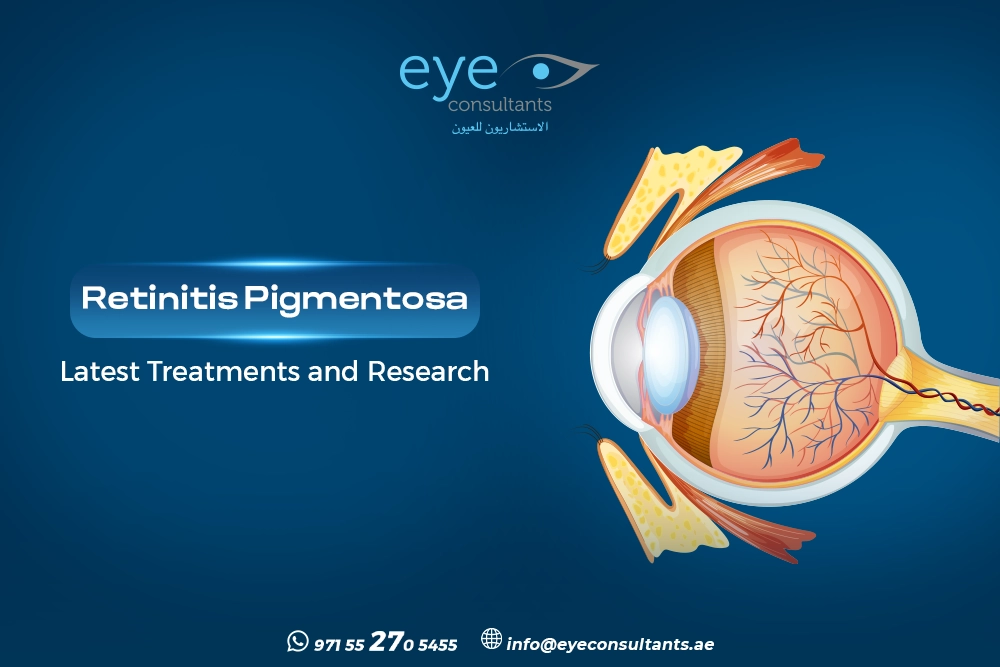
Retinitis pigmentosa latest treatments can feel like the difference between I’m managing and I’m losing my independence when night driving becomes unsafe, or your side vision starts shrinking. Many people adapt quietly until stairs, faces, or dim hallways suddenly feel unfamiliar. Because RP progresses at different speeds, the most useful plan is the one built on accurate diagnosis and realistic options.
✆ WhatsappRetinitis pigmentosa latest treatments: What is retinitis pigmentosa (RP)?
A clear definition helps you understand why RP care is long-term and personalized. Retinitis pigmentosa is a group of inherited retinal degenerations that primarily affect photoreceptors (often rods first), leading to progressive changes in night vision and peripheral vision.
In simple terms, RP often involves:
- Gradual loss of night vision (nyctalopia)
- Progressive narrowing of peripheral vision (tunnel vision)
- Variable central vision impacts later on (case-based)
Early signs (night blindness, tunnel vision) + progression
Recognizing early patterns helps patients seek the right evaluation sooner. RP symptoms may be subtle at first, then become more noticeable over time. (Watch this video)
Early signs people commonly report:
- Difficulty seeing in dim light or at night
- Bumping into objects on the side
- Slower adjustment when moving from bright to dark environments
Progression notes (realistic framing):
- Speed varies by genetic subtype and individual factors
- Central vision may remain usable for years in some cases
- Monitoring matters because planning can protect function and safety
Diagnosis (ERG, OCT, genetic testing) + family counseling
Diagnosis is not one test; it’s a structured assessment that confirms the pattern and guides the next steps. Professional guidance commonly includes clinical exam and specialized tests such as visual fields, OCT imaging, ERG, and genetic testing, where appropriate.
What a vitreoretinal/retina specialist may use:
- Dilated retinal exam to assess retinal health and typical RP changes
- OCT to evaluate retinal layers and macular status
- ERG (electroretinography) to measure retinal function
- Visual field testing to document peripheral vision loss
- Genetic testing + counseling (case-based) to clarify subtype, inform family planning, and assess eligibility for trials
Current management (monitoring, low vision rehab)
Even when there is no single cure, care can still be very active and practical. Retinitis pigmentosa latest treatments include structured monitoring and rehabilitation strategies that protect quality of life.
Current management often focuses on:
- Regular follow-up to track progression and detect treatable complications (case-based)
- Low-vision rehabilitation (magnifiers, contrast tools, device accessibility features)
- Mobility and safety support (lighting strategy, orientation tools)
- Personalized planning for work, driving, and daily routines
Emerging options (gene therapy, retinal implants) – realistic framing
This is where retinitis pigmentosa latest treatments become a fast-moving field yet it must be explained with realistic expectations.
1) Gene therapy (targeted, diagnosis-dependent)
Gene therapy is not one injection for all RP. The best-known approved example is Luxturna, indicated for patients with biallelic RPE65 mutation–associated retinal dystrophy (a specific inherited retinal condition, not all RP).
What this means for patients:
- Eligibility depends on the exact genetic diagnosis
- Genetic testing can help confirm whether an approved or trial option fits
- Expectations are functional improvement, not “perfect vision” (case-based)
2) Optogenetics (research-stage vision restoration)
Optogenetics aims to help the retina respond to light again in severe vision loss by introducing light-sensitive proteins. Trials continue, and results are still being evaluated for benefit/risk.
Realistic notes:
- Still investigational for RP
- Outcomes vary and typically require training/rehabilitation
- Not suitable for every stage or subtype
3) Retinal implants/prosthesis concepts (selected severe cases)
“Artificial vision” devices are being studied and refined. Some recent high-profile implant research has focused on advanced vision loss (not limited to RP), with outcomes showing partial functional gains in selected patients alongside significant training needs.
Key reality check:
- Vision is usually partial (contrast/shapes/letters in selected cases)
- Training and adaptation are essential
- Availability depends on approvals and local pathways
Why choose Eye Consultants Center for RP and Vitreoretinal Disease care?
When Vitreoretinal Disease is involved, the outcome is shaped by accurate diagnostics, careful interpretation, and long-term planning. Eye Consultants Center in Dubai highlights a retina-focused pathway supported by modern imaging and patient-centered communication.
Patients benefit from:
- Retina diagnostics that can include OCT and OCT-A as part of evaluating retinal vessels and layers (case-based)
- Senior vitreoretinal expertise
- A care model aligned with international standards, emphasizing clarity, privacy, and informed decisions
If you want a clear plan, not guesswork, book a retina consultation to discuss retinitis pigmentosa latest treatments for retinitis pigmentosa based on your diagnosis and test results.
Book a consultation today Call
or visit Al Razi Building 64, Block C, 1st Floor, Unit 1017 – Dubai Healthcare City – Dubai – United Arab Emirates.
FAQ
Do retinitis pigmentosa latest treatments work for every patient?
No. Options depend on the genetic subtype, retinal status, and eligibility criteria. Many emerging approaches are still in trials.
Is gene therapy available for all RP cases?
No. Gene therapy is diagnosis-specific. Luxturna, for example, is for biallelic RPE65 mutation–associated retinal dystrophy, not all RP.
“Will implants restore normal sight?
No. Research shows partial functional gains in selected severe cases, and training is usually required. Outcomes vary.
In conclusion, understanding retinitis pigmentosa latest treatments empowers patients to move from uncertainty to informed decision-making. With accurate diagnosis, realistic expectations, and specialist-guided care, today’s advances offer structured hope while protecting vision and quality of life for the future.