


Thin cornea vision correction options are often what patients start searching for after hearing an unsettling phrase during screening: (You may not be the best candidate for LASIK.) For many people, that moment creates confusion more than disappointment. Does a thin cornea mean no laser at all? Are safer alternatives still possible? In reality, the answer depends on detailed screening, corneal shape, residual tissue planning, and the refractive target, not on thickness alone.
Thin cornea vision correction options – what matters before choosing a procedure
A thin cornea does not automatically rule out vision correction, but it changes how surgeons assess safety first.
- Corneal thickness affects how much tissue can be treated while preserving structural stability.
- Screening is not based on pachymetry alone; corneal shape and tomography matter just as much.
- Some patients are better suited to thin cornea LASIK alternatives rather than LASIK itself.
- The safest option may be corneal laser, surface laser, or a lens-based approach, depending on the eye.
Why does corneal thickness change refractive surgery candidacy
Corneal refractive surgery removes tissue, so preoperative thickness and the expected residual stromal bed directly influence candidacy. This is why evaluating thin cornea vision correction options becomes essential before choosing any procedure.
- LASIK requires flap creation plus laser treatment, which means more corneal tissue is involved.
- If the cornea is too thin or structurally suspicious, the risk profile changes significantly.
- Low or insufficient corneal thickness remains one of the most common reasons patients are guided toward thin cornea vision correction options instead of standard LASIK.
- In selected cases, PRK for thin cornea may be considered because it avoids a flap, but candidacy still depends on full screening.
The role of topography and Pentacam in screening thin corneas
The final decision is based on detailed imaging, not thickness alone, especially when exploring thin cornea vision correction options.
- Corneal topography maps the surface curvature of the cornea.
- Pentacam provides tomography, pachymetry maps, and critical data for planning safe treatment.
- Tomography helps detect subtle irregularities or early ectatic risk that may not be visible from thickness measurements alone.
- These advanced scans are essential for evaluating candidates for LASIK, SMILE, and phakic IOL within safe thin cornea vision correction options.
PRK, SMILE, and Phakic IOL – how each option differs
Patients searching for thin cornea vision correction options usually need a comparison that is clear and realistic. (Watch this video)
- PRK for thin cornea: may be considered in selected eyes because it does not require a flap, though it still depends on residual tissue safety and surface suitability.
- SMILE for thin cornea: may be appropriate in some screened patients, but it is not automatically the answer for every thin cornea.
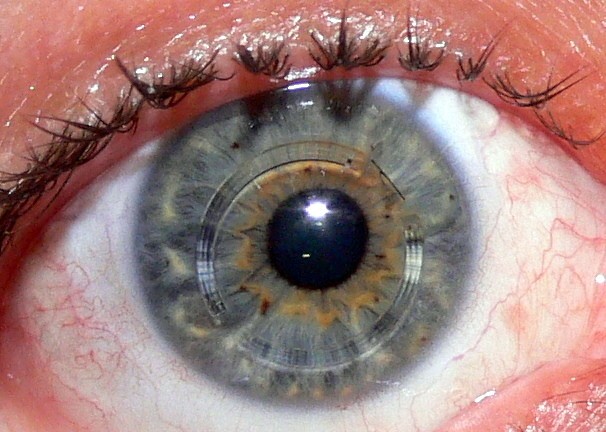
- Phakic IOL for thin cornea: may be an important option when the laser would remove too much tissue or when the cornea is thin or irregular.
- The best option depends on refraction, corneal maps, anterior chamber measurements, and surgeon’s judgment.
Which patients may not be suitable for laser at all
Some patients need to hear this clearly: laser is not always the safest path.
- Abnormal topography or tomography
- Keratoconus or ectasia risk
- Insufficient corneal thickness for a safe residual bed
- Severe dry eye or ocular surface instability in some cases
- Very high corrections better suited to a lens-based approach in selected eyes
Safety-first decision-making and how surgeons choose the best path
The best refractive plan is the one that protects long-term corneal health first.
- Surgeons weigh thickness, shape, refraction, age, lifestyle, and risk profile together.
- A patient may be declined for LASIK but still qualify for another safe option.
- In some eyes, choosing not to do laser is the right decision.
- Careful screening is what turns thin cornea vision correction options into a personalized treatment plan rather than a generic promise.
Why choose Eye Consultants Center for LASIK & Refractive Surgery?
For patients comparing thin cornea vision correction options, the quality of screening matters as much as the procedure itself.
- The center’s published pages highlight 14 years of excellence in eye care.
- Recent official content states that doctors bring over 30 years of combined expertise.
- The investigations page confirms access to Pentacam and corneal topography for refractive screening.
- The doctors’ page includes cornea and refractive specialists, including Dr. Tarek Ibrahim, Head of Cornea & Refractive Unit, and Dr. Sherif Emerah, Cornea and Refractive Surgery Consultant.
- The official site also references thousands of successful SMILE/LASIK procedures on recent refractive pages. (Watch this video)
If you have been told your cornea is thin, do not assume all options are closed. Book a refractive consultation at Eye Consultants Center for a safety-first assessment with advanced imaging and specialist-led guidance.
Contact us at:
or visit Al Razi Building 64, Block C, 1st Floor, Unit 1017 – Dubai Healthcare City – Dubai – United Arab Emirates.
FAQ’S about Thin cornea vision correction options
Does a thin cornea always mean I cannot have vision correction?
No. It may rule out LASIK in some eyes, but other options may still be available after full screening.
Is PRK safer than LASIK for thin corneas?
In selected patients, PRK may be preferred because it avoids flap creation, but safety still depends on corneal measurements and overall screening.
Can SMILE be done in thin corneas?
Sometimes, but not automatically. The decision depends on tomography, thickness profile, and refractive requirements.
When is phakic IOL considered?
Phakic IOL may be considered when a corneal laser is not ideal because of thin or irregular corneas, or when tissue preservation is a priority.
Choosing among thin cornea vision correction options is not about forcing one procedure to fit every eye. It is about understanding what your cornea can safely support and selecting the path that protects vision quality over time. With proper imaging, careful screening, and experienced refractive judgment, many patients who are not ideal LASIK candidates may still have strong alternatives worth exploring.