


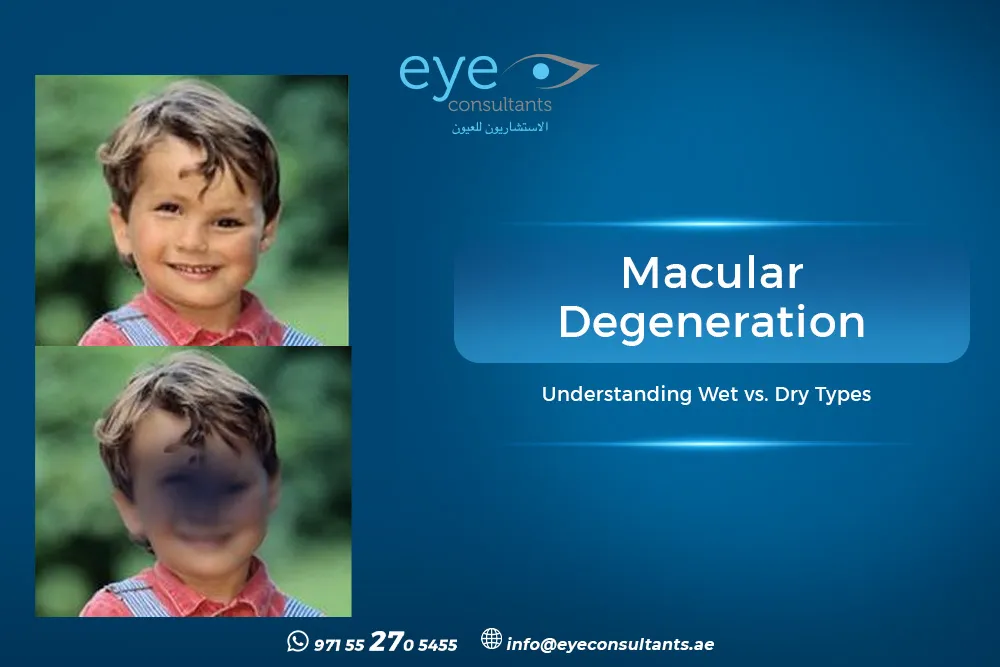
Wet vs dry macular degeneration is a phrase many people search right after they notice straight lines starting to look wavy, or reading suddenly feels not as crisp as it used to. The tricky part is that macular changes can build quietly, then become obvious at the worst moment when you need your central vision most. The reassuring part is that modern retinal imaging can identify what’s happening early and guide a clear plan. With that clarity, the next step becomes simpler than the worry in your head.
✆ WhatsappWet vs dry macular degeneration: the difference in 60 seconds
This is the quickest way to understand wet vs dry macular degeneration before you dive into details:
| Feature | Dry AMD | Wet AMD |
| How common is it? | More common | Less common |
| Speed of progression | Usually slower, gradual | Often faster and more aggressive |
| What happens in the macula? | Gradual thinning and degenerative changes in the macula (center of the retina) | Growth of abnormal blood vessels under the macula |
| Risk to vision | Gradual central vision decline | Can threaten central vision more quickly due to leakage or bleeding |
| Type of damage | Degenerative changes over time | Leakage, fluid buildup, or bleeding from abnormal vessels |
| Effect on vision | Affects central vision (reading, recognizing faces) | Affects central vision, sometimes suddenly |
| Side vision (early stages) | Usually preserved | Usually preserved |
Both wet and dry macular degeneration mainly affect central vision, not peripheral (side) vision in early stages, but the speed and urgency of management can differ significantly. (Watch this video)
Symptoms + red flags
If you’re comparing wet vs dry macular degeneration, symptoms can overlap, but speed and intensity matter.
Common symptoms:
- Central blur that makes reading harder.
- Distorted lines (wavy door frames, bent text lines).
- Trouble recognizing faces clearly.
- Increased glare sensitivity.
Red flags that need prompt retina review:
- Sudden worsening distortion over days.
- A new dark/gray spot in the center.
- Rapid drop in clarity in one eye.
Diagnosis & monitoring
Diagnosis is where wet vs dry macular degeneration becomes clear rather than confusing.
What retina specialists commonly use:
- Amsler Grid: a simple home tool to notice new distortion early.
- Dilated retina exam: checks the macula and surrounding retina carefully.
- OCT: shows macular layers and swelling in great detail.
- OCT-A: can map blood flow patterns and support early detection of vascular activity (often without dye).
Monitoring matters because changes can be subtle; imaging gives objective proof, not guesswork.
Treatment options for wet AMD (anti-VEGF injections) + what to expect
When wet vs dry macular degeneration is confirmed as wet, treatment is usually active and time-sensitive.
Common approach (general):
- Anti-VEGF injections: help reduce abnormal vessel activity and leakage in many cases
- Follow-up imaging guides timing and response
- Your doctor sets a schedule based on findings, not a one-size plan
What patients often feel/expect:
- Quick in-clinic procedure
- Numbing drops are used
- Mild irritation or scratchy feeling afterward is possible
- Vision may be blurry briefly the same day
No clinic should promise identical outcomes response varies by timing and macular status.
Management for dry AMD
Dry disease management focuses on protecting function and monitoring risk, another key difference in wet vs dry macular degeneration.
What may be recommended (case-based):
- Regular follow-ups with OCT imaging
- Supplements only if appropriate for your stage (your retina specialist decides)
- Practical lifestyle support that protects long-term eye health
The goal is steady monitoring and early interception if changes accelerate.
How to slow progression
Whether your diagnosis is wet or dry, wet vs dry macular degeneration management often shares these protective steps:
- Stop smoking (one of the strongest modifiable risks)
- Prioritize a balanced diet (leafy greens, fish, nutrient-dense meals).
- Wear UV-protective sunglasses outdoors.
- Control general health risks (blood pressure, diabetes, cholesterol).
- Keep scheduled retina imaging even when vision feels fine.
Consistency is what protects you from silent progression.
Why choose Eye Consultants Center?
When care involves Vitreoretinal Disease (retina + vitreous conditions), outcomes are influenced by accurate diagnostics and experienced planning especially for patients navigating wet vs dry macular degeneration. Eye Consultants Center in Dubai supports clear decisions through:
- 14 years of specialized eye care experience in Dubai
- Doctors with 30+ years of senior clinical expertise across retina and vitreous conditions
- Advanced evaluation pathways that can include fundus imaging, OCT, and OCT-A
- A patient-first approach focused on clarity, privacy, and informed choices.
Book a consultation now at Eye Consultants today, call
or visit Al Razi Building 64, Block C, 1st Floor, Unit 1017 – Dubai Healthcare City – Dubai – United Arab Emirates.
FAQ’S
Is wet vs dry macular degeneration diagnosed the same way?
“Both rely on a retina exam and imaging, but OCT/OCT-A helps clarify whether there is swelling or vascular activity.
If my lines look wavy, does that mean it’s wet type?
Not always. Waviness is a warning sign that needs imaging, because several macular problems can cause distortion.
Can dry AMD suddenly become wet?
In some cases, yes. That’s why regular monitoring and prompt review of new symptoms are important.
Do injections cure wet AMD permanently?
They often control activity and protect vision, but ongoing follow-up is usually needed, and response varies by case.
If you’re noticing distortion or central blur, don’t wait for it to ‘settle.’ Start with a retina-focused assessment to confirm whether wet vs dry macular degeneration is involved and get a plan you can trust.
✆ Whatsapp