



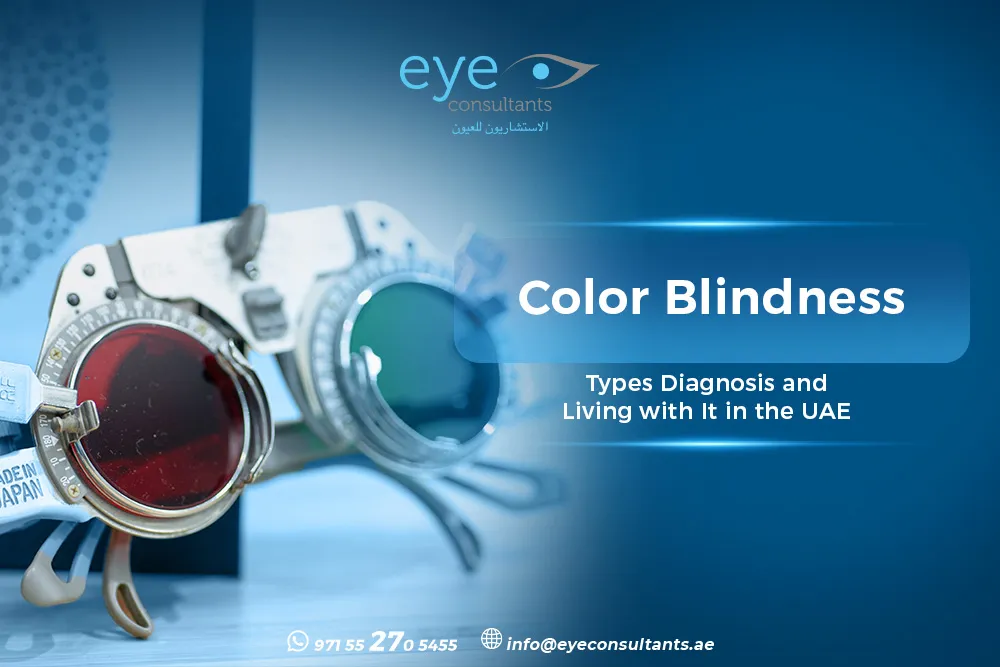
Color Blindness is a visual condition that affects how individuals perceive certain colors, often without impacting visual sharpness. Many people live with color vision deficiency without realizing it, discovering the condition during routine eye examinations or school screenings. Understanding the nature of color blindness, how it is diagnosed, and how it affects daily life is essential for proper adaptation and long-term eye care.
Color Blindness: Types and Variations
The blindness of colors is not a single condition but a group of color vision deficiencies that vary in severity and type. The most common forms include:
- Red-green color blindness: The most prevalent type, affecting the ability to distinguish between red and green shades.
- Blue-yellow color blindness: Less common, involving difficulty differentiating blue from yellow tones.
- Complete color blindness (achromatopsia): A rare condition where individuals see the world mostly in shades of gray.
The severity can range from mild color confusion to significant difficulty recognizing specific colors, depending on the type and extent of cone cell dysfunction in the retina.
Genetic Basis of Color Blindness
Most cases of color blindness are inherited and linked to genetic mutations affecting the cone cells responsible for color perception. Red-green color blindness is commonly inherited through the X chromosome, which explains why it is more prevalent in males than females.
In some cases, color vision deficiency may be acquired later in life due to eye diseases, neurological conditions, or certain medications. Distinguishing between inherited and acquired forms is important for accurate diagnosis and management.
Diagnosis Methods for Color Vision Deficiency
Diagnosing color blindness involves specialized eye tests designed to assess color perception accurately. Common diagnostic tools include:
- Ishihara color plates: Used to detect red-green color vision deficiencies.
- Arrangement tests: Assess the ability to distinguish and organize color hues.
- Advanced digital testing: Provides precise evaluation of color discrimination levels.
In the UAE, color vision testing is often required for school enrollment, driving licenses, and specific professions. Early diagnosis helps individuals understand limitations and adapt effectively.
Impact on Daily Life
Details can influence various aspects of daily life. Challenges may include difficulty interpreting traffic signals, reading color-coded information, or choosing matching clothing. In professional settings, certain careers may have color vision requirements, making early awareness essential for informed career planning.
Despite these challenges, most individuals with color blindness adapt well by using contextual cues, labeling systems, and learned color patterns. The condition does not affect intelligence or overall visual acuity.
Aids and Technology for Color Blindness
While there is no cure for inherited color blindness, several tools and technologies can enhance color recognition and daily functioning:
- Color-corrective glasses: Designed to enhance color contrast for certain types of color blindness.
- Mobile applications: Assist with identifying colors in real time.
- Digital accessibility settings: Many devices offer color filters to improve screen visibility.
- Environmental adaptations: Labeling, pattern recognition, and organizational strategies.
With the right support and tools, individuals with color blindness can lead fully independent and productive lives.
Conclusion
It is a common visual condition that varies widely in type and impact. Through accurate diagnosis, awareness, and the use of modern assistive technologies, individuals can effectively manage daily challenges. In the UAE, access to advanced eye care and diagnostic services ensures early detection and proper guidance, empowering people with color blindness to adapt confidently and maintain a high quality of life.
Contact Information (NAP)
Name: Eye Consultants Center
Address: Al Razi Bldg No. 64, Block C, 1st Floor, Unit 1017, Dubai Healthcare City, Dubai, UAE
Phone: +971 4 4211 299