



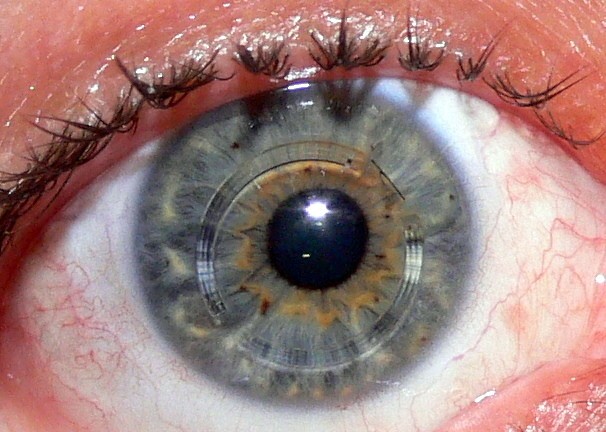
Combined Phototherapeutic Keratectomy, Intracorneal Ring Segment Implantation, and Corneal Collagen Cross-Linking in Keratoconus Management
Keratoconus is a progressive corneal ectatic disorder that can lead to irregular astigmatism, increasing corneal steepening, and reduced visual quality. In selected cases, combined treatment strategies may be used to improve functional vision while also aiming to stabilize the cornea.
For related specialist care, patients can also explore the clinic’s Corneal Treatment page and Investigations page.
Abstract
This clinical science article reports the outcomes of a combined procedure involving intracorneal ring segment implantation (ICRS), corneal collagen cross-linking (CXL), and superficial phototherapeutic keratectomy (PTK) in patients diagnosed with moderate keratoconus. The study was designed to evaluate efficacy, predictability, and safety.
Study Design
According to the live page, 55 eyes received ICRS implantation followed by combined CXL and PTK treatment. Patients were followed for 6 months. Primary outcomes included LogMAR uncorrected distance visual acuity (UDVA), corrected distance visual acuity (CDVA), sphere, cylinder, mean spherical equivalent, index of surface variance, index of vertical asymmetry, keratoconus index, central keratoconus index, index of height asymmetry, and index of height decentration. Secondary outcomes included higher-order aberrations such as total HOA, coma, spherical aberration, secondary astigmatism, and trefoil.
Main Findings
Visual Acuity Outcomes
The article reports statistically significant improvement in both UDVA and CDVA at 6 months compared with baseline. It states that 14% of the eyes improved to 20/25 UDVA and that 96% had at least 20/40 or better spectacle-corrected vision. For CDVA, 49% of eyes gained between 1 and 8 lines of vision, 38% showed no change, 11% lost 1 line, and 1 eye (2%) lost 3 lines while still gaining UDVA.
Refractive Outcomes
The study also reports statistically significant improvement in sphere and cylinder at 6 months. In the refractive predictability analysis, 30.9% of eyes were within ±0.5 diopter, 45.5% were within ±1.0 diopter, and 74.5% were within ±2.0 diopters.
Higher-Order Aberrations
The article reports improvement in several higher-order aberration parameters, including total HOA, coma, spherical aberration, and secondary astigmatism. These changes were reported as statistically significant in the published summary.
Authors’ Conclusion
The study concludes that a combined procedure of ICRS implantation, CXL, and PTK was effective, predictable, and apparently safe in patients diagnosed with moderate keratoconus.
Clinical Relevance
This article is useful for readers looking at combined corneal procedures in keratoconus management rather than single-modality treatment alone. Patients exploring broader corneal and refractive options can also review Major Types of Corrective Eye Surgery.
For related clinical reading, you can also see Intracorneal Rings (INTACS SK) Might be Beneficial in Keratoconus; A Prospective Nonrandomized Study.