


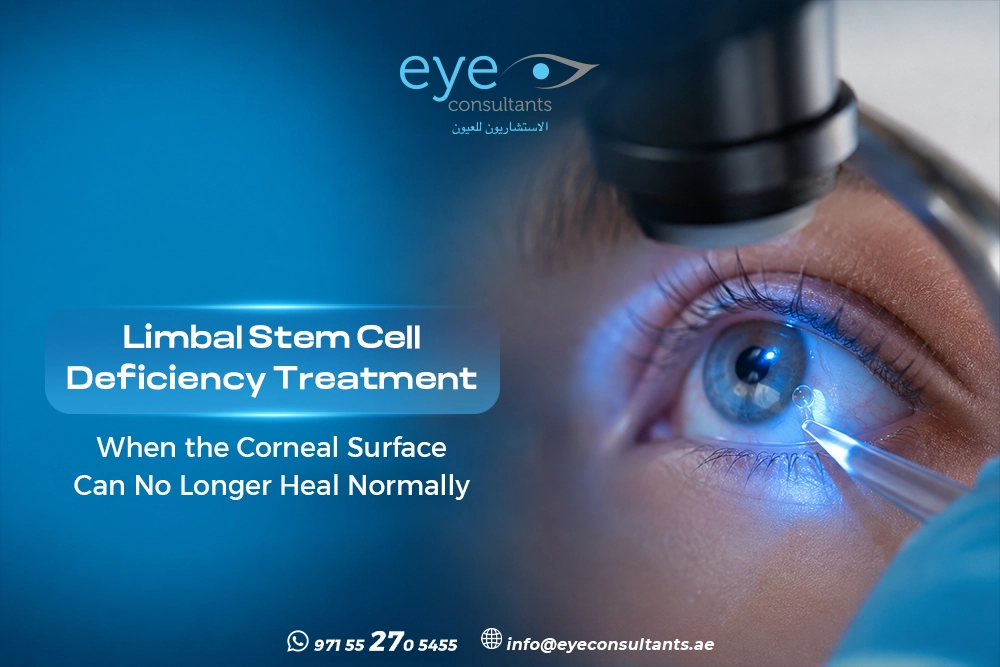
Limbal stem cell deficiency treatment may be needed when the corneal surface cannot renew itself normally after injury, disease, or prolonged irritation. Persistent redness, discomfort, light sensitivity, and blurred vision may occur. Because these symptoms can resemble dry eye or other corneal conditions, specialist assessment is important to identify the cause and evaluate the ocular surface.
What Do Limbal Stem Cells Do and Why Does the Corneal Surface Depend on Them?
Understanding their role helps explain why limbal stem cell deficiency treatment may require more than routine dry-eye care.
Limbal stem cells at the edge of the cornea help renew its epithelial layer. When they are damaged or depleted, healing can become abnormal, with persistent epithelial changes, inflammation, or conjunctival tissue growing onto the cornea.
What Causes Limbal Stem Cell Deficiency?
The cause is important when planning limbal stem cell deficiency treatment. Potential causes include:
- Chemical or thermal eye injuries.
- Long-term or poorly tolerated contact lens wear. (Watch this video)
- Previous eye surgery or repeated procedures.
- Chronic inflammatory ocular-surface disease.
- Certain congenital conditions.
Contact lens induced LSCD may occur with prolonged contact lens wear, while severe chemical injuries can damage the limbus and require specialist chemical eye burn treatment.
What Are the Symptoms and How Is LSCD Different From Routine Dry Eye?
Some limbal stem cell deficiency symptoms overlap with dry eye, so examination is important before choosing limbal stem cell deficiency treatment.
Possible findings include:
- Persistent redness and irritation.
- Light sensitivity.
- Blurred or fluctuating vision.
- Recurrent epithelial defects.
- Abnormal blood vessels or conjunctival growth over the cornea.
Unlike routine dry eye, corneal surface failure may produce characteristic epithelial and limbal changes. Diagnosis depends on clinical findings, not symptoms alone.
What Are the Treatment Stages for Limbal Stem Cell Deficiency?
Limbal stem cell deficiency treatment is individualized according to the cause, severity, and stage of limbal damage. Management may initially focus on protecting and stabilizing the ocular surface.
Depending on the assessment, options may include:
- Lubrication and supportive ocular-surface care.
- Management of associated inflammation or dry eye.
- Changes in contact lens use when appropriate.
- Protective or specialty lenses in selected cases.
- Amniotic membrane transplantation when suitable.
- Removal of abnormal tissue or reconstructive procedures in advanced cases.
The appropriate plan is determined after corneal assessment, and outcomes vary between patients.
When May Limbal Stem Cell Transplantation Be Considered?
In advanced or persistent cases, limbal stem cell deficiency treatment may involve tissue-based reconstruction when surface measures are insufficient.
A limbal stem cell transplant may be considered according to the cause, whether one or both eyes are affected, disease stage, and remaining healthy limbal tissue. Depending on the case, tissue may come from the patient’s healthy eye, a donor, or cultivated cells.
Why Choose Eye Consultants Center?
Managing complex corneal conditions requires accurate diagnosis and specialist care. Eye Consultants Center provides specialized corneal care in Dubai, supported by consultant ophthalmologists with more than 30 years of clinical experience.
The center offers:
- Advanced corneal and ocular-surface examinations.
- Personalized treatment and follow-up plans.
- Specialist care for complex corneal conditions.
- A comprehensive approach to diagnosis and patient care.
If you have persistent eye irritation, blurred vision, or a history of chemical injury, prolonged contact lens use, or previous eye surgery, a specialist corneal assessment can help identify the cause and determine the appropriate next step. (Watch also)
Book your appointment at Eye Consultants Dubai for a comprehensive corneal assessment tailored to your condition.
Contact us:
or visit Al Razi Building 64, Block C, 1st Floor, Unit 1017 – Dubai Healthcare City – Dubai – United Arab Emirates.
Working Hours:
Monday to Thursday and Saturday: 8 AM to 8 PM
Friday: Closed
Sunday: 9 AM to 8 PM
Frequently Asked Questions
Can contact lens wear cause limbal stem cell deficiency?
Yes. Prolonged or poorly tolerated contact lens wear can contribute to limbal damage. However, it is only one possible cause, so a corneal specialist should assess the ocular surface to confirm the cause.
Can LSCD be confused with dry eye?
Yes. Both can cause redness, irritation, light sensitivity, and fluctuating vision. LSCD may also cause abnormal epithelial changes or conjunctival growth over the cornea. Specialist examination helps distinguish the conditions and guide limbal stem cell deficiency treatment.
Does every patient need a transplant?
No. Treatment depends on the cause, severity, and stage. Some patients may need only surface-protective care, while advanced cases may require reconstructive procedures.
Can LSCD affect vision?
Yes. Limbal damage can make the corneal surface irregular or unstable, which may affect visual quality. The impact depends on the extent of corneal and limbal involvement.
Conclusion
Limbal stem cell deficiency treatment depends on identifying the cause, assessing limbal damage, and protecting the corneal surface. Early specialist evaluation can help determine whether surface care, monitoring, or reconstructive treatment should be considered.