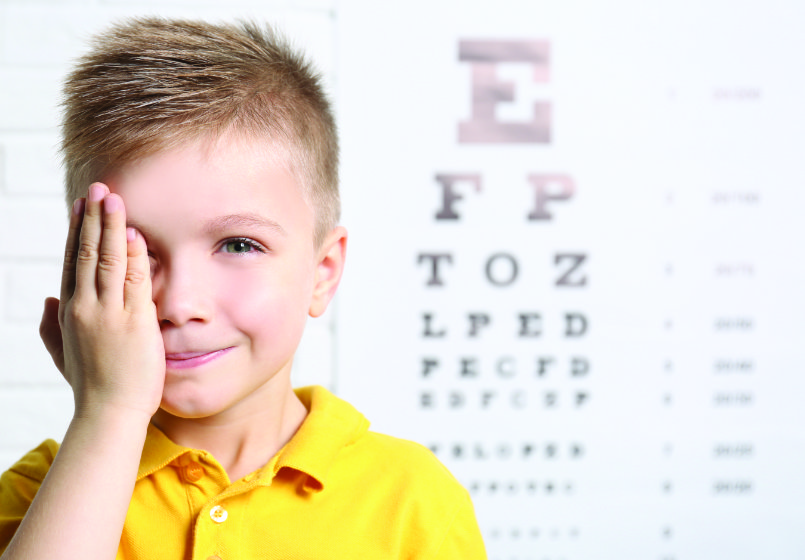



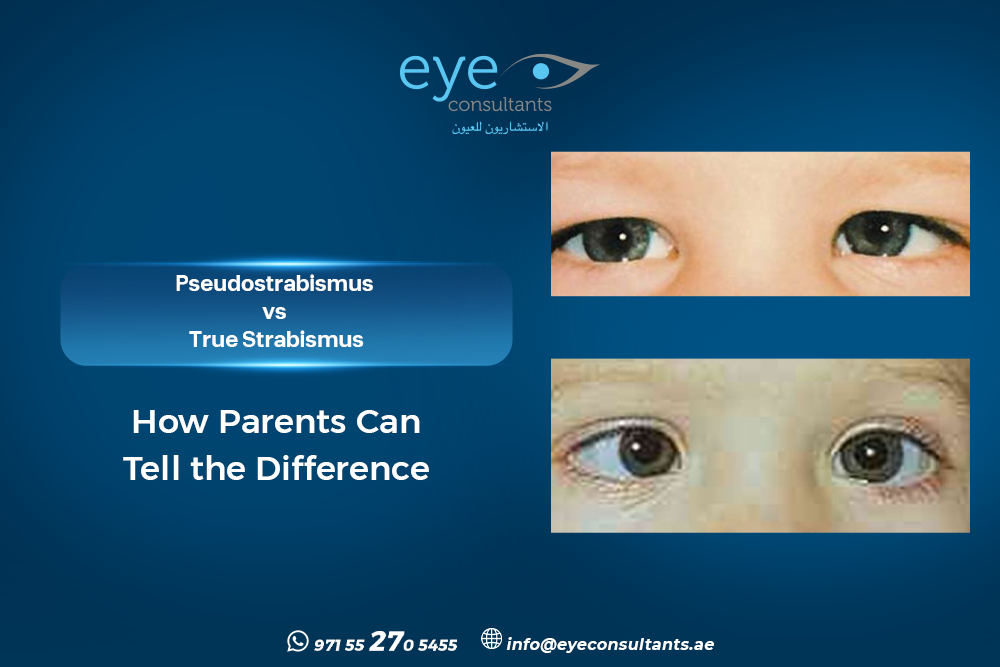
Pseudo strabismus vs true strabismus is a concern many parents face when they notice their baby’s eyes appear crossed in photos or during certain moments of the day. A child may look straight ahead most of the time, but suddenly one eye seems to turn inward or outward. This can be alarming for families who worry about their child’s visual development. In many cases, the appearance is only an illusion caused by facial features.
Pseudo strabismus vs True Strabismus – Understanding the Key Difference
To understand pseudo strabismus vs true strabismus, it is important to know how eye alignment works in children. In pseudo strabismus, the eyes are actually aligned properly, but facial anatomy creates the appearance of a squint.
This appearance is commonly related to:
- A wide or flat nasal bridge in infants
- Prominent skin folds near the inner eyelids (epicanthal folds)
- Certain lighting conditions or camera angles
In contrast, pseudo strabismus vs true strabismus becomes clinically important because true strabismus means that one eye is not pointing in the same direction as the other eye. The eye may turn inward, outward, upward, or downward. This misalignment can interfere with binocular vision if it is not evaluated properly.
Signs That May Help Parents Recognize the Difference
Parents often notice the first signs of eye misalignment at home. Observing patterns over time can provide useful clues when thinking about pseudo strabismus vs true strabismus.
Common signs that may indicate pseudo strabismus include:
- The eyes appear crossed only in photographs
- The appearance changes depending on the lighting or head position
- Both eyes move together when the child looks around
However, warning signs that may suggest pseudo strabismus vs true strabismus require medical attention, including:
- One eye drifting consistently inward or outward
- The child is closing one eye in bright sunlight
- Frequent head tilting or turning while focusing
- Eyes that do not appear to move together
If these signs occur repeatedly, an eye examination is recommended. (Watch this video)
How Pediatric Eye Specialists Diagnose the Condition
Visual appearance alone cannot confirm pseudo strabismus vs true strabismus, which is why pediatric eye specialists perform specific diagnostic tests.
During a pediatric eye consultation, doctors may evaluate:
- The corneal light reflex, which checks whether light reflects symmetrically from both eyes
- The cover test, used to detect hidden eye deviations
- Refraction testing to identify refractive errors
- Binocular vision and depth perception
- Overall eye health and structure
These assessments help determine whether the eyes are truly misaligned or if the appearance is only related to facial features. Accurate diagnosis is essential when evaluating pseudo strabismus vs true strabismus, especially in young children whose visual system is still developing.
Why Early Evaluation Matters
When discussing pseudo strabismus vs true strabismus, timing is important. Many infants appear to have crossed eyes during early development because facial structures are still forming. As the nasal bridge grows and facial proportions change, the appearance of pseudo strabismus often disappears naturally.
However, true strabismus does not resolve simply with growth. If left untreated, it may affect:
- Binocular vision
- Depth perception
- Visual development
- Eye coordination
For this reason, pediatric ophthalmologists recommend evaluation whenever parents remain unsure about pseudo strabismus vs true strabismus, especially if the eye deviation appears constant or persistent after the first few months of life.
Why Choose Eye Consultants Center?
Choosing the right clinic is an important step when evaluating pseudo strabismus vs true strabismus in children.
Eye Consultants Center in Dubai offers specialized pediatric eye services designed to diagnose and manage childhood eye conditions with precision and care.
Key advantages include:
- 14 years of experience providing ophthalmology services in Dubai
- Doctors with more than 30 years of expertise in eye care and surgical treatments
- Dedicated Squint and Pediatric Consultation services
- Advanced diagnostic technologies for accurate pediatric eye examination
- A highly trained team focused on patient comfort and child-friendly care
- Modern facilities following international ophthalmology standards
If you notice your child’s eyes appearing crossed, drifting, or behaving differently during focus, a professional assessment can provide clarity and reassurance. (Watch this video)
Schedule a Squint and Pediatric Consultation with the Consultants at Eye Consultants Center to evaluate your child’s eye alignment and visual development.
Call us:
or visit Al Razi Building 64, Block C, 1st Floor, Unit 1017 – Dubai Healthcare City – Dubai – United Arab Emirates.
Frequently Asked Questions
Can pseudo strabismus become real strabismus?
Pseudo strabismus itself does not cause eye misalignment. However, a child who appears to have pseudo strabismus may still develop strabismus later, which is why regular monitoring can be helpful.
Is pseudo strabismus common in infants?
Yes. Many babies appear to have crossed eyes during early infancy due to facial anatomy. The appearance usually improves as the nasal bridge develops.
When should parents see an eye specialist?
Parents should consult a pediatric ophthalmologist if the eye deviation appears constant, persists beyond early infancy, or is accompanied by head tilting, eye closing, or visual complaints.
Understanding pseudo strabismus vs true strabismus helps parents respond with confidence when they notice changes in their child’s eye alignment. While some children only have the appearance of crossed eyes due to facial features, a pediatric eye evaluation can confirm whether the eyes are properly aligned and ensure healthy visual development.