


Retinal vein occlusion treatment may be needed when vision suddenly becomes blurred, distorted, or reduced in one eye. A blocked retinal vein can cause bleeding, reduced blood flow, and macular swelling. The treatment depends on the type of occlusion, retinal swelling, and possible complications.
Retinal vein occlusion treatment – What is retinal vein occlusion and why can vision change suddenly?
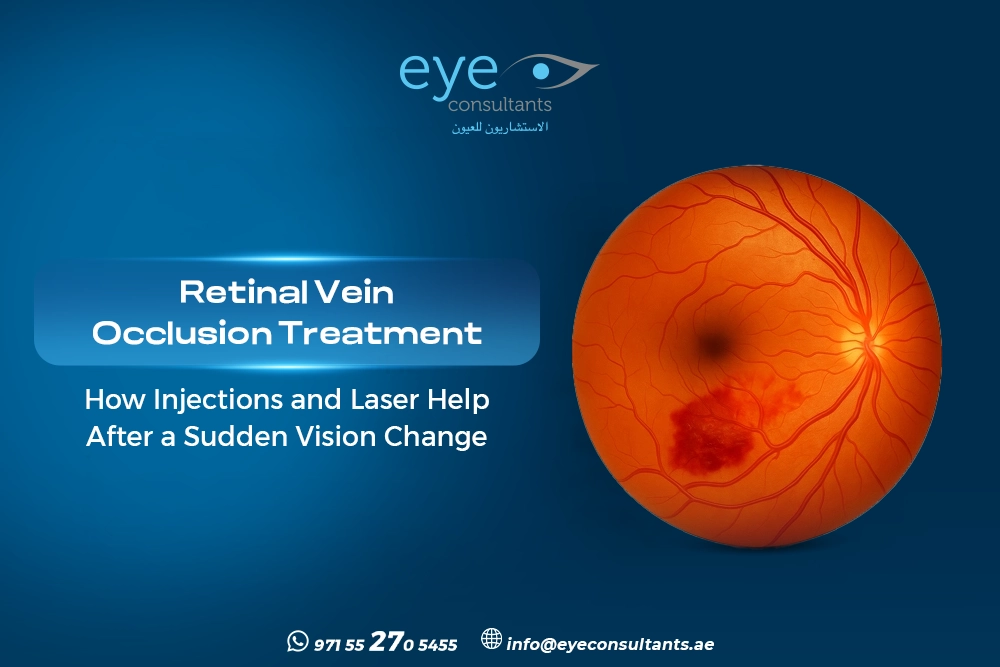
Retinal vein occlusion (RVO) occurs when a vein carrying blood away from the retina becomes blocked. This can cause blood and fluid to leak from retinal vessels, leading to retinal bleeding and swelling.
The two main forms are:
- Branch retinal vein occlusion (BRVO): affects one of the smaller retinal veins.
- Central retinal vein occlusion (CRVO): affects the main retinal vein.
Vision changes can range from mild blurring to more significant loss, particularly when the macula is affected. (Watch this video)
BRVO vs CRVO – How does the location affect risk and treatment?
The location of the blockage can influence how much of the retina is affected and which complications need to be monitored.
With BRVO, the changes usually involve a specific area of the retina. CRVO can affect a larger retinal area and may carry a higher risk of retinal ischemia and abnormal blood vessel growth. Both types can cause macular edema.
Therefore, retinal vein occlusion treatment is individualized according to
- Type and extent of the occlusion.
- Degree of macular swelling.
- Retinal blood flow.
- Visual function.
- Presence of abnormal blood vessels or other complications.
OCT, fundus photography, and angiography used in diagnosis
A detailed retinal examination helps determine what is happening inside the eye and whether treatment is needed.
The ophthalmologist may use
- OCT: to detect and monitor macular swelling.
- Fundus photography: to document retinal bleeding and other changes.
- Fluorescein angiography: when more information about leakage or retinal circulation is needed.
These tests help the retina specialist assess the condition and monitor changes over time.
Anti-VEGF injections, laser, and monitoring for complications
Retinal vein occlusion treatment focuses on managing complications such as macular edema. Anti-VEGF injections may reduce retinal swelling and help preserve or improve vision, making them an important option in retinal swelling treatment. Some patients may need repeated injections and follow-up.
Retinal laser treatment may be considered in selected cases, especially when abnormal blood vessels or certain BRVO complications develop.
Regular monitoring is important because RVO may lead to:
- Persistent macular edema.
- Retinal ischemia.
- Abnormal blood vessel growth.
- Vitreous bleeding.
- Neovascular glaucoma.
Blood pressure, diabetes, glaucoma, and systemic risk coordination
Retinal vein occlusion treatment should also consider factors that may increase the risk of retinal vascular disease. Conditions such as high blood pressure, diabetes, glaucoma, and other vascular risk factors may be relevant.
Depending on the patient’s medical history, the ophthalmologist may recommend coordination with the appropriate physician to assess and manage these factors.
This may include:
- Blood pressure assessment.
- Diabetes and blood sugar management.
- Cardiovascular risk evaluation.
- Glaucoma assessment when appropriate.
- Review of other relevant medical conditions. (Watch also)
Why Choose Eye Consultants Center?
Eye Consultants Center in Dubai provides specialized vitreoretinal care, including assessment and treatment planning for retinal vein occlusion. Its vitreoretinal service includes retinal vein occlusion among the conditions managed by the retina department, with treatment and post-treatment care.
Patients benefit from:
- Specialized vitreoretinal assessment.
- Advanced retinal imaging and examination.
- Individualized treatment planning.
- Experienced retinal specialists.
- Follow-up after treatment.
- A convenient Dubai Healthcare City location.
If you notice a sudden change in one eye, a timely retinal assessment can help determine the cause and next step.
Book your retinal evaluation at Eye Consultants Center with our vitreoretinal specialists.
Contact us
or visit Al Razi Building 64, Block C, 1st Floor, Unit 1017 – Dubai Healthcare City – Dubai – United Arab Emirates.
Working Hours
Monday to Thursday and Saturday: 8 AM to 8 PM
Friday: Closed
Sunday: 9 AM to 8 PM
FAQ’S
When is retinal vein occlusion treatment needed?
It depends on the type of occlusion, vision changes, macular edema, and retinal complications. A retina specialist determines the appropriate approach after examination and imaging.
Do anti-VEGF injections cure retinal vein occlusion?
No. They do not remove the blockage but can help reduce macular edema. Some patients may need repeated injections and follow-up.
Is laser used for every retinal vein occlusion?
No. Laser is used selectively based on retinal findings and complications. Anti-VEGF treatment is commonly used for macular edema.
Can retinal vein occlusion affect vision permanently?
It can cause lasting vision changes, especially when macular damage or retinal ischemia occurs. Outcomes vary between patients.
Conclusion
Retinal vein occlusion treatment depends on the type of blockage, macular swelling, retinal circulation, and associated complications. OCT and other retinal imaging can help guide treatment and ongoing monitoring.