


Xanthelasma removal is often considered when yellow patches appear on the eyelids and gradually become more noticeable. While many people view these plaques as a cosmetic concern, they may also indicate underlying cholesterol abnormalities in some individuals. The appropriate treatment depends on a careful medical evaluation, the size and location of the plaques, and the patient’s overall health. Understanding when removal is cosmetic and when further medical assessment is needed is the first step toward making an informed decision.
What Is Xanthelasma removal and Why Do Yellow Eyelid Plaques Appear?
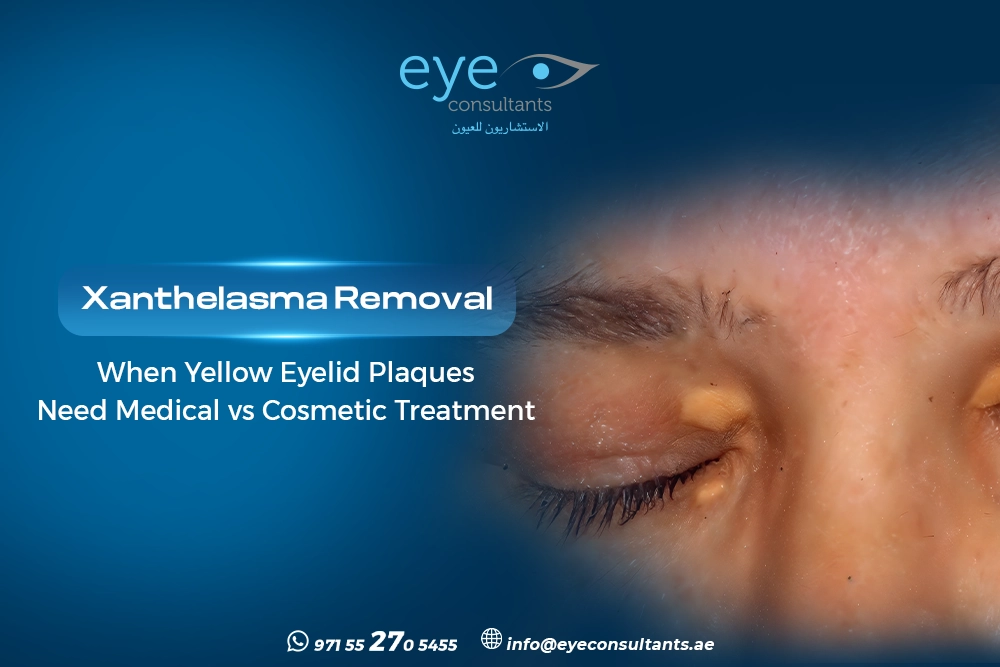
Xanthelasma removal is usually considered after confirming that the yellow patches are xanthelasma rather than another eyelid condition. Xanthelasma consists of soft, yellow cholesterol deposits on the eyelids that commonly develop near the inner corners of the upper or lower eyelids.
Although the exact cause varies, contributing factors may include:
- Aging.
- Elevated cholesterol or lipid disorders.
- Diabetes or metabolic conditions. (Watch this)
- Family history.
- Normal cholesterol levels in some individuals.
Not everyone with yellow cholesterol deposits on eyelids has abnormal cholesterol levels, making a thorough medical assessment important before planning treatment.
When Do Eyelid Deposits Suggest Cholesterol Evaluation as Well as Removal?
Because xanthelasma can sometimes be associated with systemic health conditions, removal alone may not be the only consideration.
An ophthalmologist may recommend additional evaluation if:
- The plaques appear at a relatively young age.
- Multiple or rapidly enlarging plaques are present.
- There is a personal or family history of high cholesterol or cardiovascular disease.
- Other cardiovascular risk factors exist.
Evaluating overall health alongside xanthelasma eyelid treatment helps ensure that both the cosmetic concern and any underlying medical issues are appropriately addressed. (Watch this video)
Treatment Options Used by Oculoplastic Surgeons and How the Right Choice Is Made
Selecting the most appropriate xanthelasma removal technique depends on individual clinical findings rather than a single standard approach. The most suitable approach for eyelid plaque removal is determined after evaluating the size, depth, location of the plaques, and the overall condition of the eyelids.
Possible treatment options may include:
| Treatment option | When it may be considered |
| Surgical excision | Larger or well-defined plaques |
| Laser treatment | Selected superficial lesions |
| Radiofrequency or other tissue-removal techniques | Depending on plaque characteristics |
| Observation | Small plaques when removal is not currently desired |
The choice depends on factors such as:
- Plaque size and depth.
- Eyelid anatomy.
- Skin quality.
- Cosmetic expectations.
- Overall medical assessment.
An oculoplastic surgeon recommends the most suitable option after a detailed examination.
Healing Time, Scar Expectations, and Return to Normal Activities
Recovery varies according to the treatment technique and the extent of the procedure.
Patients may generally expect:
- Mild swelling or bruising during the first few days.
- Gradual healing over several weeks.
- Follow-up visits to monitor recovery.
- Scar appearance that typically improves over time.
Because the eyelid skin heals differently from person to person, scar visibility and recovery timelines vary. The treating surgeon provides individualized postoperative instructions based on each case.
Can Xanthelasma Come Back and How Is Recurrence Risk Reduced?
Even after successful xanthelasma removal, recurrence remains possible.
The likelihood of xanthelasma recurrence depends on several factors, including:
- Individual cholesterol metabolism.
- Underlying lipid disorders.
- Family history.
- Size and extent of the original lesions.
Although recurrence cannot always be prevented, managing cardiovascular risk factors and attending regular follow-up appointments may help reduce future risk. Treatment decisions should always be guided by clinical evaluation.
Why Choose Eye Consultants?
Managing eyelid conditions requires both cosmetic precision and medical expertise. At Eye Consultants Center, patients benefit from:
- More than 14 years of experience in ophthalmology.
- A team of consultant ophthalmologists with over 30 years of combined clinical experience across multiple subspecialties.
- Dedicated oculoplastic services for functional and cosmetic eyelid conditions.
- Advanced diagnostic equipment for comprehensive eyelid assessment.
- Personalized treatment planning based on detailed clinical evaluation.
- Ongoing follow-up focused on both medical safety and aesthetic outcomes.
Schedule Your Oculoplastic Consultation
If you have noticed persistent yellow eyelid plaques or are considering xanthelasma removal, a specialist assessment can determine whether treatment is primarily cosmetic or whether further medical evaluation is recommended. (Watch this)
Contact us
or visit Al Razi Building 64, Block C, 1st Floor, Unit 1017 – Dubai Healthcare City – Dubai – United Arab Emirates.
Working Hours:
Monday to Thursday and Saturday: 8 AM to 8 PM
Friday: Closed
Sunday: 9 AM to 8 PM
Frequently Asked Questions about Xanthelasma removal
Is xanthelasma always related to high cholesterol?
Not always. Some patients with xanthelasma have normal cholesterol levels, while others may have lipid abnormalities or additional cardiovascular risk factors. A medical evaluation helps determine whether cholesterol testing or further assessment is appropriate.
Is xanthelasma removal considered cosmetic or medical?
It may be either, depending on the individual case. Some patients seek treatment for cosmetic reasons, while others require medical evaluation because the plaques could be associated with underlying lipid disorders or other health conditions.
Can xanthelasma return after treatment?
Yes. Xanthelasma recurrence is possible even after successful treatment. The likelihood varies between individuals and depends on factors such as cholesterol metabolism, family history, and underlying medical conditions.
Will xanthelasma removal leave a scar?
Healing depends on the treatment method, lesion size, and individual skin characteristics. Modern oculoplastic techniques aim to minimize visible scarring, but outcomes differ from one patient to another and are discussed during consultation.
Should I see an ophthalmologist or a dermatologist for xanthelasma?
Because these plaques develop on the delicate eyelid tissues, evaluation by an ophthalmologist with expertise in oculoplastic surgery can help determine the correct diagnosis, assess eyelid function, and recommend the most appropriate treatment approach.
Conclusion
xanthelasma removal is not simply about improving appearance. A thorough examination helps distinguish cosmetic concerns from conditions that may benefit from additional medical evaluation. Early assessment allows the most appropriate treatment plan to be developed while preserving both eyelid health and cosmetic outcomes.