


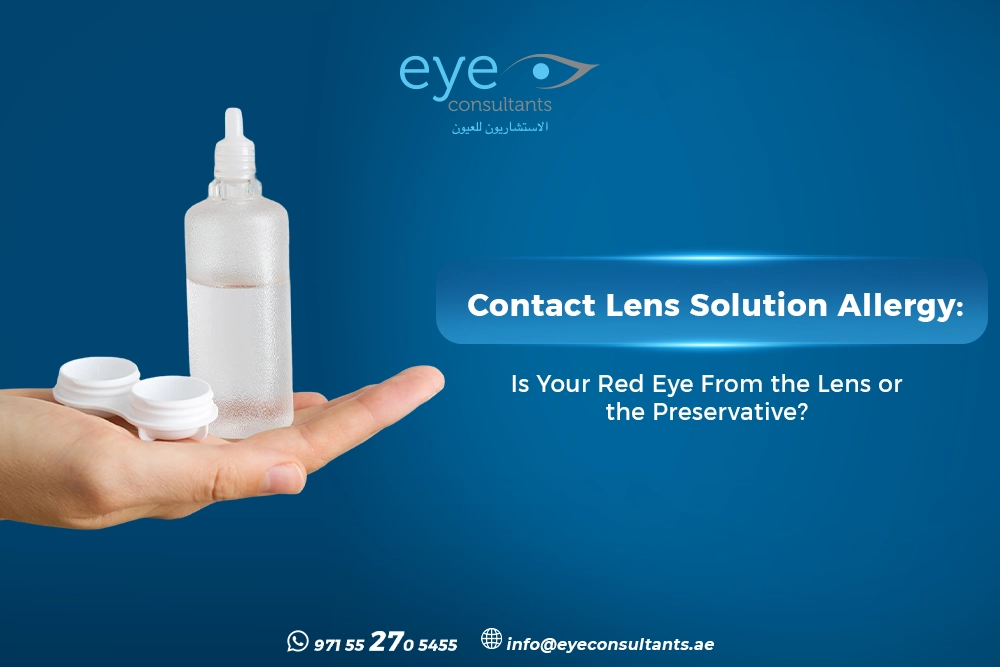
Contact lens solution allergy can cause redness, burning, itching, and discomfort, but not every reaction means the solution is the problem. Similar symptoms may result from dry eye, poor lens fit, lens deposits, or other ocular-surface conditions. Identifying the actual cause helps determine whether the lens, solution, or wearing routine needs to change.
How Contact Lens Solution Allergy Can Trigger Irritation or Allergic Responses
Contact lens solution allergy may occur when the eye reacts to an ingredient or preservative in a lens-care product. Repeated exposure can lead to irritation or preservative sensitivity in some contact lens wearers.
Common symptoms may include
- Redness and burning
- Itching or stinging
- Excessive tearing
- Foreign-body sensation
- Discomfort while wearing lenses
However, contact lens solution allergy cannot be confirmed from redness alone. The ophthalmologist needs to assess the eye, contact lens, solution, tear film, and ocular surface together. (Watch this video)
Distinguishing Allergy From Infection, Dry Eye, and Poor Lens Fit
Not every case of red eyes from contact lenses is caused by contact lens solution allergy. Similar symptoms can occur because of:
- Dry eye and tear-film instability
- Poor lens fit causing mechanical irritation
- Lens deposits
- Allergic reactions
- Corneal infection
Infection requires particular attention because symptoms can include significant pain, light sensitivity, discharge, or sudden blurred vision. If these symptoms occur, lenses should be removed and prompt medical assessment should be sought.
Symptoms That Mean Lenses Should Be Stopped Until Reviewed
If contact lens solution allergy is suspected, continuing to wear the lenses may increase irritation and make it more difficult to identify the cause.
Remove the lenses and seek an eye examination if you experience:
- Persistent or increasing redness
- Significant eye pain
- New light sensitivity
- Sudden or worsening blurred vision
- Unusual discharge
- Irritation that continues after removing the lenses
Persistent contact lens intolerance can also be a reason to have the lenses and ocular surface professionally assessed.
Daily Disposables, Hydrogen Peroxide Systems, and Specialty-Lens Alternatives
For some patients with contact lens solution allergy, changing the lens-care routine may be considered after examining the eye.
Possible options include:
- Daily disposable lenses: Single-use lenses that do not require overnight storage or repeated solution exposure.
- Hydrogen peroxide systems: An alternative lens-care system that must be used correctly and completely neutralized before the lens is placed on the eye.
- Specialty lenses: May be considered for selected corneal or vision conditions.
The appropriate option depends on the prescription, lens type, ocular surface, and individual tolerance. (Watch also)
When to Suspect Giant Papillary Conjunctivitis or Deeper Ocular-Surface Disease
Persistent symptoms do not always indicate contact lens solution allergy. Giant papillary conjunctivitis can also affect some contact lens wearers and may cause itching, redness, mucus, and reduced tolerance for lenses.
Other possible contributors include:
- Dry-eye disease
- Ocular allergies
- Meibomian gland dysfunction
- Corneal-surface problems
- Lens deposits
- Poor lens fit
A complete examination can help determine whether contact lens solution allergy is responsible or whether another ocular-surface problem needs attention.
Why Choose Eye Consultants Center?
Eye Consultants Center has more than 14 years of experience, with a team of ophthalmology specialists who have more than 30 years of experience.
The Contact Lenses & Low Vision service provides individualized assessment based on:
- Contact-lens fit and tolerance
- Ocular-surface condition
- Lens-care habits
- Recurrent redness or irritation
- Appropriate lens options
- Follow-up and monitoring
For patients with suspected contact lens solution allergy, evaluating the lens, solution, and ocular surface together can help identify the underlying problem and guide the next step.
Book your appointment at Eye Consultants Dubai Now.
Contact us
or visit Al Razi Building 64, Block C, 1st Floor, Unit 1017 – Dubai Healthcare City – Dubai – United Arab Emirates.
FAQ’S
How can I know if I have a contact lens solution allergy?
Itching, redness, burning, or discomfort after using a particular solution may suggest a reaction, but these symptoms can have several causes. An eye examination is needed to identify the likely source.
Can contact lens solution cause red eyes?
Yes. Some solutions may cause irritation or an allergic response. However, red eyes can also result from dry eye, poor lens fit, lens deposits, or other ocular-surface conditions.
Should I stop wearing lenses when my eyes become red?
If redness is accompanied by pain, light sensitivity, discharge, or blurred vision, remove the lenses and seek professional eye-care advice.
Can daily disposable lenses help?
They may be suitable for some patients, but the right lens depends on the prescription, corneal condition, ocular surface, and individual tolerance.
When should I have a contact-lens assessment?
Repeated redness, discomfort, or reduced wearing time may indicate that an assessment is needed. An ophthalmologist can determine the underlying cause and recommend the most appropriate lens and care routine.
Conclusion
Contact lens solution allergy is only one possible cause of uncomfortable, red eyes. A comprehensive contact-lens and ocular-surface assessment can help distinguish a solution reaction from other causes and guide a more appropriate lens-care plan.