


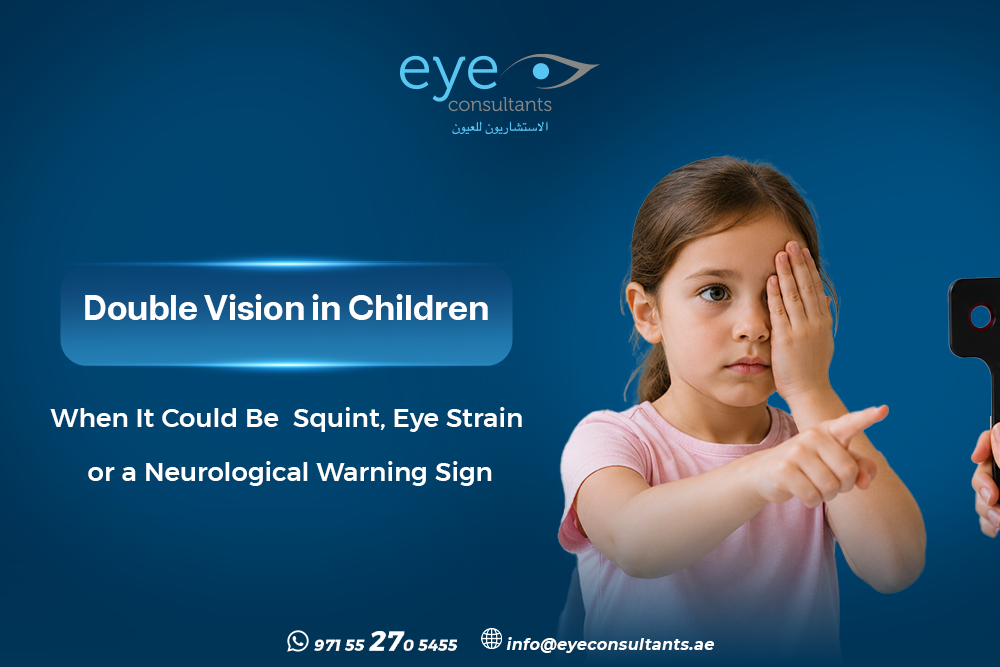
Double vision in children can be difficult to recognize because children may not describe what they see in the same way adults do. A child may close one eye, tilt their head, avoid reading, or complain that objects look unusual. These signs can have several causes, so knowing when they need specialist assessment is important.
How children describe double vision and why they may not use the term
A child seeing double may not say, “I see two images.” Double vision in children can be difficult for young children to describe, so parents may instead notice signs such as:
- Closing or covering one eye.
- Tilting or turning the head.
- Avoiding reading, drawing, or close-up activities.
- Complaining that letters overlap or move.
- Headaches or visual discomfort.
Younger children may find it difficult to explain exactly what they are experiencing. A pediatric eye assessment can help determine whether the problem is related to eye alignment, focusing, or another visual issue. (Watch this video)
Common causes of double vision in children
Double vision in children can happen when the eyes are not working together properly. Possible causes include:
- Squint or strabismus: The eyes may point in different directions, affecting binocular vision.
- Convergence problems: The eyes may have difficulty turning inward during near activities.
- Refractive error: Uncorrected focusing problems can affect clear and comfortable vision.
- Trauma: An injury to the eye or head can affect alignment or eye movement.
- Nerve palsy: Problems affecting the nerves that control eye movement can cause misalignment.
The term pediatric diplopia describes double vision in a child, but identifying the underlying cause is more important than the label itself.
Red flags that need urgent review
Some symptoms require prompt ophthalmic assessment. These may include:
- A sudden squint in child who previously had normal eye alignment.
- New or persistent double vision.
- Eye pain, severe headache, or vomiting.
- A drooping eyelid or new abnormal eye movement.
- Double vision following head or eye trauma.
- Neurological eye symptoms child may show, such as changes in balance, weakness, speech, or coordination.
Double vision in children that begins suddenly, particularly when associated with neurological symptoms or trauma, should not be ignored. The urgency depends on the child’s symptoms and examination findings.
Eye-alignment, eye-movement, and cycloplegic refraction tests
To investigate double vision in children, an ophthalmologist may assess:
- Visual acuity according to the child’s age.
- Eye alignment and binocular function.
- Eye movements in different directions.
- Focusing and refractive error, often using cycloplegic refraction.
- The front and back of the eye when clinically indicated.
An eye muscle exam can help assess whether the eyes are aligned and moving together normally. Additional investigations, such as imaging, are considered based on the clinical findings rather than automatically performed for every child.
Treatment based on cause: glasses, prism, amblyopia therapy, or referral
Treatment for double vision in children depends on what is causing the symptoms. Depending on the assessment, management may include:
- Glasses when a refractive error contributes to the problem.
- Prism in selected cases of binocular misalignment.
- Amblyopia therapy when reduced vision in one eye is present.
- Follow-up and observation when appropriate.
- Further referral or investigation when an eye-movement, neurological, or other underlying condition is suspected.
Because the causes can vary, treatment decisions should follow a complete pediatric ophthalmology assessment.
Why Choose Eye Consultants Dubai?
Eye Consultants Center has more than 14 years of clinical expertise in ophthalmology, with doctors who have more than 30 years of combined experience in eye care and surgical treatments.
Its dedicated pediatric ophthalmology and strabismus service provides:
- Pediatric squint consultation
- Amblyopia therapy
- Pediatric refraction
- Vision therapy
- Pediatric cataract care
- Eye infection assessment
- Advanced diagnostic tools for pediatric eye evaluation
If your child is experiencing double vision or you have noticed a new change in eye alignment or movement, specialist assessment can help identify the possible cause and guide the next steps. (Watch this video)
Book your appointment now at Eye Consultants Dubai for a comprehensive assessment by our team of ophthalmology consultants.
Contact us
or visit Al Razi Building 64, Block C, 1st Floor, Unit 1017 – Dubai Healthcare City – Dubai – United Arab Emirates.
FAQ’S
Can children really have double vision?
Yes. Double vision in children can have different causes, including eye misalignment, focusing problems, trauma, or conditions affecting eye movement. A pediatric ophthalmology assessment can help identify the cause.
Is double vision always caused by squint?
No. Double vision in children can also be associated with refractive problems, convergence difficulties, trauma, or nerve-related eye movement problems.
When should my child have an eye assessment?
New, sudden, persistent, or unexplained visual changes should be assessed, especially when they occur with pain, headache, abnormal eye movement, trauma, or other concerning symptoms.
How is double vision evaluated in children?
The assessment may include visual acuity, eye alignment, eye movement testing, binocular vision assessment, and cycloplegic refraction. Additional investigations are considered when clinically indicated.
Conclusion
Double vision in children should not be dismissed as simple eye strain, especially when it is new or accompanied by changes in eye alignment or other symptoms. Early pediatric ophthalmology assessment can help identify the cause and determine the appropriate next step.