


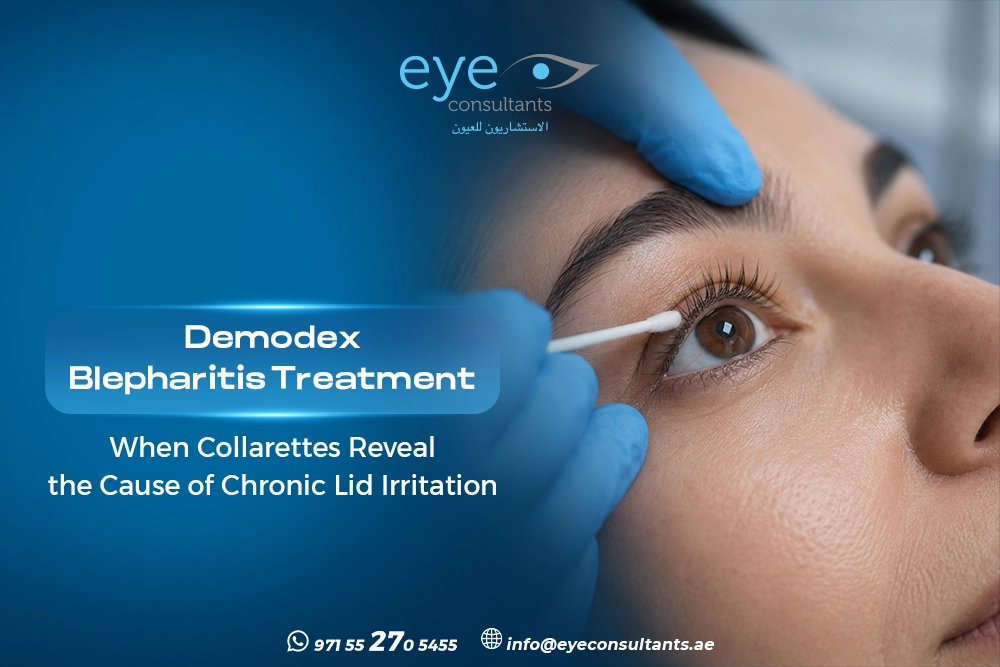
Demodex blepharitis treatment may be the missing answer if your eyelids remain itchy or irritated despite using artificial tears or routine lid cleansers. Tiny mites living around the eyelashes can trigger chronic eyelid inflammation that is often mistaken for ordinary blepharitis or dry eye. Recognizing the characteristic collarettes around the eyelashes helps ophthalmologists identify the underlying cause and recommend the most appropriate treatment before symptoms continue to worsen.
Demodex Blepharitis Treatment – What Is It and Why Can the Mites Become Clinically Significant?
Understanding the cause helps guide Demodex blepharitis treatment.
Demodex eyelash mites naturally live around eyelash follicles, but excessive numbers can lead to eyelid margin inflammation and recurrent blepharitis. During examination, ophthalmologists look for:
- Collarettes on eyelashes.
- Eyelid margin inflammation.
- Recurrent blepharitis.
- Dry eye or meibomian gland dysfunction.
- Ocular surface changes.
Finding the underlying cause allows treatment to target the condition rather than only relieving symptoms. (Watch this video)
Collarettes, Itching, Burning, Redness, and Fluctuating Vision
Symptoms often resemble other eye conditions.
Patients may experience:
- Chronic eyelid itching.
- Burning or stinging.
- Red eyelids.
- Collarettes on eyelashes.
- Fluctuating vision.
- Recurrent blepharitis.
Because these symptoms overlap with allergy and dry eye disease, a specialist examination is essential before starting Demodex blepharitis treatment.
How Does a Slit-Lamp Examination Separate Demodex from Allergy and Meibomian Gland Dysfunction?
Symptoms alone cannot confirm the diagnosis.
A slit-lamp examination allows the ophthalmologist to inspect the eyelashes, eyelid margins, and ocular surface in detail. The presence of collarettes strongly suggests Demodex infestation.
The examination also helps distinguish Demodex from:
- Allergy.
- Meibomian gland dysfunction.
- Dry eye disease.
- Other causes of recurrent blepharitis.
Accurate diagnosis is essential because Demodex blepharitis treatment differs from the management of these conditions.
Treatment Options, Lid Hygiene, and Why Routine Baby Shampoo May Not Be Enough
Successful Demodex blepharitis treatment begins with a comprehensive assessment.
Depending on the examination findings, your ophthalmologist may recommend:
- Medical eyelid hygiene.
- Targeted treatment to reduce Demodex eyelash mites.
- Management of associated dry eye disease.
- Regular follow-up visits.
Although baby shampoo has traditionally been used for eyelid cleaning, it may not effectively eliminate Demodex mites or address the underlying cause. The most suitable treatment depends on clinical evaluation.
Recurrence Prevention and When Dry-Eye Treatment Should Be Added
Long-term improvement requires ongoing care.
Even after symptoms improve, recurrence may occur if associated dry eye disease or eyelid inflammation is not treated. During follow-up, the ophthalmologist monitors tear film stability, eyelid health, and treatment response, adjusting the plan when needed. Combining dry-eye management with Demodex blepharitis treatment often improves long-term comfort and ocular surface health. (Watch this video)
Why Choose Eye Consultants Dubai?
Managing eyelid disease requires experience and precise diagnosis. Eye Consultants Center offers:
- More than 14 years of excellence in ophthalmology.
- Consultant ophthalmologists with over 30 years of clinical experience.
- Advanced slit-lamp and ocular surface assessment.
- Comprehensive dry eye and eyelid disease evaluation.
- Personalized treatment and follow-up plans.
If you have persistent eyelid itching, burning, or recurrent blepharitis, early evaluation can identify the underlying cause and guide the right management.
Book your appointment at Eye Consultants Dubai for a comprehensive eyelid and ocular surface evaluation tailored to your condition.
Contact us:
or visit Al Razi Building 64, Block C, 1st Floor, Unit 1017 – Dubai Healthcare City – Dubai – United Arab Emirates.
Working Hours:
Monday to Thursday and Saturday: 8 AM to 8 PM
Friday: Closed
Sunday: 9 AM to 8 PM
Frequently Asked Questions
Can Demodex blepharitis develop even if I clean my eyelids regularly?
Yes. Good hygiene alone may not eliminate Demodex eyelash mites. If symptoms continue, Demodex blepharitis treatment should begin with a specialist examination to identify the underlying cause.
Are collarettes on the eyelashes a sign of Demodex?
Yes. Collarettes on eyelashes are considered one of the most characteristic clinical signs of Demodex blepharitis and are identified during a slit-lamp examination.
Is baby shampoo enough to treat Demodex blepharitis?
Not always. It may remove debris but does not specifically target Demodex mites. Treatment should be based on the ophthalmologist’s assessment.
Can Demodex blepharitis affect vision?
It usually does not cause permanent vision loss, but tear film instability may lead to fluctuating vision and discomfort. Early Demodex blepharitis treatment and specialist evaluation help improve ocular surface health.
Why does Demodex blepharitis keep coming back?
Recurrence may occur if associated dry eye disease or eyelid inflammation is left untreated. Regular follow-up helps reduce flare-ups and monitor progress.
Conclusion
Demodex blepharitis treatment focuses on addressing the underlying cause of chronic eyelid irritation rather than masking symptoms. Early diagnosis, slit-lamp examination, and personalized care can improve eyelid health and reduce recurrence. If you notice persistent itching, collarettes on your eyelashes, or repeated episodes of blepharitis, schedule a comprehensive eye assessment without delay.