



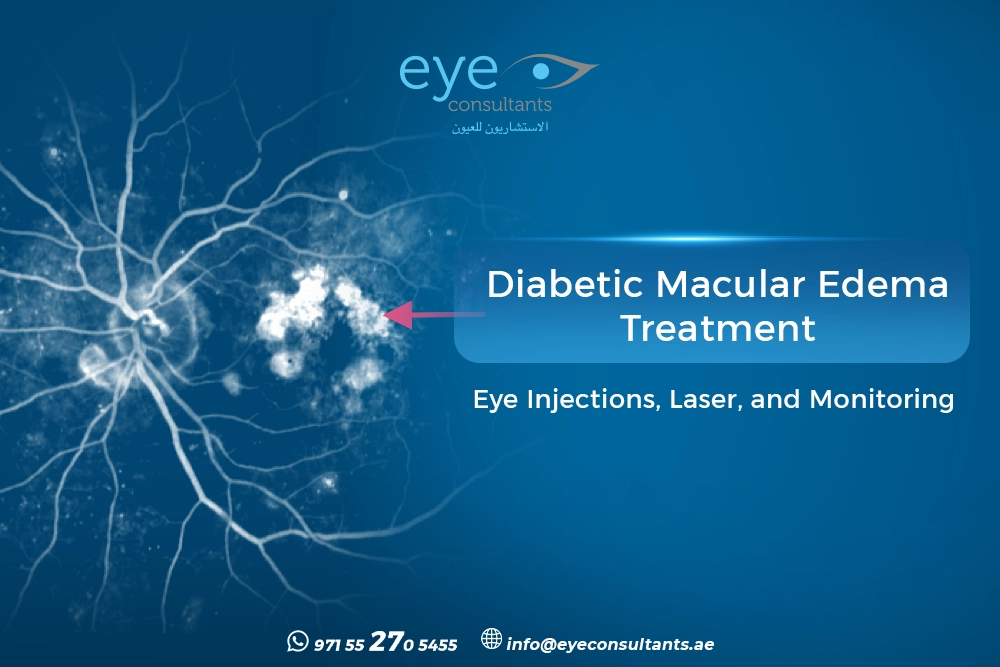
Diabetic macular edema treatment becomes urgent when reading begins to blur, straight lines appear distorted, and everyday visual tasks suddenly require more effort. Many people living with diabetes notice these changes gradually and assume they are temporary. In reality, swelling in the macula can silently threaten central vision if not evaluated early. Modern retinal care focuses on early diagnosis, precise monitoring, and targeted treatment strategies that help protect vision and maintain quality of life.
Diabetic Macular Edema Treatment: Why Early Action Matters
Vision problems related to diabetes often begin quietly, which makes timely retinal evaluation essential.
Diabetic macular edema occurs when high blood sugar damages the tiny blood vessels in the retina. Over time, weakened vessels begin leaking fluid into the macula, the central area of the retina responsible for sharp and detailed vision.
Common signs may include:
- Blurred or fluctuating central vision
- Difficulty reading or focusing on digital screens
- Distorted lines or shapes
- Colors appearing faded or less vivid
When these symptoms appear, diabetic macular edema treatment should be evaluated promptly. Early diagnosis allows the retina specialist to determine the level of swelling and choose the most appropriate management plan before vision becomes significantly affected. (Watch this video)
Eye Injections for Diabetic Macular Edema Treatment
One of the most commonly recommended approaches in modern retinal care involves targeted eye injections.
These injections work by reducing abnormal fluid leakage from damaged retinal blood vessels. By controlling this leakage, the swelling in the macula can gradually decrease, helping stabilize or improve central vision.(Watch this video)
Key aspects of injection-based treatment include:
- A carefully planned schedule based on retinal imaging
- Ongoing evaluation of response to treatment
- Adjustments in timing depending on how the retina improves
Because diabetic retinal disease can change over time, diabetic macular edema treatment often requires a structured treatment plan rather than a single session. Regular follow-up allows the retina specialist to monitor progress and maintain retinal stability.
When Laser Treatment May Be Recommended
Although injections are frequently used, laser therapy still plays an important role in specific cases.
Laser treatment may be considered when retinal imaging shows certain leakage patterns that respond well to targeted laser application. The procedure aims to stabilize weakened retinal blood vessels and reduce further fluid accumulation.
Laser treatment may help:
- Slow the progression of retinal swelling
- Support long-term retinal stability
- Complement other forms of diabetic macular edema treatment
Treatment decisions are always guided by detailed retinal imaging and clinical evaluation to ensure the most appropriate approach for each patient. (Watch this video)
Monitoring: A Critical Part of Diabetic Macular Edema Treatment
Successful retinal care depends on continuous evaluation, not only procedures.
Advanced diagnostic imaging such as Optical Coherence Tomography (OCT) allows specialists to measure retinal swelling with high precision. These scans help track subtle changes in the macula and guide treatment adjustments.
Monitoring typically includes:
- Regular retinal examinations
- OCT imaging to evaluate macular thickness
- Vision testing to assess functional improvement
- Ongoing assessment of diabetes control
Consistent follow-up ensures that diabetic macular edema treatment remains aligned with the patient’s current retinal condition and helps prevent unexpected vision deterioration.
Why Choose Eye Consultants Center?
Selecting the right ophthalmology center plays a key role in achieving the best outcomes for retinal care.
Eye Consultants Center has built a strong reputation in Dubai through more than 14 years of specialized ophthalmology services, supported by a medical team with over 30 years of clinical experience across complex eye conditions.
The center provides comprehensive care for a wide range of conditions including:
- Cataract treatment
- Glaucoma management
- Diabetic Eye Disease
- Retinal disorders
- Corneal diseases
Advanced refractive surgeries such as SMILE, Femto LASIK, Contoura Vision, and PRK
Patients benefit from:
- Modern diagnostic technology
- Advanced treatment techniques
- A highly trained ophthalmology team
- A supportive and patient-focused environment
For expert retinal evaluation and advanced eye care, schedule a consultation at Eye Consultants Center:
Call us:
or visit Al Razi Building 64, Block C, 1st Floor, Unit 1017 – Dubai Healthcare City – Dubai – United Arab Emirates.
Early consultation can make a significant difference in preserving vision and managing diabetic retinal disease effectively
Frequently Asked Questions
What causes diabetic macular edema?
Diabetic macular edema develops when long-term diabetes damages retinal blood vessels, causing fluid to leak into the macula and affect central vision.
Is diabetic macular edema treatment always the same for every patient?
No. Treatment depends on retinal findings, severity of swelling, and the patient’s response to therapy. Some patients require injections, others may benefit from laser treatment or careful monitoring.
How is diabetic macular edema diagnosed?
Diagnosis typically involves a detailed eye examination and OCT imaging, which allows specialists to measure swelling in the macula with high accuracy.
Can early diabetic macular edema treatment help protect vision?
Early detection allows specialists to control retinal swelling sooner, which may help maintain clearer vision and prevent further retinal damage.
Protecting vision in patients with diabetes begins with early evaluation and a carefully structured treatment strategy. Diabetic macular edema treatment combines accurate diagnosis, modern therapeutic techniques, and continuous monitoring to manage retinal swelling and support long-term visual health.