


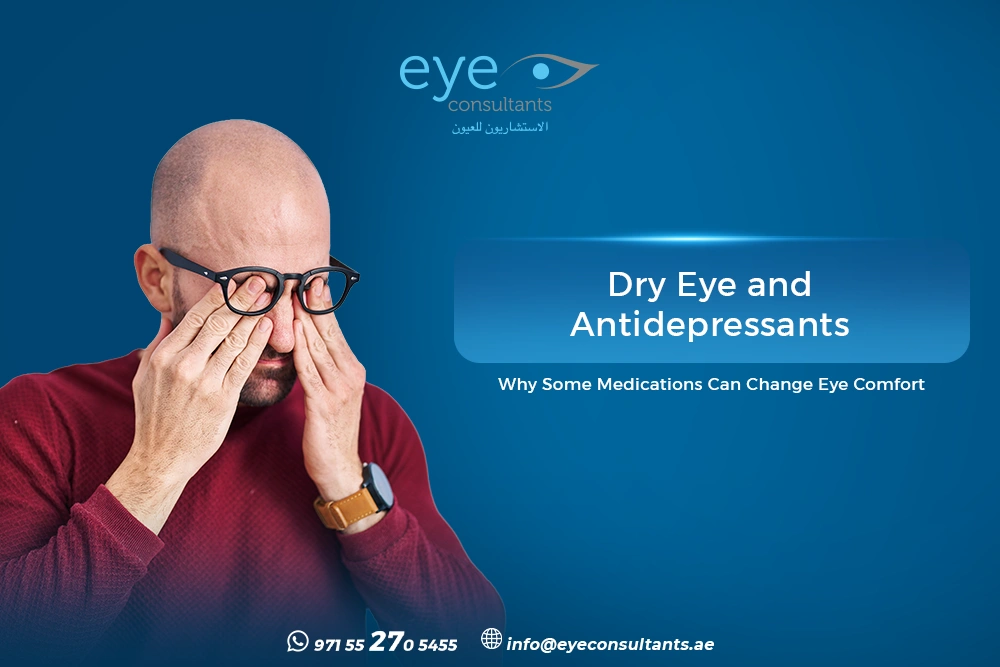
Dry eye and antidepressants may be connected when patients notice persistent burning, irritation, or fluctuating vision after starting medication. If artificial tears provide only temporary relief, medication effects may be one factor worth investigating. However, dry eye can have several causes, and symptoms alone cannot establish the reason. Understanding the possible connection helps patients seek appropriate eye care without interrupting essential treatment.
How Dry Eye and Antidepressants Can Influence Ocular Comfort
Dry eye and antidepressants may be associated because certain antidepressants can affect tear production or the stability of the tear film. Tears lubricate the eye, protect its surface, and support clear vision.
Medication related effects may involve:
- Reduced tear production: Some antidepressants can decrease the amount of tears available to lubricate the eyes.
- Tear film instability: Changes in the tear film may allow tears to evaporate more quickly.
- Ocular surface irritation: Inadequate lubrication can contribute to inflammation and discomfort.
The effects vary depending on the medication and the individual. Not everyone taking antidepressants develops dry eye, and other contributing factors may be present.
What Symptoms Should You Watch For?
When dry eye and antidepressants are potentially connected, symptoms may appear or become more noticeable after starting treatment or changing a dose.
Common symptoms include:
- Burning, stinging, or a gritty sensation.
- Redness or irritation throughout the day.
- Blurred vision that temporarily improves after blinking.
- Sensitivity to light or discomfort during prolonged screen use.
- Excessive watering, which can occur as a response to irritation.
Keeping track of when symptoms began and how they change can help your ophthalmologist assess possible medication related effects.
Why You Should Never Stop Medication Yourself
If you suspect dry eye and antidepressants are connected, do not stop taking your medication or change its dose without consulting the prescribing doctor.
Abruptly stopping some antidepressants can cause discontinuation symptoms or a return of the condition being treated.
Instead, consider these steps:
- Record when your eye symptoms started.
- Note any recent medication changes.
- Tell your prescribing doctor about persistent discomfort.
- Arrange an eye examination to assess the ocular surface.
Your prescribing doctor can determine whether a medication adjustment is appropriate, considering your overall health and treatment needs.
What Other Causes Should Be Ruled Out?
Medication may contribute to dry eye, but it is not the only possible explanation. Identifying other causes helps avoid attributing every symptom to antidepressant use.
Your ophthalmologist may consider:
- Environmental factors: Air conditioning, dry weather, and prolonged screen use.
- Eyelid conditions: Inflammation or meibomian gland dysfunction affecting the oily layer of tears.
- Other medications: Antihistamines and certain other medicines may contribute to dryness.
- Underlying health conditions: Some systemic conditions can affect tear production or ocular surface health.
More than one factor may contribute to symptoms at the same time.
How Is the Ocular Surface Assessed?
When dry eye and antidepressants may be related, a structured eye examination can help determine whether dry eye is present and identify contributing factors.
Assessment may include:
- Evaluating tear quantity and tear film stability.
- Examining the cornea and conjunctiva for signs of irritation.
- Checking eyelid margins and meibomian gland function.
- Reviewing symptom patterns and relevant medication history.
These findings help guide an individualised management plan rather than relying on symptoms alone.
Why Choose Eye Consultants Center?
Persistent dry eye requires more than temporary symptom relief. At Eye Consultants Center in Dubai Healthcare City, we focus on identifying the factors affecting your tear film and ocular surface to support informed, personalised care.
- A Diagnostic Approach Beyond Symptoms: We assess tear film stability, tear production, eyelid health, and ocular surface changes to help identify the underlying contributors to dryness.
- Care That Considers the Bigger Picture: Your symptoms, medical history, and relevant medication use help inform the assessment, particularly when dryness develops after a treatment change.
- Management Guided by Clinical Findings: Our ophthalmologists use examination results to determine appropriate options for relieving discomfort and protecting ocular surface health.
- Continuity of Care: Follow up allows us to review your response to management and reassess persistent symptoms when necessary.
Persistent dry eye deserves the right attention. Book a consultation at Eye Consultants Center to identify possible causes and explore the most appropriate care for your eyes.
Contact us
or visit Al Razi Building 64, Block C, 1st Floor, Unit 1017 – Dubai Healthcare City – Dubai – United Arab Emirates.
Frequently Asked Questions
Can antidepressants cause dry eyes?
Yes. Some antidepressants may affect tear production or ocular surface comfort, although the effects vary between individuals and medications.
Will dry eye improve if I stop taking antidepressants?
Do not stop medication without medical advice. Your prescribing doctor can discuss suitable options while an ophthalmologist evaluates your eye symptoms.
Can artificial tears help?
Artificial tears may relieve dryness, but persistent symptoms may require further assessment to identify the underlying cause.
When should I see an ophthalmologist?
Arrange an examination if dryness, burning, or blurred vision persists. Eye pain, significant light sensitivity, or sudden vision changes require urgent assessment.
Conclusion
Dry eye and antidepressants may be linked in some patients, but medication is only one possible contributing factor. A comprehensive eye examination can help identify the cause and guide appropriate care.