



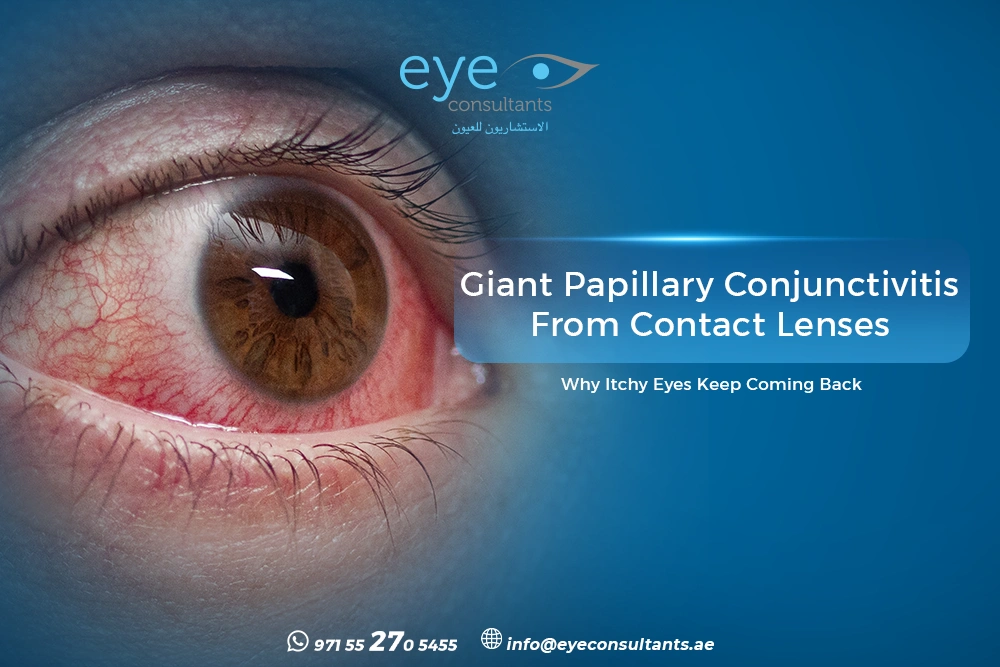
Giant papillary conjunctivitis from contact lenses can turn comfortable lens wear into a frustrating experience. Persistent itching, redness, thick mucus, and the feeling that your lenses no longer fit properly may indicate inflammation beneath the upper eyelids. Although these symptoms can resemble an allergy or dry eye, identifying the underlying cause is essential to restoring comfort and determining whether contact lens wear can safely resume.
✆ WhatsappWhat Is Giant Papillary Conjunctivitis From Contact Lenses?
Giant papillary conjunctivitis from contact lenses is an inflammatory condition affecting the conjunctiva, the membrane lining the inside of the eyelids. It causes raised bumps called papillae, usually beneath the upper eyelid.
The condition may develop through repeated friction and an inflammatory response to deposits on contact lenses.
Common characteristics include:
- Eyelid inflammation: Raised papillae develop on the inner surface of the upper eyelid.
- Lens intolerance: Contact lenses become increasingly uncomfortable during wear.
- Mucus production: Thick or stringy discharge may accumulate around the eyes.
Although the condition is not usually contagious, persistent inflammation can affect lens tolerance and, in some cases, the ocular surface.
Why Can Contact Lenses Trigger This Condition?
Giant papillary conjunctivitis from contact lenses can develop when mechanical irritation combines with an inflammatory response to deposits accumulating on the lens surface.
Several factors may contribute:
- Protein and debris deposits: Accumulated material can irritate the conjunctiva.
- Extended wearing time: Wearing lenses for longer than recommended may increase irritation.
- Inadequate lens hygiene: Improper cleaning and replacement can encourage deposit accumulation.
- Poor lens fit: Excessive movement or friction may aggravate the inner eyelid.
Following the recommended wearing schedule and replacement routine can reduce avoidable irritation, but persistent symptoms still require assessment.
What Symptoms Should You Watch For?
Giant papillary conjunctivitis from contact lenses may cause symptoms that gradually worsen, particularly after several hours of lens wear.
Look for these warning signs:
- Persistent itching: An urge to rub the eyes, especially after removing lenses.
- Redness and irritation: Eyes appear bloodshot or feel uncomfortable.
- Mucus discharge: Thick or stringy mucus collects around the eyes.
- Blurred vision: Deposits or mucus interfere with clear vision.
- Reduced lens tolerance: Lenses feel uncomfortable or move excessively when blinking.
These symptoms are not specific to this condition, so an eye examination is necessary to establish the diagnosis.
How Does It Differ From Infection and Dry Eye?
Several eye conditions can cause redness, itching, and discomfort, but their underlying causes differ.
- Allergic conjunctivitis: Often causes intense itching and may accompany other allergy symptoms.
- Dry eye disease: Commonly causes burning, grittiness, and fluctuating vision.
- Eye infections: May cause redness, discharge, pain, or light sensitivity, depending on the infection.
Contact lens wearers experiencing eye pain, light sensitivity, or sudden blurred vision should remove their lenses and seek urgent eye assessment.
When Changing Lens Type Is Not Enough
Changing contact lenses alone may not resolve giant papillary conjunctivitis from contact lenses if inflammation remains active.
Management may involve:
- Temporarily stopping contact lens wear until the inflammation improves.
- Reviewing lens hygiene, replacement schedules, and lens fit.
- Considering a different lens material or replacement schedule when appropriate.
- Using prescribed medication when recommended by an ophthalmologist.
Do not restart lens wear or use medicated eye drops without appropriate professional guidance.
When Should You Seek an Eye Assessment?
Persistent itching, redness, or mucus in contact lens wearers may indicate ongoing inflammation that requires professional evaluation. Giant papillary conjunctivitis from contact lenses can become difficult to manage if the underlying triggers remain unaddressed.
Seek an ophthalmic assessment if you experience:
- Persistent itching: Especially when symptoms continue after removing your contact lenses.
- Recurring mucus: Thick or stringy discharge that repeatedly accumulates around the eyes.
- Reduced lens tolerance: Contact lenses become increasingly uncomfortable or move excessively when blinking.
- Ongoing redness: Irritation that persists despite following your usual lens care routine.
An ophthalmologist can examine the inner eyelids, assess the ocular surface, and determine whether the symptoms are caused by this condition or another eye problem. Eye pain, light sensitivity, or sudden blurred vision requires urgent assessment.
Why Choose Eye Consultants Center?
At Eye Consultants Center in Dubai Healthcare City, we focus on identifying the cause of persistent contact lens discomfort and developing an appropriate management plan based on each patient’s clinical findings. (Watch this video)
- Detailed Eye and Eyelid Examination: Assessment of the inner eyelids and ocular surface helps identify signs of inflammation and distinguish this condition from other causes of irritation.
- Personalised Contact Lens Assessment: Lens fit, material, wearing habits, and replacement schedules can be reviewed to identify factors contributing to recurring symptoms.
- Evidence Based Clinical Management: Recommendations are guided by the examination findings and may include temporary lens discontinuation, changes to lens use, or appropriate medical treatment.
- Guidance on Returning to Lens Wear: Patients receive advice on when contact lens use may be resumed safely, depending on the severity of inflammation and their response to management.
Book your consultation at Eye Consultants Center in Dubai Healthcare City for a professional assessment of your eye health and contact lens concerns.
Contact us
or visit Al Razi Building 64, Block C, 1st Floor, Unit 1017 – Dubai Healthcare City – Dubai – United Arab Emirates.
Frequently Asked Questions
Is giant papillary conjunctivitis contagious?
No. It is an inflammatory condition rather than a contagious infection.
Can I continue wearing contact lenses if my eyes are itchy?
It is best to stop wearing them until you have been assessed, particularly if itching is persistent or accompanied by redness or mucus.
How is giant papillary conjunctivitis diagnosed?
An ophthalmologist examines the eyes and turns the upper eyelids outward to look for characteristic raised papillae.
Can the condition return after treatment?
Yes. Symptoms may recur if contributing factors, such as lens deposits, poor fit, or excessive wearing time, are not addressed.
When should I seek urgent medical attention?
Seek urgent assessment for eye pain, light sensitivity, or sudden blurred vision, especially when wearing contact lenses.
Conclusion
Giant papillary conjunctivitis from contact lenses can make everyday lens wear uncomfortable, but identifying the cause is an important step towards appropriate management. Persistent itching, redness, and mucus should not be dismissed as normal contact lens discomfort.
✆ Whatsapp