


A child can pass a basic vision screening and still have an eye condition that affects learning, confidence, coordination, or long-term visual development. Knowing when children need eye exams helps parents act before a treatable concern becomes harder to correct. Children rarely have the words to explain that vision is blurred, doubled, uncomfortable, or different between their two eyes. Often, their behavior provides the first clue.
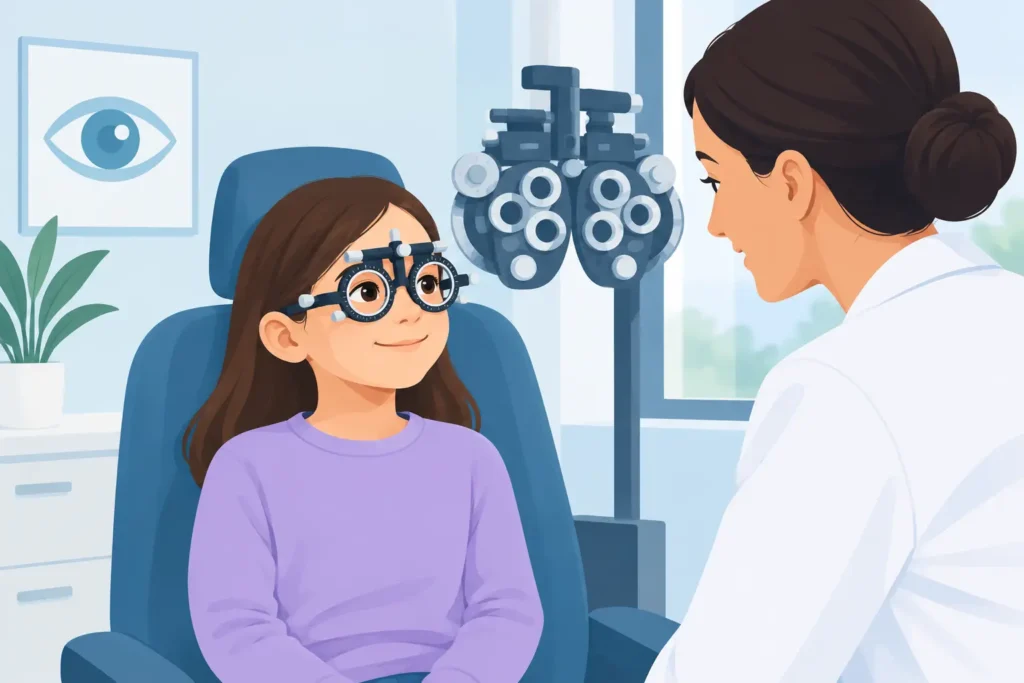
A comprehensive eye examination assesses more than whether a child can read letters on a chart. It evaluates how clearly each eye sees, how the eyes work together, whether the eyes are aligned, and whether the internal and external eye structures are healthy. For young children, specialist ophthalmologists use age-appropriate methods that do not depend solely on reading or verbal responses.
When Children Need Eye Exams by Age
Eye care begins earlier than many families expect. Newborns should have their eyes checked as part of routine neonatal care, including an assessment for a normal red reflex. This simple observation can help identify uncommon but serious concerns, including congenital cataract, that require prompt specialist attention.
During infancy, the eyes should appear aligned most of the time and should follow faces, lights, and moving objects. An examination during the first year is especially worthwhile if a parent notices an eye turning in or out, poor visual attention, frequent tearing, unusual light sensitivity, or a difference in the appearance of the pupils.
Between ages 3 and 5, a comprehensive examination can identify refractive errors, eye misalignment, and amblyopia, often called “lazy eye.” This is a critical developmental period. A child’s brain is learning how to use visual information from both eyes, and a persistent difference in focus or alignment can cause the brain to favor one eye. Early treatment may include glasses, patching, or other ophthalmologist-directed care, depending on the cause.
Before starting school, children should also have their vision assessed, particularly if they have not had a full eye examination before. Classroom demands can expose difficulties that were not obvious at home, such as reduced distance vision, focusing problems, or trouble coordinating the eyes for close work.
After that, the right interval depends on the child. Children who wear glasses, have myopia, have had eye surgery, or are being monitored for a pediatric eye condition may need more frequent follow-up. A child with no concerns may still benefit from periodic professional assessment as visual needs change with growth.
Signs Your Child May Need an Eye Exam Sooner
Parents do not need to wait for a scheduled screening if something seems unusual. Some signs are subtle and may be mistaken for inattention, tiredness, or reluctance to read. Others are more noticeable.
Consider arranging a pediatric eye examination if your child regularly squints, closes or covers one eye, sits very close to screens, holds books unusually near, or tilts their head to look at objects. These behaviors can occur when a child is trying to sharpen vision or compensate for an alignment problem.
Complaints of headaches, tired eyes, blurred vision, double vision, or words moving on the page also warrant assessment. Headaches in children have many possible causes, and not every headache is related to the eyes. However, when headaches occur with reading, schoolwork, or visual tasks, an eye examination can help clarify whether vision or eye coordination plays a role.
School feedback matters as well. A child who loses their place while reading, avoids near work, struggles to copy from the board, or seems to have a shorter attention span for visually demanding tasks may need evaluation. Vision is only one possible factor in learning challenges, but it should not be overlooked.
Other warning signs include frequent eye rubbing, excessive blinking, recurring redness, sensitivity to light, or watering that does not settle. These symptoms may relate to irritation, allergies, dry eye, a need for glasses, or another eye condition. A specialist examination identifies the cause rather than relying on assumptions.
Eye Turns, Unequal Vision, and Amblyopia
An eye that consistently turns inward, outward, upward, or downward should be assessed by a pediatric ophthalmologist. Intermittent crossing can be normal in very young newborns, but persistent or newly noticed misalignment needs attention. Eye turns, also called strabismus, may be present all the time or only appear when a child is tired, unwell, or looking at distant objects.
The key concern is not appearance alone. When the eyes are not working together, a child may develop amblyopia. Amblyopia can also result when one eye is much more farsighted, nearsighted, or astigmatic than the other, even if the eyes look straight. Because children often adapt well, they may not realize one eye sees less clearly.
Treatment is most effective while the visual system is still developing. That does not mean every eye turn or prescription requires the same treatment. The plan depends on the child’s age, visual acuity, eye alignment, refractive error, and the underlying reason for reduced vision. A detailed examination provides the information needed to make that decision safely.
Family History and Medical Factors That Call for Early Care
Some children should be examined earlier or monitored more closely because of their medical history. This includes children born prematurely, particularly those who required neonatal intensive care, as well as children with developmental delays or neurological conditions that may affect visual function.
Family history also matters. Parents should mention childhood cataracts, glaucoma, severe nearsightedness, strabismus, amblyopia, retinal disease, or inherited eye conditions when booking an appointment. A family history does not mean a child will develop the same condition, but it can guide the ophthalmologist’s assessment and follow-up recommendations.
Children with diabetes or conditions requiring medications that may affect the eyes should have care coordinated with their treating physicians and an ophthalmologist. The appropriate monitoring schedule is individual and should be based on the child’s health needs.
Why a Vision Screening Is Not the Same as an Eye Examination
School and pediatric-office screenings are valuable because they identify many children who need further care. They are not, however, a replacement for a full ophthalmic examination. Screenings generally focus on selected aspects of vision and may not detect early eye disease, subtle eye coordination concerns, or a significant difference in prescription between the eyes.
Likewise, passing a screening does not rule out a problem if symptoms persist. A child who is struggling visually deserves a closer look, even when a previous screen was normal. Comprehensive examinations can include testing vision in each eye, evaluating alignment and movement, measuring refractive error, and examining the health of the eye with specialized equipment.
When to Seek Urgent Pediatric Eye Care
Certain changes should be assessed promptly. Seek urgent ophthalmic care for a white, gray, or unusual reflection in the pupil; a sudden or constant new eye turn; eye injury; significant pain; marked redness with light sensitivity; sudden reduction in vision; or swelling around the eye accompanied by fever or difficulty moving the eye.
A child with a chemical splash to the eye needs immediate first-aid rinsing with clean water and urgent medical assessment. Do not attempt to remove an embedded object or use leftover eye drops unless specifically directed by a clinician.
At Eye Consultants Center in Dubai Healthcare City, pediatric eye assessments are designed around a child’s developmental stage and individual concerns. A calm, thorough approach can make the visit more comfortable while giving families clear guidance about next steps.
Contact us
Conclusion
Trust your observations. If your child’s visual behavior has changed, schoolwork has become more difficult, or their eyes simply do not look or feel right, a pediatric eye examination offers reassurance when all is well and timely care when it is needed.