



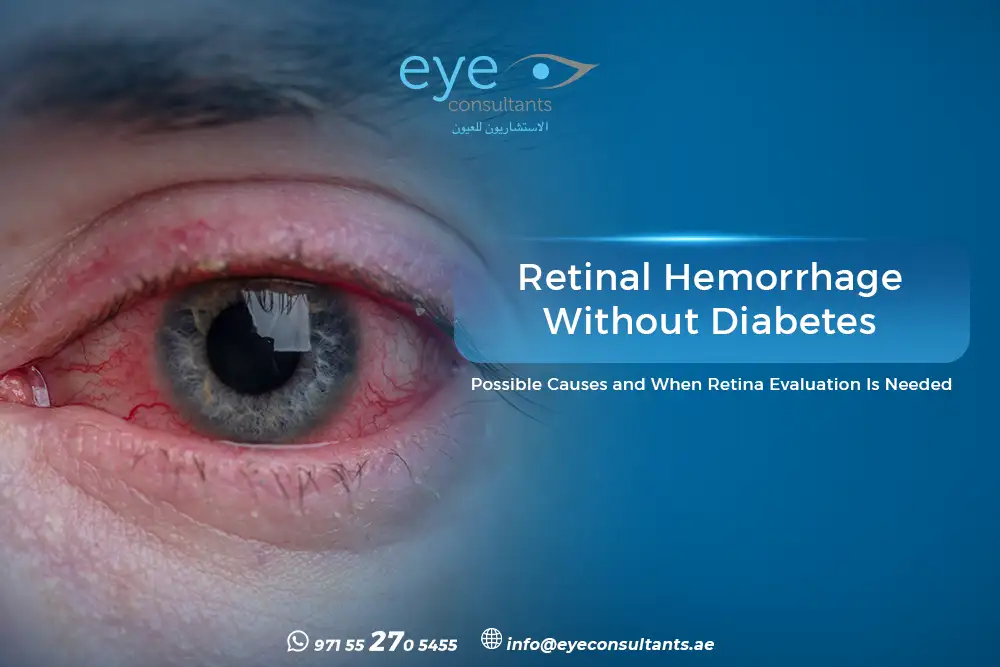
Retinal hemorrhage without diabetes can be an unexpected finding, even in people who have never been diagnosed with a blood sugar disorder. Bleeding inside the retina may be associated with blood vessel changes, high blood pressure, retinal vein occlusion, or other medical conditions. Identifying the underlying cause is essential because the location and extent of bleeding can affect vision and determine whether further investigation or treatment is needed.
What Retinal Hemorrhage Without Diabetes Means
Retinal hemorrhage without diabetes refers to bleeding from blood vessels within the retina, the light sensitive tissue at the back of the eye. The appearance and location of the bleeding can help an ophthalmologist identify its possible cause.
Retinal hemorrhages may appear in different forms:
- Flame shaped hemorrhages: Occur in superficial retinal layers and may be associated with hypertension.
- Dot and blot hemorrhages: Develop within deeper retinal layers and can occur with several retinal vascular conditions.
- Subretinal bleeding: Occurs beneath the retina and may be associated with conditions affecting deeper retinal blood vessels.
The presence of bleeding does not establish a diagnosis on its own. A detailed retinal examination is needed to assess its pattern and significance.
Can Retinal Bleeding Happen Without Diabetes?
Yes. Retinal hemorrhage without diabetes can occur for several reasons, including conditions affecting blood vessels, circulation, or the retina itself.
Possible explanations include:
- High blood pressure, which can damage small retinal blood vessels.
- Retinal vein occlusion, where a blocked retinal vein causes blood to accumulate and leak.
- Eye or head trauma that damages retinal vessels.
- Blood disorders, including certain forms of anemia or clotting abnormalities.
Some patients may have no obvious symptoms, particularly when the bleeding does not affect the central retina. This makes appropriate assessment important, even when vision initially seems normal.
Causes Doctors Investigate
When investigating retinal bleeding causes, ophthalmologists consider the patient’s medical history, examination findings, and associated risk factors.
The assessment may focus on:
- Vascular conditions: Hypertension, retinal vein occlusion, and other retinal vascular disorders.
- Blood related conditions: Anemia, clotting problems, or selected blood disorders.
- Inflammatory conditions: Certain forms of retinal vasculitis can affect blood vessel integrity.
- Local eye problems: Retinal tears, trauma, or other retinal abnormalities may require specific treatment.
The cause cannot always be determined from the appearance of the hemorrhage alone. Additional medical investigations may be recommended when the findings suggest an underlying systemic condition.
Symptoms That Need Urgent Assessment
Retinal hemorrhage without diabetes may cause no noticeable symptoms, but some presentations require prompt evaluation.
Watch for:
- Sudden floaters or a sudden increase in their number.
- Flashes of light or a shadow resembling a curtain across the vision.
- Sudden blurred vision or reduced visual clarity.
- New distortion or a dark area in the central or peripheral visual field.
Sudden visual changes require urgent eye assessment, as they may indicate retinal bleeding, a retinal tear, or another sight threatening condition. (Watch this video)
How OCT and Retinal Imaging Help
A retina specialist assessment helps determine the location, extent, and possible cause of bleeding.
Depending on the findings, investigations may include:
- Dilated retinal examination: Allows direct assessment of the retina and its blood vessels.
- Optical coherence tomography (OCT): Produces detailed retinal images and helps identify swelling or bleeding affecting retinal layers.
- Fluorescein angiography: May be used to evaluate retinal circulation, leakage, or areas of reduced blood flow.
Not every patient requires every test. The choice depends on the clinical examination and suspected cause.
Treatment Depends on the Cause
Treatment for retinal hemorrhage without diabetes depends on the underlying condition, the extent of bleeding, and whether vision is affected.
Management may involve:
- Monitoring selected hemorrhages when appropriate.
- Addressing contributing medical conditions, such as uncontrolled blood pressure.
- Retinal injections or laser treatment for specific conditions when clinically indicated.
- Surgery in selected cases involving complications such as persistent vitreous hemorrhage or retinal detachment.
There is no single treatment suitable for every case. Timely diagnosis helps guide appropriate management.
Why Choose Eye Consultants Center?
- A Team of Senior Retina Specialists: Our vitreoretinal team includes Dr. Ahmed El Khashab, Consultant Ophthalmologist and Vitreoretinal Surgeon, Dr. Ehab N. El-Rayes, with over 25 years of experience, and Dr. Mohamed Awadalla, with over 30 years of clinical and surgical experience. (Watch this video)
- Specialized Care for Complex Retinal Conditions: From retinal hemorrhages and retinal vein occlusion to retinal tears and detachment, our specialists assess each condition and determine the most appropriate care pathway.
- Advanced Retinal Treatment Options: Access specialized retinal evaluation and treatment options, including intravitreal injections, laser therapy, and vitreoretinal surgery when clinically indicated.
- Care Tailored to Your Diagnosis: We focus on identifying the underlying cause of retinal bleeding and developing a treatment plan based on your retinal findings, visual needs, and medical history.
- Comprehensive Care Under One Roof: With multiple ophthalmic subspecialties available at Eye Consultants Center in Dubai Healthcare City, patients can access coordinated eye care when retinal conditions overlap with other eye health concerns.
Your retinal health deserves experienced specialist care. Book your consultation at Eye Consultants Center to receive a thorough assessment and discuss the right next steps for your vision.
Contact us
or visit Al Razi Building 64, Block C, 1st Floor, Unit 1017 – Dubai Healthcare City – Dubai – United Arab Emirates.
Frequently Asked Questions
Can retinal bleeding occur with normal blood sugar levels?
Yes. High blood pressure, retinal vein occlusion, trauma, and certain blood disorders can cause retinal hemorrhage without diabetes.
Does retinal hemorrhage always cause vision loss?
No. Some hemorrhages cause no noticeable symptoms, while others affect vision depending on their location, extent, and underlying cause.
Can retinal hemorrhage resolve on its own?
Some hemorrhages may gradually clear, but the underlying cause still needs assessment. Do not assume that improving symptoms mean the condition is harmless.
When should I see a retina specialist?
Seek urgent assessment for sudden floaters, flashes, a curtain like shadow, or sudden changes in vision.
Conclusion
Retinal hemorrhage without diabetes can result from several underlying conditions, including retinal vascular disorders and high blood pressure. Early evaluation helps identify the cause, assess potential risks to vision, and guide appropriate management.