


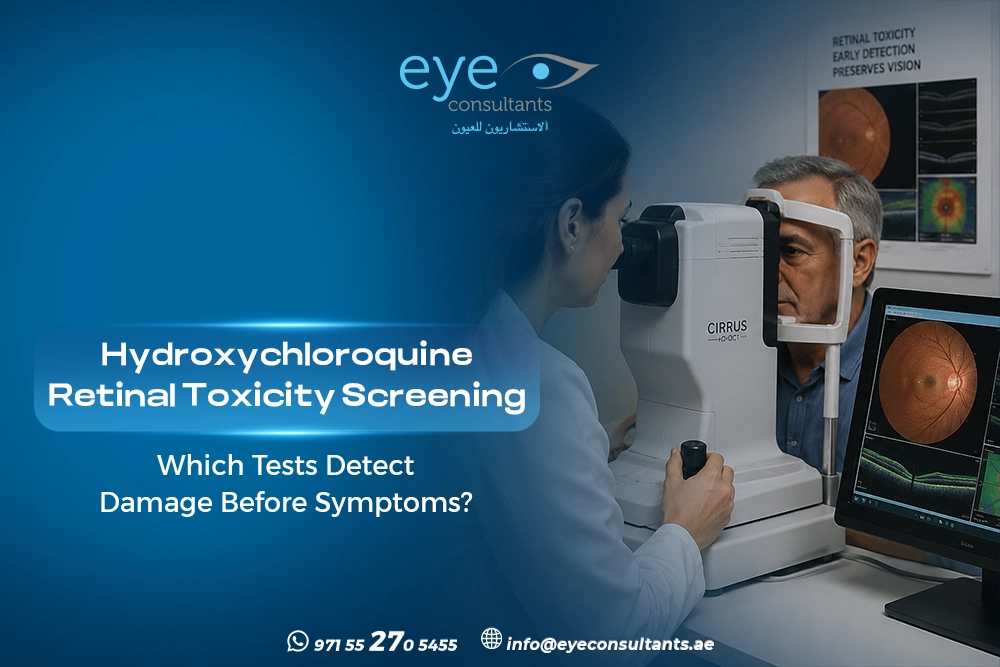
Hydroxychloroquine retinal toxicity screening is important because retinal changes may develop before noticeable vision problems. Early toxicity can be silent, while established retinal damage is generally irreversible. Regular eye assessment and appropriate imaging can help detect suspicious changes before significant visual loss occurs.
Why Does Hydroxychloroquine Retinal Toxicity Screening Matter After Cumulative Exposure?
Hydroxychloroquine retinal toxicity screening focuses on detecting damage to the macula associated with long-term exposure to hydroxychloroquine. The main risk factors are daily dose and duration of treatment, while kidney disease and tamoxifen use can further increase risk.
Early retinal toxicity may cause no symptoms. As it progresses, patients may experience:
- Difficulty reading.
- Blurred or reduced central vision.
- Paracentral blind spots.
- Changes in visual quality or color perception.
This is why symptoms alone should not determine when screening is needed.
Who Needs a Baseline Exam and How Does Risk Affect Follow-Up?
A baseline examination is generally recommended before starting hydroxychloroquine or within the first year of treatment. For patients without major risk factors, annual screening typically begins after five years of use. Earlier monitoring may be appropriate when significant risk factors are present.
Hydroxychloroquine retinal toxicity screening should therefore be tailored to the patient’s treatment history, risk factors, and existing retinal health.
A baseline eye exam hydroxychloroquine assessment also provides a reference for distinguishing pre-existing retinal abnormalities from later changes. (Watch also)
Which Tests Can Detect Early Retinal Changes?
Modern hydroxychloroquine retinal toxicity screening uses complementary tests because no single test can reliably detect every case. Current recommendations emphasize structural retinal imaging, supported by functional testing when appropriate.
The assessment may include:
- OCT for hydroxychloroquine toxicity to examine retinal layers and detect subtle structural changes.
- Fundus autofluorescence to identify changes in the retinal pigment epithelium.
- Automated visual-field testing, such as a visual field 10-2, when clinically appropriate.
- Retinal photography and fundus examination.
- Additional testing in selected uncertain cases.
Eye Consultants Center provides OCT and visual-field testing as part of its ophthalmic investigations.
Why Should Patients Not Stop Hydroxychloroquine Without Medical Advice?
A suspicious retinal toxicity test does not mean that patients should stop their medication independently. Hydroxychloroquine may be important for controlling an underlying systemic condition.
If retinal toxicity is suspected, the ophthalmologist should communicate with the prescribing physician or rheumatologist. This allows the potential ocular risk to be considered alongside the need to control the patient’s systemic disease.
This coordinated approach makes hydroxychloroquine retinal toxicity screening part of long-term medical care rather than an isolated eye examination.
How Do Ophthalmology and Rheumatology Coordinate When Tests Are Suspicious?
When screening findings are unclear, the ophthalmologist reviews the patient’s retinal images, visual-field results, treatment history, and risk factors. Additional testing may be considered when necessary to distinguish medication-related toxicity from another retinal condition.
Patients should provide accurate information about how long they have taken hydroxychloroquine and share previous eye-test results when available. This can help the medical team compare changes over time and make a more informed assessment.
Why Choose Eye Consultants Center?
Accurate retinal screening depends on appropriate imaging and experienced interpretation. Eye Consultants Center provides advanced ophthalmic investigations in Dubai, including OCT, OCT-A, fundus photography, and visual-field testing. The center has more than 14 years of experience, while its doctors bring over 30 years of clinical experience across different ophthalmic specialties.
The medical team includes Dr. Nihal Kenawy, Consultant Ophthalmologist in Medical Retina and Ocular Oncology, with more than 20 years of experience and expertise in advanced retinal imaging. (Watch this video)
If you take hydroxychloroquine, Plaquenil eye screening can help monitor the retina and identify concerning changes before significant symptoms appear.
Book your appointment at Eye Consultants Dubai for a comprehensive retinal assessment tailored to your individual risk profile.
Contact us:
or visit Al Razi Building 64, Block C, 1st Floor, Unit 1017 – Dubai Healthcare City – Dubai – United Arab Emirates.
Working Hours:
Monday to Thursday and Saturday: 8 AM to 8 PM
Friday: Closed
Sunday: 9 AM to 8 PM
FAQ’S About Hydroxychloroquine retinal toxicity screening
Can hydroxychloroquine retinal toxicity develop without symptoms?
Yes. Early toxicity may be completely asymptomatic, which is why regular screening is important even when vision appears normal.
When should screening begin?
A baseline examination is generally recommended before treatment or within the first year. The timing of follow-up depends on treatment duration and individual risk factors.
Is a visual-field test enough?
No. Visual-field testing is generally interpreted alongside structural imaging such as OCT and, when appropriate, fundus autofluorescence.
Can retinal damage from hydroxychloroquine be reversed?
Established retinal toxicity is generally irreversible, which makes early detection particularly important.
Conclusion
Hydroxychloroquine retinal toxicity screening provides a structured way to monitor the retina before noticeable vision loss occurs. Appropriate imaging, functional testing, and specialist follow-up can help identify concerning changes and support coordinated medical decisions.