


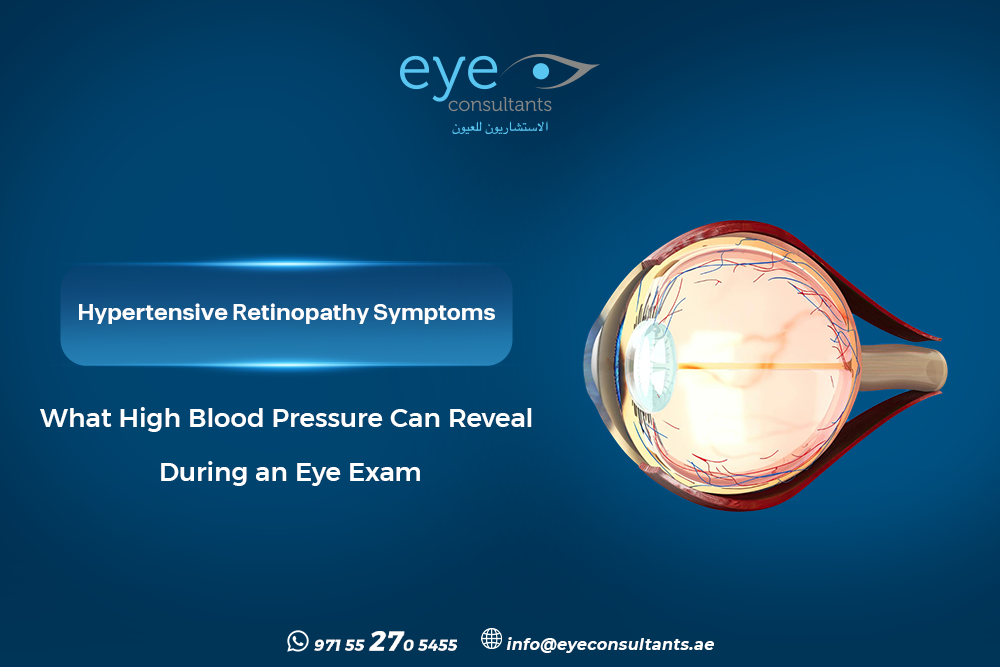
Hypertensive retinopathy symptoms may not appear until high blood pressure has already caused damage to the delicate blood vessels in the retina. Many people with hypertension have no noticeable vision changes, making routine eye examinations an important opportunity to detect retinal damage before it affects sight. By combining a comprehensive retinal examination with advanced imaging, retina specialists can identify early changes, assess their severity, and determine whether further evaluation or follow-up is needed.
✆ WhatsappHypertensive Retinopathy Symptoms: What Do They Mean and How Does High Blood Pressure Damage the Retina?
Before discussing symptoms, it is important to understand how high blood pressure affects the eye.
Hypertensive retinopathy symptoms develop when persistently elevated blood pressure damages the tiny blood vessels that supply the retina. Over time, these vessels may become narrowed, thickened, or leaky, reducing the retina’s ability to function normally.
During evaluation, retina specialists assess:
- The degree of retinal changes from hypertension.
- The condition of the retinal blood vessels.
- Whether swelling or bleeding is present.
- The severity and duration of hypertension.
- Associated retinal findings on imaging.
Although high blood pressure eye damage may develop gradually, early detection allows ophthalmologists to monitor retinal health and coordinate care with the patient’s primary physician or cardiologist when appropriate. (Watch this video)
Why Do Some Patients Have No Hypertensive Retinopathy Symptoms Until the Disease Is Advanced?
One of the challenges of hypertensive retinopathy is that many patients remain symptom-free during the early stages.
Because retinal blood vessel changes often develop slowly, vision may remain normal even while damage is progressing. As the condition becomes more advanced, patients may begin to notice:
- Blurred vision with hypertension.
- Reduced visual clarity.
- Areas of missing vision in severe cases.
- Difficulty reading or focusing.
- Sudden visual changes when blood pressure rises significantly.
Since similar symptoms may occur with many retinal disorders, a specialist examination is essential to determine whether hypertensive retinopathy symptoms are responsible.
What Eye Signs Do Doctors Look for During a Retina Examination?
Symptoms alone cannot determine the extent of retinal damage.
A retina exam for high blood pressure allows ophthalmologists to identify characteristic changes that may not yet affect vision.
The examination may reveal:
- Narrowing of retinal arteries.
- Retinal hemorrhages.
- Cotton wool spots.
- Swelling of the retina or optic nerve in severe cases.
- Other retinal changes from hypertension.
To evaluate these findings accurately, retina specialists may use:
- Optical Coherence Tomography (OCT).
- Retinal photography.
- Comprehensive dilated retinal examination.
- Additional imaging when clinically indicated.
These investigations help determine disease severity and guide appropriate follow-up.
When Do Hypertensive Retinopathy Symptoms and Blurred Vision Require Urgent Evaluation Rather Than Routine Follow-Up?
Not every episode of blurred vision is caused by hypertension, but certain situations require prompt medical assessment. In some cases, hypertensive retinopathy symptoms may indicate significant retinal involvement that requires timely evaluation.
Patients should seek urgent ophthalmic evaluation if they experience:
- Sudden or rapidly worsening blurred vision.
- Vision loss in one or both eyes.
- New blind spots.
- Visual distortion.
- Symptoms accompanied by severely elevated blood pressure.
The appropriate management depends on the underlying cause. Retina specialists determine whether hypertensive retinopathy symptoms are related to high blood pressure eye damage, another retinal condition, or a different eye disease requiring immediate attention. (Watch this video)
How Can Retinal Findings Support Broader Cardiovascular Risk Assessment?
The retina provides a unique view of the body’s small blood vessels without invasive procedures.
When retina specialists identify hypertensive retinopathy symptoms or retinal changes associated with hypertension, these findings may support a broader discussion about cardiovascular health alongside the patient’s treating physician.
Retinal evaluation may help:
- Document retinal vascular damage.
- Monitor progression over time.
- Support overall cardiovascular risk assessment.
- Reinforce the importance of blood pressure control.
- Guide long-term ophthalmic follow-up.
Eye examination findings are considered alongside the patient’s medical history and systemic evaluation rather than in isolation.
Why Choose Eye Consultants Dubai?
Managing vitreoretinal disease requires experienced retina specialists and advanced diagnostic technology. At Eye Consultants Center, patients benefit from:
- More than 14 years of excellence in ophthalmology.
- Consultant ophthalmologists with over 30 years of combined clinical experience.
- Dedicated vitreoretinal specialists experienced in diagnosing retinal diseases associated with systemic conditions such as hypertension.
- Advanced retinal imaging, including OCT, retinal photography, and comprehensive diagnostic investigations.
- Individualized assessment and follow-up plans tailored to each patient’s clinical findings.
If you have hypertension, experience blurred vision with hypertension, or have been advised to undergo a retina exam for high blood pressure, an early retinal evaluation can help detect changes before they threaten long-term vision. (Watch this video)
Book Your Retina Assessment Today
Contact us:
or visit Al Razi Building 64, Block C, 1st Floor, Unit 1017 – Dubai Healthcare City – Dubai – United Arab Emirates.
Working Hours:
Monday to Thursday and Saturday: 8 AM to 8 PM
Friday: Closed
Sunday: 9 AM to 8 PM
Frequently Asked Questions
Can hypertensive retinopathy develop without symptoms?
Yes. Early hypertensive retinopathy symptoms may be absent because retinal blood vessel changes often occur gradually. Many patients are diagnosed during routine retinal examinations before they notice any visual problems.
Does high blood pressure always cause permanent eye damage?
Not necessarily. The extent of high blood pressure eye damage depends on blood pressure control, the duration of hypertension, and the severity of retinal involvement. Early detection allows retina specialists to monitor changes and recommend appropriate follow-up.
Why is a retina examination important for patients with hypertension?
A retina exam for high blood pressure allows ophthalmologists to identify retinal vascular changes that may not produce symptoms. The findings help assess retinal health and support decisions regarding ophthalmic monitoring.
Is blurred vision always caused by hypertensive retinopathy?
No. Blurred vision with hypertension may result from hypertensive retinopathy or from other retinal, optic nerve, or ocular conditions. A comprehensive retinal examination and appropriate imaging are necessary to establish the correct diagnosis.
Can hypertensive retinopathy improve?
The outcome varies depending on blood pressure control and the extent of retinal damage. Retina specialists evaluate each case individually and determine the appropriate monitoring or management plan based on clinical findings.
Conclusion
Hypertensive retinopathy symptoms should never be ignored, even when vision appears normal. A comprehensive retinal examination can detect retinal changes from hypertension early, helping retina specialists assess retinal health and support appropriate long-term follow-up. If you have high blood pressure or experience new visual symptoms, scheduling a prompt retinal evaluation is an important step toward protecting your vision.
✆ Whatsapp