


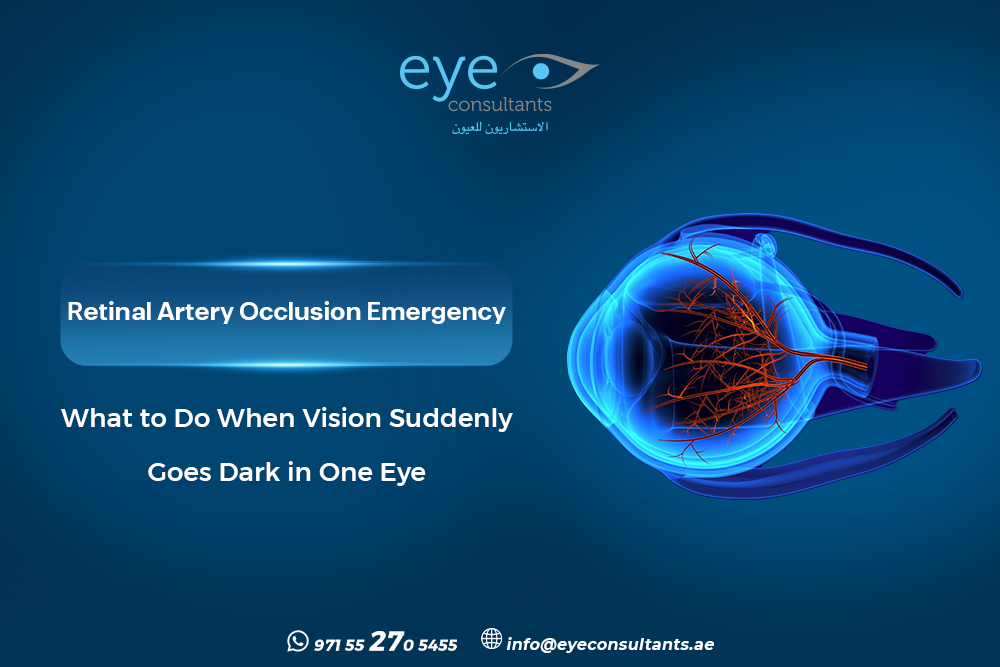
Retinal artery occlusion emergency is a true medical emergency that can cause sudden painless vision loss in one eye within minutes. Often described as an eye stroke emergency, it requires immediate evaluation because delayed care may increase the risk of permanent retinal damage and may also indicate an underlying vascular condition. Early retinal assessment helps specialists determine the diagnosis and coordinate appropriate emergency care.
✆ WhatsappRetinal Artery Occlusion Emergency: Why Is It Considered an Eye-Stroke Emergency?
The retina depends on a constant blood supply to function normally.
A retinal artery occlusion emergency occurs when blood flow to the retina is suddenly blocked, depriving retinal tissue of oxygen. Because retinal cells are highly sensitive to ischemia, urgent evaluation is essential.
Retina specialists assess:
- The location of the blockage.
- The severity of retinal damage.
- Whether the central or a branch retinal artery is involved.
- Retinal imaging findings.
- The duration of sudden painless vision loss.
Because retinal artery blockage symptoms may also indicate systemic vascular disease, further medical evaluation is often recommended. (Watch this video)
What Are the Classic Symptoms and How Do They Differ from Floaters or Cataracts?
Recognizing the symptoms can help patients seek care without delay.
The most common symptom is sudden painless vision loss in one eye. Unlike cataracts, which cause gradually blurred vision, or floaters that drift across vision, retinal artery occlusion usually causes abrupt visual loss.
Common retinal artery blockage symptoms include:
- Sudden vision loss in one eye.
- A dark or gray area in the visual field.
- Reduced central or overall vision.
- Partial vision loss in some branch artery occlusions.
A comprehensive retinal examination is needed to identify the exact cause.
Why Does Every Minute Matter in a Retinal Artery Occlusion Emergency?
Prompt assessment is critical.
A retinal artery occlusion emergency may cause permanent retinal damage if blood flow is not restored quickly. It may also represent an eye stroke emergency, requiring evaluation for stroke and cardiovascular risk factors.
Urgent assessment helps physicians:
- Confirm the diagnosis.
- Assess retinal viability.
- Identify possible vascular causes.
- Coordinate emergency medical evaluation.
Management always depends on the patient’s overall condition and examination findings.
What Tests May Retina Specialists Arrange Urgently?
Symptoms alone cannot confirm the diagnosis.
To evaluate a retinal artery occlusion emergency, retina specialists may perform:
- Comprehensive dilated retinal examination.
- Optical Coherence Tomography (OCT).
- Retinal photography.
- OCT Angiography or fluorescein angiography when indicated.
Additional neurological or cardiovascular investigations may also be required depending on the clinical findings.
What Can Treatment and Follow-Up Involve?
Management does not end after the initial assessment. Following a retinal artery occlusion emergency, treatment and follow-up depend on the timing of presentation, retinal findings, and associated medical conditions.
Urgent retina treatment and follow-up depend on the timing of presentation, retinal findings, and associated medical conditions.
Follow-up may include:
- Monitoring retinal recovery.
- Repeat retinal imaging.
- Cardiovascular risk assessment.
- Coordination with other medical specialists when appropriate.
Treatment decisions are individualized based on the patient’s overall clinical picture.
Why Choose Eye Consultants Dubai?
Managing vitreoretinal disease requires experienced retina specialists and advanced diagnostic technology. Eye Consultants Center offers:
- More than 14 years of excellence in ophthalmology.
- Consultant ophthalmologists with over 30 years of combined experience.
- Dedicated vitreoretinal specialists.
- Advanced retinal imaging, including OCT.
- Personalized evaluation and follow-up plans.
If you experience sudden painless vision loss, immediate retinal evaluation can help determine the cause and guide appropriate emergency care.
Book Your Urgent Retina Assessment Today
Contact us:
or visit Al Razi Building 64, Block C, 1st Floor, Unit 1017 – Dubai Healthcare City – Dubai – United Arab Emirates.
Working Hours:
Monday to Thursday and Saturday: 8 AM to 8 PM
Friday: Closed
Sunday: 9 AM to 8 PM
Frequently Asked Questions
Is retinal artery occlusion a medical emergency?
Yes. A retinal artery occlusion emergency requires immediate evaluation because it may threaten vision and can be associated with stroke or cardiovascular disease.
What causes sudden painless vision loss?
Sudden painless vision loss may result from retinal artery occlusion or other retinal and optic nerve disorders. A comprehensive retinal examination is necessary to determine the cause.
Which tests are used to diagnose retinal artery occlusion?
Diagnosis typically includes retinal examination, OCT, retinal photography, and additional imaging when clinically indicated.
Can vision recover after retinal artery occlusion?
Recovery varies between patients and depends on several factors, including the extent of retinal damage and how quickly medical evaluation occurs.
Conclusion
Retinal artery occlusion emergency should never be ignored. Early retinal assessment, advanced imaging, and prompt evaluation help retina specialists determine the diagnosis, guide management, and identify associated vascular risks. If you experience sudden painless vision loss, seek urgent ophthalmic care without delay.
✆ Whatsapp