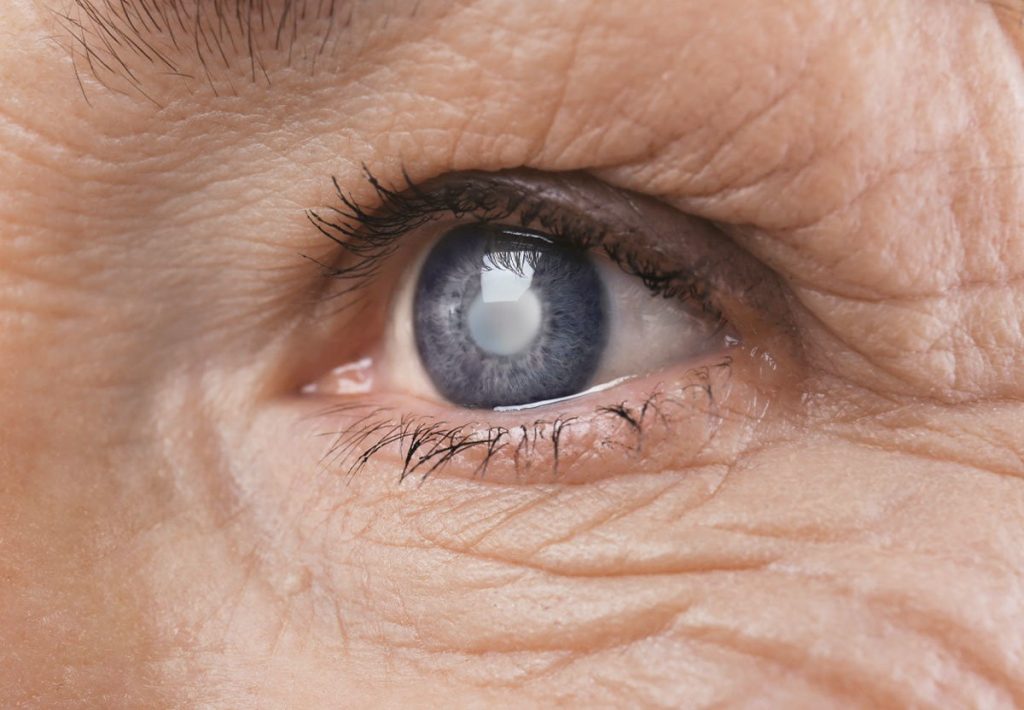



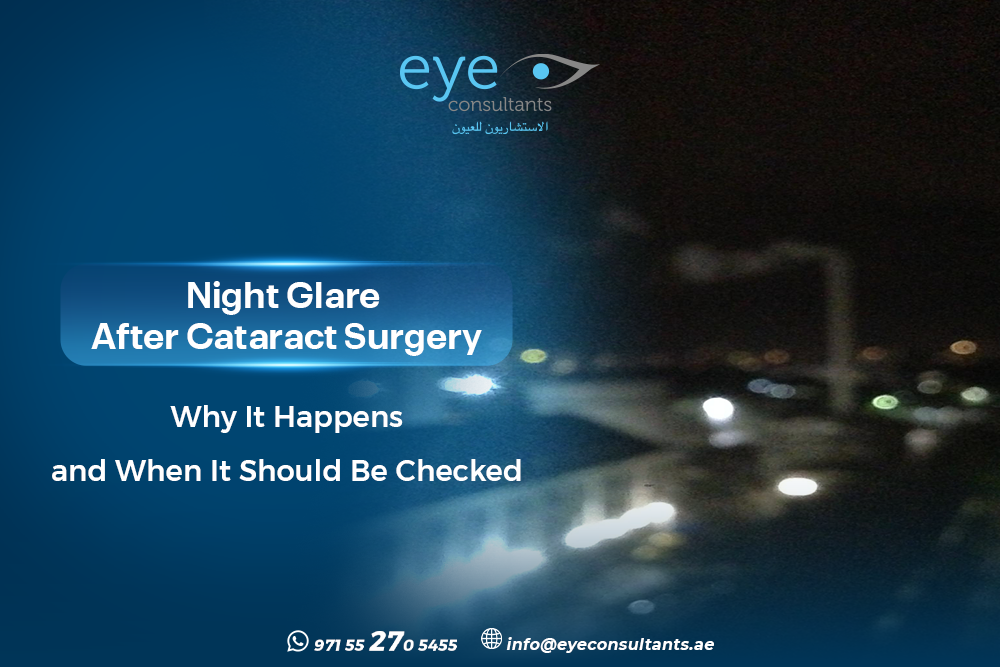
Night glare after cataract surgery is one of the most common visual complaints patients notice during recovery, especially while driving or looking at bright lights at night. Although many cases improve gradually as the eye heals, persistent glare, halos, or streaks may sometimes indicate dry eye, residual refractive error, or other optical factors that deserve proper evaluation instead of simple reassurance alone.
Night Glare After Cataract Surgery – What Do Patients Actually See?
Night glare after cataract surgery may appear differently from one patient to another depending on lighting conditions and the type of visual disturbance involved:
* Halos surrounding headlights
* Starburst patterns around streetlights
* Light streaks during night driving
* Increased sensitivity to bright lights
Some patients describe these symptoms as blurry light circles, while others mainly notice reduced contrast or difficulty driving comfortably at night after cataract surgery.
What Causes Glare and Halos After Cataract Surgery?
Several factors may contribute to night glare after cataract surgery, especially during the first weeks or months after the procedure:
* Normal healing and temporary corneal swelling
* Dry eye affecting tear film quality
* Residual refractive error or astigmatism
* Posterior capsule changes behind the lens
* Lens edge reflections or dysphotopsia after cataract surgery
In some patients, multiple small factors combine together rather than one single problem being responsible for the visual symptoms.
When Does Glare Improve Naturally and When Should It Be Checked?
For many patients, night glare after cataract surgery gradually improves as the eye surface stabilizes and the brain adapts to the new optical system:
* Mild symptoms during early healing are common
* Dry eye related glare often fluctuates throughout the day
* Improvement may continue over several weeks
* Persistent worsening deserves reassessment
If symptoms remain severe, interfere significantly with night activities, or continue progressing instead of improving, additional evaluation may help identify whether further testing or treatment is necessary.
Which Treatments Depend on the Underlying Cause?
Management of night glare after cataract surgery depends heavily on identifying the specific source of the symptoms rather than treating all cases the same way:
* Lubricating therapy for ocular surface dryness
* Glasses adjustment for residual refractive error
* YAG laser for significant posterior capsule opacity
* Monitoring adaptation in mild optical disturbances
During evaluation for Cataract Treatment ophthalmologists assess whether symptoms originate from the cornea, tear film, lens implant optics, or subtle retinal factors that may affect visual quality at night.
What Are Safe Expectations for Night Driving Recovery?
Understanding realistic expectations around night glare after cataract surgery may help reduce anxiety during the recovery phase:
* Some temporary glare is relatively common early on
* Most patients gradually regain comfortable night function
* Premium lenses may produce different night vision experiences
* Stable healing usually improves visual quality over time
Patients should avoid comparing recovery timelines too closely with others because healing patterns, ocular surface health, and lens selection all influence visual adaptation differently.
Why Choose Eye Consultants Center for Post Cataract Vision Assessment?
Post cataract care involves more than checking whether the lens implant is positioned correctly. At Eye Consultants Center in Dubai, visual recovery assessment focuses on understanding the full optical system including tear film stability, corneal clarity, retinal health, and lens performance during real life visual tasks such as night driving. (Watch this video)
Patients benefit from:
* Advanced diagnostics for postoperative visual symptoms
* Detailed evaluation of glare, halos, and optical quality
* Personalized management based on symptom source
* Experienced ophthalmologists familiar with premium and standard lens technologies
If night vision symptoms continue affecting your comfort or confidence after surgery, specialized assessment may help identify the underlying cause and guide appropriate management.
Book your consultation today through:
or visit Al Razi Building 64, Block C, 1st Floor, Unit 1017 – Dubai Healthcare City – Dubai – United Arab Emirates.
Working Hours:
Monday to Thursday and Saturday: 8 AM to 8 PM
Friday: Closed
Sunday: 9 AM to 8 PM
FAQ’S
Are halos around lights common after cataract surgery?
Mild halos may occur temporarily during healing, especially in dim lighting conditions, but persistent or worsening symptoms should still be evaluated.
Can dry eye alone cause night glare?
Yes. An unstable tear film can scatter light and significantly affect night visual quality after surgery.
Why do some patients notice more glare with premium lenses?
Certain premium intraocular lenses may create different light distribution patterns that affect contrast or night vision perception.
Does posterior capsule clouding happen immediately after surgery?
Usually not. Posterior capsule opacity often develops gradually over time rather than during the first few days after surgery.
When should driving at night be avoided after surgery?
Patients should avoid night driving until they feel visually comfortable and their ophthalmologist confirms stable healing and adequate visual quality.
Conclusion
Understanding the causes of night glare after cataract surgery helps patients recognize the difference between normal healing related symptoms and visual disturbances that may require further evaluation. With careful assessment of the ocular surface, lens optics, and retinal health, ophthalmologists can often identify the underlying source of glare and guide more targeted management for safer and more comfortable night vision recovery.
✆ Whatsapp