



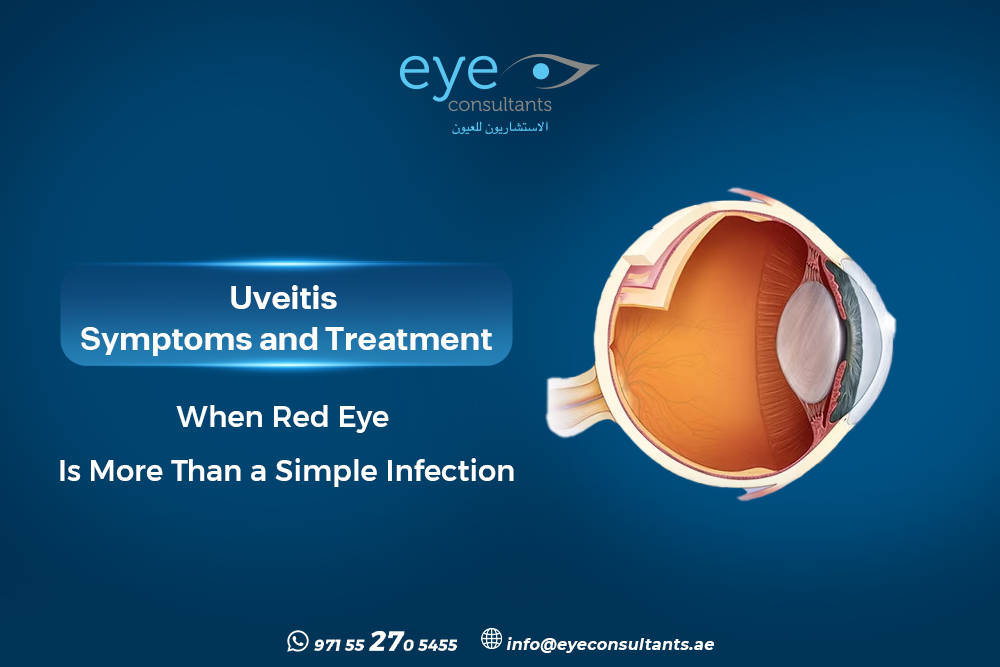
Uveitis symptoms and treatment are often misunderstood because many patients initially assume their red eye is caused by a simple infection or irritation. However, uveitis is a deeper form of eye inflammation that may affect important internal eye structures and sometimes threaten vision if diagnosis is delayed. Recognizing the warning signs early may help patients seek specialized care before complications develop.
Uveitis Symptoms and Treatment: How Is Uveitis Different From Conjunctivitis?
Uveitis symptoms and treatment differ significantly from routine conjunctivitis because the inflammation affects internal eye tissues rather than the eye surface alone:
* Eye pain may be deeper and more intense
* Light sensitivity is often prominent
* Vision may become blurry quickly
* Redness may appear concentrated around the iris
Unlike common conjunctivitis, uveitis eye inflammation may not improve with basic lubricants or over the counter redness drops, especially when inflammation develops inside the eye itself.
Which Symptoms Should Raise Concern for Uveitis?
Recognizing uveitis symptoms and treatment early is important because inflammatory eye disease may worsen rapidly in some patients:
* Moderate to severe eye pain
* Red eye with light sensitivity
* Floaters or hazy vision
* Sudden visual blur in one eye
Certain iritis symptoms may appear gradually, while others develop suddenly over hours or days. Some patients also experience tearing or difficulty tolerating bright environments.
Why Does Early Diagnosis Matter for Vision Protection?
Proper evaluation of uveitis symptoms and treatment helps reduce the risk of long term inflammatory complications affecting the eye:
* Elevated eye pressure may develop
* Inflammation can affect the retina or lens
* Scar tissue may form inside the eye
* Recurrent inflammation may damage vision gradually
Because some cases are linked to autoimmune or systemic inflammatory conditions, ophthalmologists may also evaluate whether symptoms are isolated to the eye or connected to broader health issues.
Which Tests Help Confirm the Diagnosis?
Assessing uveitis symptoms and treatment often requires a detailed inflammatory eye examination rather than a simple surface eye check:
* Slit lamp examination of inflammatory cells
* Retinal evaluation after dilation
* Review of medical and autoimmune history
During advanced Investigations an eye inflammation specialist may sometimes request imaging or laboratory work depending on the severity, recurrence pattern, or suspected underlying inflammatory condition.
Why Can Self Medication Be Risky in Inflammatory Eye Disease?
Management of uveitis symptoms and treatment depends on identifying the exact type and location of inflammation before starting therapy:
* Steroid drops may require close monitoring
* Some infections can worsen with improper medication
* Delayed treatment may increase complication risk
* Recurrent episodes may need long term follow up
Anterior uveitis treatment often involves anti inflammatory therapy, but treatment plans vary significantly depending on whether inflammation affects the front, middle, or back portions of the eye.
Why Choose Eye Consultants Center for Inflammatory Eye Evaluation?
Inflammatory eye disease requires careful assessment beyond identifying redness alone. At Eye Consultants Center in Dubai, evaluation focuses on understanding whether symptoms represent isolated irritation, deeper ocular inflammation, or inflammation associated with retinal or systemic disease.
Patients benefit from:
* Detailed inflammatory eye examinations
* Advanced retinal and anterior segment assessment
* Careful monitoring of pressure and inflammatory activity
* Specialist evaluation tailored to recurrent or complex cases
If persistent redness, light sensitivity, or blurred vision continues despite basic treatment, specialized inflammatory eye assessment may help identify the underlying cause earlier and guide safer management.
Book your consultation today through:
or visit Al Razi Building 64, Block C, 1st Floor, Unit 1017 – Dubai Healthcare City – Dubai – United Arab Emirates.
Working Hours:
Monday to Thursday and Saturday: 8 AM to 8 PM
Friday: Closed
Sunday: 9 AM to 8 PM
FAQ’S
Can uveitis happen without severe redness?
Yes. Some patients experience significant inflammation with only mild visible redness but noticeable pain or light sensitivity.
Is every painful red eye caused by infection?
No. Certain inflammatory eye conditions may mimic infection but require completely different management approaches.
Why does light sensitivity happen with inflammation inside the eye?
Inflammation near the iris and internal eye structures can make the eye much more sensitive to light exposure.
Can uveitis return after successful treatment?
Yes. Some inflammatory eye diseases may recur and require ongoing monitoring even after symptoms improve.
Why is eye pressure checked during inflammatory episodes?
Inflammation and certain medications may both affect eye pressure, making monitoring important during treatment.
Conclusion
Understanding uveitis symptoms and treatment may help patients recognize when a painful or light sensitive red eye represents more than simple irritation. With detailed examination, inflammatory assessment, and timely management, ophthalmologists can better identify the cause of inflammation and help reduce the risk of long term visual complications.
✆ Whatsapp