


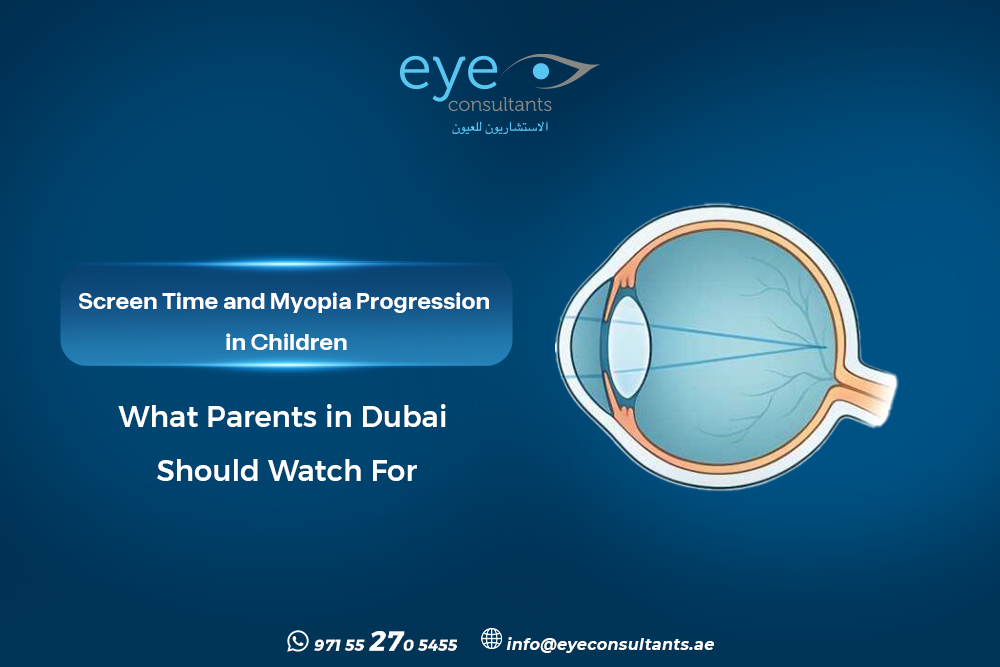
Screen time and myopia progression in children has become one of the most common concerns parents discuss during pediatric eye consultations in Dubai. With tablets, phones, and online learning becoming part of daily life, many families wonder whether excessive near work may accelerate myopia progression. While screens are not the only factor involved, modern visual habits may influence how quickly some children’s eyesight changes over time.
✆ WhatsappScreen Time and Myopia Progression in Children – What Does Current Research Suggest?
Screen time and myopia progression in children is strongly linked to prolonged near work and reduced visual breaks during the day:
* Extended device use may increase visual strain
* Close viewing distances can affect focusing behavior
* Reduced outdoor exposure may contribute indirectly
* Children already prone to myopia may progress faster
Current studies suggest that screen time myopia children concerns are often connected to cumulative near work rather than screens alone. Genetics, environment, and visual habits all interact together in childhood myopia progression.
Why Does Outdoor Time Matter for Eye Development?
Research surrounding screen time and myopia progression in children also highlights the protective role of outdoor activities:
* Natural daylight supports healthy eye development
* Outdoor viewing encourages distance focusing
* Physical activity reduces continuous near work
* Time outside may help slow myopia progression risk
Outdoor time and myopia discussions have become increasingly important because children spending limited time outdoors may show higher progression rates compared with children who maintain regular outdoor exposure.
Which Warning Signs Do Parents Usually Notice First?
Recognizing screen time and myopia progression in children early may help parents seek assessment before vision changes begin affecting school performance:
* Sitting too close to screens or televisions
* Frequent squinting while reading distant objects
* Complaints of blurry classroom vision
* Eye rubbing or headaches after prolonged device use
Some children adapt gradually to blurry distance vision and may not complain directly, which is why routine pediatric eye examinations remain important even when symptoms seem mild.
How Do Eye Doctors Track Fast Myopia Progression?
Monitoring screen time and myopia progression in children involves more than checking glasses power during a routine vision exam:
* Refraction measurements over time
* Axial length monitoring in some cases
* Corneal and retinal evaluation
* Assessment of family history and lifestyle habits
Because myopia risk factors in kids vary widely, ophthalmologists evaluate how quickly prescription changes occur and whether progression appears faster than expected for the child’s age group.
When Is Active Myopia Control Considered?
Management of screen time and myopia progression in children sometimes shifts from simple observation to active myopia control strategies:
* Rapid yearly prescription increases
* Strong family history of progressive myopia
* Early onset myopia during childhood
* Signs suggesting higher future progression risk
Does screen time worsen myopia permanently in every child? Not necessarily. However, children showing faster progression may benefit from earlier intervention plans rather than repeated glasses changes alone. (Watch this video)
Why Choose Eye Consultants Center for Pediatric Myopia Monitoring?
Children’s vision changes require long term monitoring rather than isolated prescription checks alone. At Eye Consultants Center in Dubai, pediatric myopia assessment focuses on understanding progression speed, lifestyle patterns, and future visual risk instead of simply updating glasses prescriptions when vision worsens.
Patients benefit from:
* Comprehensive pediatric eye examinations
* Careful tracking of progressive myopia patterns
* Child friendly visual assessment approaches
* Personalized discussions about lifestyle and monitoring strategies
If your child’s vision seems to be changing more quickly, an early specialist evaluation may help clarify progression patterns and guide appropriate follow up planning.
Book your consultation today through:
or visit Al Razi Building 64, Block C, 1st Floor, Unit 1017 – Dubai Healthcare City – Dubai – United Arab Emirates.
Working Hours:
Monday to Thursday and Saturday: 8 AM to 8 PM
Friday: Closed
Sunday: 9 AM to 8 PM
FAQ’S
Can children develop myopia even with limited screen use?
Yes. Genetics and other environmental factors also play major roles in myopia development.
Is tablet use worse than television viewing for myopia?
Closer viewing distances during tablet or phone use may create more prolonged near focusing demand compared with watching television from farther away.
At what age does myopia usually begin?
Myopia commonly begins during school years, although some children develop it earlier depending on family history and visual habits.
Why are regular eye exams important if my child already wears glasses?
Children’s prescriptions may change quickly during growth years, making monitoring important even after glasses are prescribed.
Does myopia always continue worsening into adulthood?
Not always. Progression often slows later in adolescence, although the rate varies between individuals.
Conclusion
Understanding the relationship between screen time and myopia progression in children may help parents recognize how daily habits, outdoor activity, and visual behavior can influence long term eye development. Through regular monitoring and early assessment of progression patterns, ophthalmologists can better identify children who may benefit from closer follow up or earlier myopia management strategies.