


brow ptosis vs eyelid ptosis is an important distinction when the upper eye area looks heavy, tired, or lower than before. The visible problem may come from the eyebrow, the eyelid, excess skin, or a combination of these. Understanding the difference matters because the correct diagnosis can change the surgical plan and help protect both eyelid function and the natural appearance of the eye.
Brow Ptosis vs Eyelid Ptosis Where Is the Problem Actually Coming From?
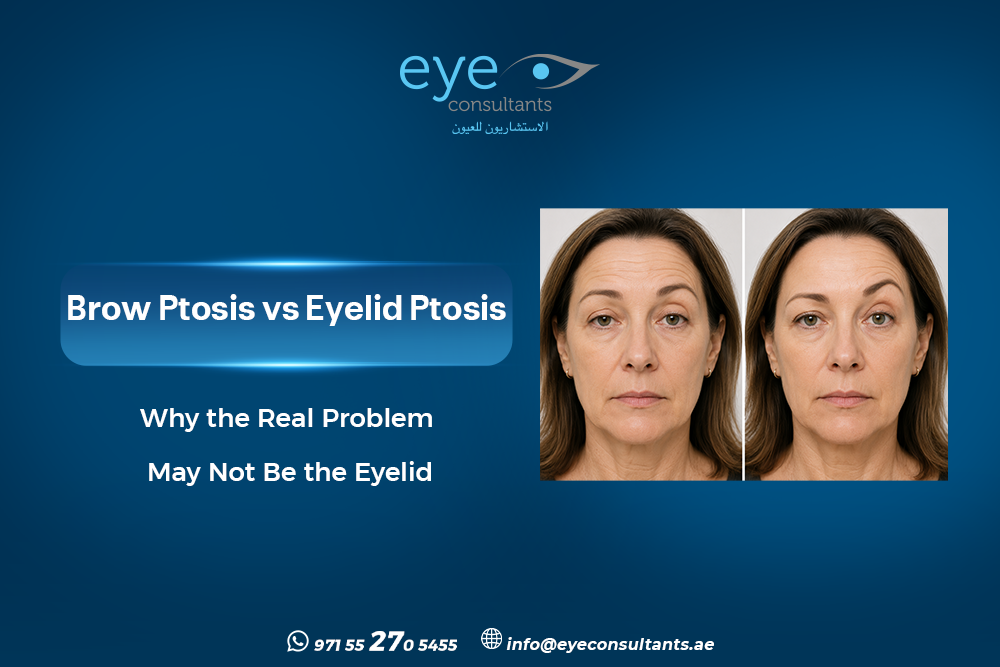
brow ptosis vs eyelid ptosis starts with understanding how the brow and upper eyelid work together. A droopy brow can push tissues downward and create the impression that the eyelid itself is drooping.
- Brow ptosis: the eyebrow descends from its normal position.
- Eyelid ptosis: the upper eyelid margin sits lower than expected.
- Dermatochalasis: excess or lax upper eyelid skin creates additional heaviness.
- More than one condition can occur at the same time.
A specialist examination can separate these causes before deciding whether Oculoplastic & Eyelid Suargery is appropriate.
How Doctors Distinguish a Droopy Brow From a Droopy Eyelid
brow ptosis vs eyelid ptosis requires more than looking at the eyes in a photograph. The position of the brow, eyelid margin, eyelid skin, and eyelid lifting muscles all need to be considered.
- Brow position is assessed with the forehead muscles relaxed.
- Eyelid measurements can help identify true ptosis.
- The amount of excess skin and fat is assessed separately.
- Eyelid movement and muscle function may also be examined.
This distinction is important because treating the wrong structure may not address the actual cause of the heaviness.
Can It Affect the Upper Visual Field?
brow ptosis vs eyelid ptosis can have functional implications when the brow or upper eyelid tissues obstruct the superior or peripheral visual field. Some patients may notice difficulty while reading, driving, or seeing above them.
- Visual field testing can document the degree of obstruction.
- External photographs help record brow and eyelid position.
- Testing may be performed with the eyelid untaped and taped when functional obstruction needs assessment.
These measurements give the surgeon objective information rather than relying only on appearance.
Brow Lift, Ptosis Repair, or Blepharoplasty?
brow ptosis vs eyelid ptosis can lead to very different surgical considerations. A brow lift addresses brow descent, while ptosis repair targets the eyelid position. Blepharoplasty is generally used to address excess upper eyelid tissue and may sometimes be combined with brow repositioning.
- Brow lift: considered when brow descent is a significant contributor.
- Ptosis repair: considered when the eyelid margin itself is low.
- Blepharoplasty: addresses appropriate excess upper eyelid tissue.
- A combination may be considered when multiple problems coexist.
The procedure should follow the diagnosis, not simply the appearance of a heavy upper eyelid.
Recovery and Setting Realistic Expectations
brow ptosis vs eyelid ptosis also matters when discussing expected recovery and outcomes. Oculoplastic procedures can involve swelling, bruising, temporary asymmetry, or changes during healing, and the final plan depends on the specific anatomy and procedure performed.
- Recovery varies according to the procedure.
- Healing and symmetry are assessed during follow-up.
- Conservative planning is important around the delicate eyelid structures.
- The goal is to address the identified problem while preserving eyelid function.
A detailed preoperative assessment helps establish realistic expectations before treatment.
Why Choose Eye Consultants Center?
At Eye Consultants Center , brow ptosis vs eyelid ptosis is approached within a dedicated oculoplastic service that addresses both functional and aesthetic concerns around the eyelids, eye socket, and surrounding structures. The center states that patients undergo a complete physical examination before diagnosis and discussion of treatment options.(Watch this video)
- Dedicated oculoplastic care with advanced technology.
- Expertise covering eyelid surgery, ptosis repair, reconstruction, and cosmetic procedures.
- Oculoplastic specialists including consultants and surgeons focused on eyelid and orbital conditions.
- Treatment planning based on the diagnosed structural problem rather than a one procedure fits all approach.
- Care that considers both healthy eyelid function and natural appearance.
Book your oculoplastic consultation at Eye Consultants in Dubai to have your brow and eyelids assessed and understand which treatment approach may be appropriate for your case.
Contact us
or visit Al Razi Building 64, Block C, 1st Floor, Unit 1017 – Dubai Healthcare City – Dubai – United Arab Emirates.
FAQ’S
How can I tell if my eyebrow or eyelid is causing the drooping?
It is not always possible to tell from appearance alone. A specialist examines brow position, eyelid measurements, skin redundancy, and eyelid muscle function.
Is a brow lift the same as upper blepharoplasty?
No. They address different anatomical structures. A brow lift targets brow position, while upper blepharoplasty addresses excess upper eyelid tissue.
Can brow ptosis and eyelid ptosis happen together?
Yes. Brow descent can coexist with eyelid ptosis or dermatochalasis, which is why the surrounding structures should be assessed together.
Can drooping affect my vision?
Yes. Significant brow or upper eyelid drooping can obstruct parts of the visual field. Visual field testing may help document functional impact.
Conclusion
brow ptosis vs eyelid ptosis is not simply a cosmetic distinction. Identifying whether the brow, eyelid margin, excess skin, or several structures are responsible can influence the appropriate treatment plan. If heavy upper eyelids are affecting your appearance or vision, a specialist oculoplastic assessment can clarify the underlying cause.