


Contact lens induced corneal ulcer can develop when microorganisms infect the cornea, particularly in contact lens wearers. Pain, redness, light sensitivity, discharge, reduced vision, or a white spot on the cornea can signal a serious infection. Prompt ophthalmic assessment is important because corneal infection can progress and threaten vision. Understanding the warning signs can help contact lens wearers seek care without delay.
How Can Contact Lens Induced Corneal Ulcer Develop?
A contact lens induced corneal ulcer may develop when germs enter the cornea through a damaged surface. Contact lens wear increases the risk of microbial keratitis, especially when lenses are worn overnight, handled incorrectly, or exposed to contaminated water. (Watch this video)
Risk can increase when:
- Lenses are worn longer than recommended.
- Lenses are not disinfected correctly.
- Lens cases are not cleaned or replaced as advised.
- Lenses are exposed to tap water, showers, or swimming pools.
- Lenses are worn overnight without specific medical guidance.
Warning Signs Pain, Light Sensitivity, Discharge, Reduced Vision, and a White Spot
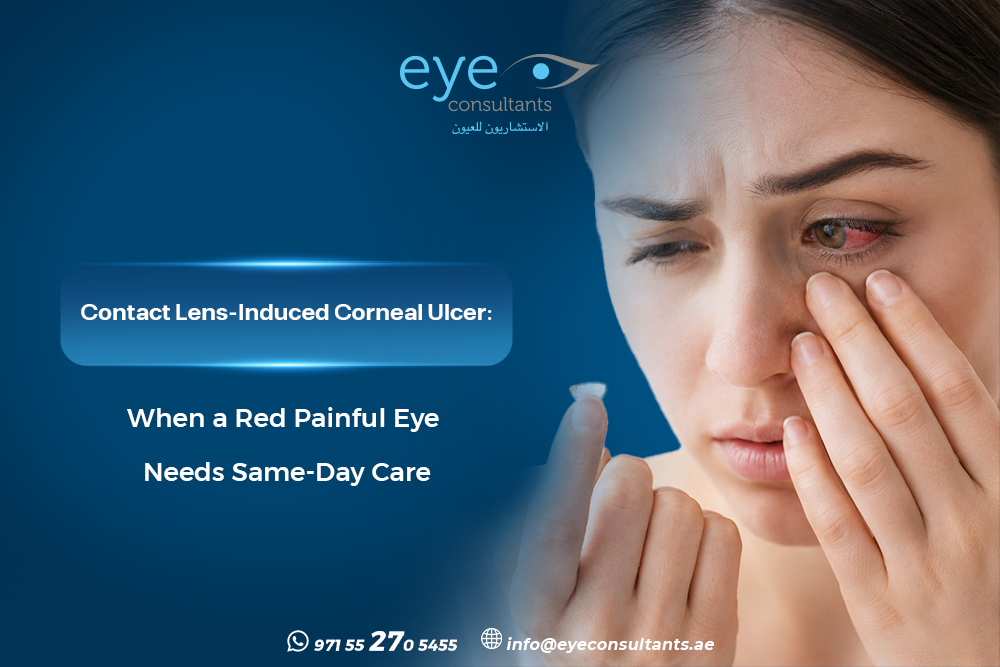
A red painful eye contact lens wearers experience should not be assumed to be simple irritation. A contact lens induced corneal ulcer can cause symptoms that require prompt ophthalmic assessment.
Possible warning signs include:
- Eye pain or increasing discomfort
- Redness
- Light sensitivity
- Blurred or reduced vision
- Excessive tearing or discharge
- A white or grey spot on the cornea
If these symptoms occur, remove the contact lenses and seek urgent ophthalmic assessment. (Watch also)
Behaviors That Increase Risk: Sleeping, Swimming, Poor Hygiene, and Overwear
Certain contact lens habits can significantly increase the risk of contact lens induced corneal ulcer, especially when lenses are worn overnight, overused, poorly disinfected, or exposed to water.
Safer habits include:
- Wash and dry your hands before handling lenses.
- Follow the recommended wearing and replacement schedule.
- Remove lenses before swimming or showering.
- Never rinse or store lenses in water.
- Use fresh disinfecting solution as directed.
- Keep the lens case clean and replace it as recommended.
These precautions can help reduce the risk of contact lens infection and other serious corneal complications.
Diagnosis With Slit-Lamp Exam, Staining, and When Cultures May Be Needed
A contact lens induced corneal ulcer requires a detailed eye examination. An ophthalmologist may use a slit lamp to examine the cornea and fluorescein staining to identify epithelial damage or an ulcer.
Depending on the appearance and severity, a corneal scraping may be sent for laboratory testing. Cultures may be considered for larger, deeper, central, atypical, chronic, or treatment-resistant ulcers.
This evaluation helps distinguish corneal ulcer contact lenses complications from other causes of a painful red eye and helps guide appropriate management.
Treatment Urgency and Why Steroid Drops Should Never Be Self-Started
A contact lens induced corneal ulcer should be assessed urgently because infectious keratitis can progress and damage the cornea. Contact lens wear should be stopped, and management should be determined by an ophthalmologist based on the suspected cause and examination findings.
Steroid eye drops should not be self-started when an infection is suspected. Corticosteroids can worsen some infections, so their use requires careful ophthalmic assessment and appropriate management of the underlying infection.
Why Choose Eye Consultants Center?
Eye Consultants Center provides specialized corneal care as part of its ophthalmic services, including assessment and management of corneal conditions such as keratitis. The center combines specialist eye care with advanced diagnostic technology and individualized assessment.
With more than 14 years of clinical experience and ophthalmologists with more than 30 years of combined experience, the center provides specialized eye care across multiple subspecialties in Dubai Healthcare City.
If you have an emergency eye infection or a painful red eye while wearing contact lenses, prompt specialist assessment is important.
Book your appointment now at Eye Consultants Center for a comprehensive assessment by our team of ophthalmology consultants.
Contact us:
or visit Al Razi Building 64, Block C, 1st Floor, Unit 1017 – Dubai Healthcare City – Dubai – United Arab Emirates.
FAQ’S
Can contact lenses cause a corneal ulcer?
Yes. Contact lens wear increases the risk of serious corneal infections, especially with overnight wear, poor hygiene, or water exposure. A contact lens induced corneal ulcer needs prompt assessment.
What should I do if my eye becomes red and painful?
Remove the lenses and avoid wearing them until advised by an eye professional. Pain, light sensitivity, discharge, or reduced vision need prompt assessment.
Is every red eye in a contact lens wearer an infection?
No. It may be irritation, dry eye, or inflammation. However, significant pain, worsening redness, reduced vision, or a corneal spot requires prompt assessment.
Can a corneal ulcer affect vision permanently?
Yes. Severe or untreated infections can cause corneal scarring and permanent vision loss. Early assessment is important.
When is a contact lens eye infection an emergency?
A painful red eye with light sensitivity, discharge, reduced vision, or a white corneal spot requires same-day ophthalmic assessment. Do not wait for symptoms to resolve.
Conclusion
A contact lens induced corneal ulcer can progress quickly, so prompt ophthalmic assessment is important when significant symptoms develop. Avoid self-treatment and seek professional care without delay.