


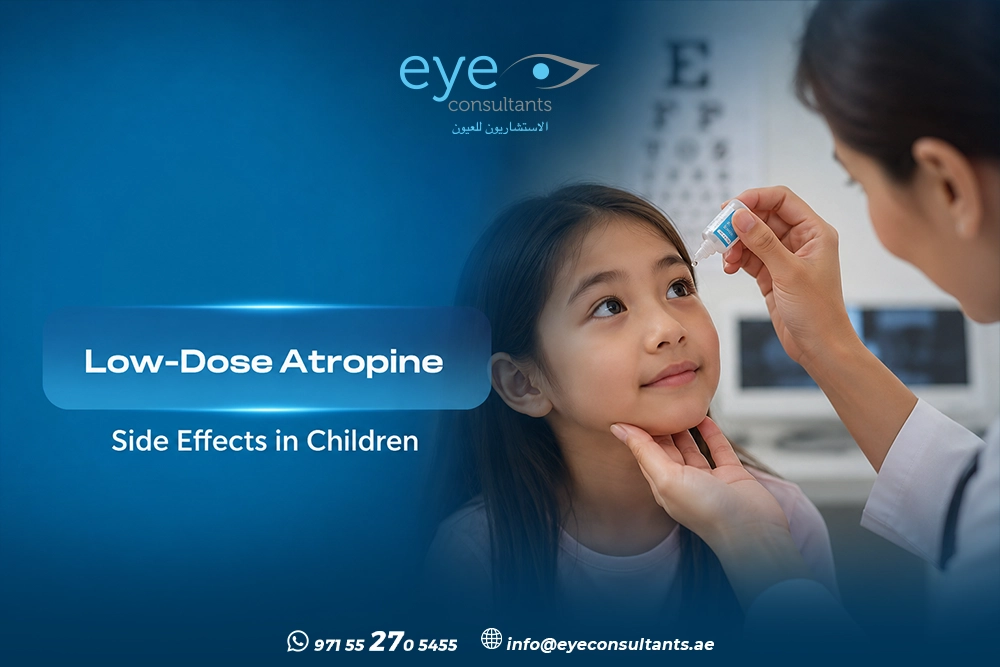
Low dose atropine side effects in children are often among the first concerns parents have when considering treatment to slow the progression of myopia. It is understandable for families to question whether long-term eye drop use could affect their child’s comfort, school performance, or daily activities. Although low-dose atropine has become an important option in childhood myopia management, understanding what reactions may occur can help parents make informed decisions. Knowing what is normal and when to seek advice can make the treatment journey more reassuring.
✆ WhatsappLow Dose Atropine Side Effects in Children: What Parents Should Know
Understanding low dose atropine side effects in children helps parents distinguish between expected treatment responses and symptoms that require professional review.
Most children tolerate low dose atropine myopia treatment well, with side effects generally being mild and temporary.
Parents may notice:
- Mild sensitivity to bright light
- Slight difficulty with near focusing initially
- Mild pupil enlargement
- Temporary adaptation during the first weeks of treatment
- Minimal disruption to daily routines and school activities
Regular communication with your child’s ophthalmologist supports safe and effective treatment.
Why Low-Dose Atropine Is Used in Childhood Myopia Control
Low-dose atropine is increasingly used to help slow the progression of childhood myopia.
Children prescribed atropine for progressive myopia may benefit because treatment aims to:
- Slow the rate of myopia progression
- Reduce the future risk of complications associated with high myopia
- Support long-term visual health
- Complement other myopia management strategies
- Provide a non-surgical treatment option
Treatment plans are individualized according to each child’s needs and progression pattern. (Watch this)
The Most Common Side Effects and How Often They Really Interfere With Daily Life
Many parents researching low dose atropine side effects in children want to understand how often these reactions interfere with normal activities.
Common atropine eye drops side effects child patients may experience include:
- Mild light sensitivity
- Slight near vision blur
- Temporary stinging after drop instillation
- Mild difficulty adapting during the early treatment phase
- Minimal impact on sports, reading, or classroom performance
Most children continue their usual activities without significant limitations.
Pupil Size, Light Sensitivity, Reading Blur, and Drop Timing
Some children may develop dilated pupils from atropine as part of treatment.
Possible effects include:
- Mild enlargement of the pupils
- Increased sensitivity to sunlight or bright environments
- Temporary difficulty focusing during prolonged reading
- Minor visual adjustments during the adaptation period
- Improvement in tolerance over time
Your ophthalmologist may recommend strategies to optimize comfort throughout treatment.
When Symptoms Are Mild and When Parents Should Contact the Doctor
Most low dose atropine side effects in children are mild and manageable. However, parents should seek medical advice if symptoms become concerning.
Contact your child’s eye specialist if you notice:
- Significant difficulty reading or completing schoolwork
- Persistent headaches associated with vision complaints
- Severe light sensitivity affecting daily activities
- Ongoing eye irritation or redness
- Any unexpected symptoms causing concern
Prompt communication helps ensure continued safety and treatment success.
How Follow-Up Visits Assess Both Safety and Effect on Progression
Regular follow-up appointments are an important part of low dose atropine myopia treatment.
During these visits, the ophthalmologist may evaluate:
- Changes in myopia progression
- Eye growth measurements when appropriate
- Tolerance to treatment
- Presence of any low dose atropine side effects in children
- Whether adjustments to the treatment plan are needed
Ongoing monitoring helps balance effectiveness with patient comfort. (Watch this video)
Why Choose Eye Consultants for Childhood Myopia Management?
Managing childhood myopia requires specialized expertise and individualized care. At Eye Consultants Center Dubai, families benefit from more than 14 years of excellence in specialized eye care and a team of ophthalmologists with over 30 years of clinical expertise in pediatric ophthalmology and myopia management.
Using advanced diagnostic technologies and evidence-based approaches, the team provides comprehensive assessments and personalized treatment plans tailored to each child’s needs. Through ongoing follow-up and family-centered care, the focus remains on supporting healthy visual development and long-term eye health.
Book Your Child’s Myopia Assessment Today
If you have concerns about low dose atropine side effects in children or would like to explore whether myopia control treatment is appropriate for your child, a specialist consultation can provide guidance and reassurance.
Contact us
or visit Al Razi Building 64, Block C, 1st Floor, Unit 1017 – Dubai Healthcare City – Dubai – United Arab Emirates.
Working Hours:
Monday to Thursday and Saturday: 8 AM to 8 PM
Friday: Closed
Sunday: 9 AM to 8 PM
Frequently Asked Questions
Are low dose atropine side effects in children common?
Most side effects are mild and temporary, and many children tolerate treatment very well.
Can low-dose atropine affect my child’s reading ability?
Some children may notice mild near blur initially, but significant reading difficulties are uncommon.
Are dilated pupils from atropine permanent?
No. Mild pupil enlargement associated with treatment is temporary and generally resolves after discontinuation.
Is low dose atropine myopia treatment safe for long-term use?
Current evidence suggests that low-dose atropine is generally well tolerated when prescribed and monitored by an ophthalmologist.
When should parents contact the doctor?
Parents should seek medical advice if symptoms worsen, interfere with daily activities, or if unexpected reactions occur.
Conclusion
Understanding low dose atropine side effects in children can help parents approach myopia management with greater confidence. Although mild side effects may occur, regular follow-up and open communication with your child’s ophthalmologist support safe treatment and effective long-term myopia control.
✆ Whatsapp