


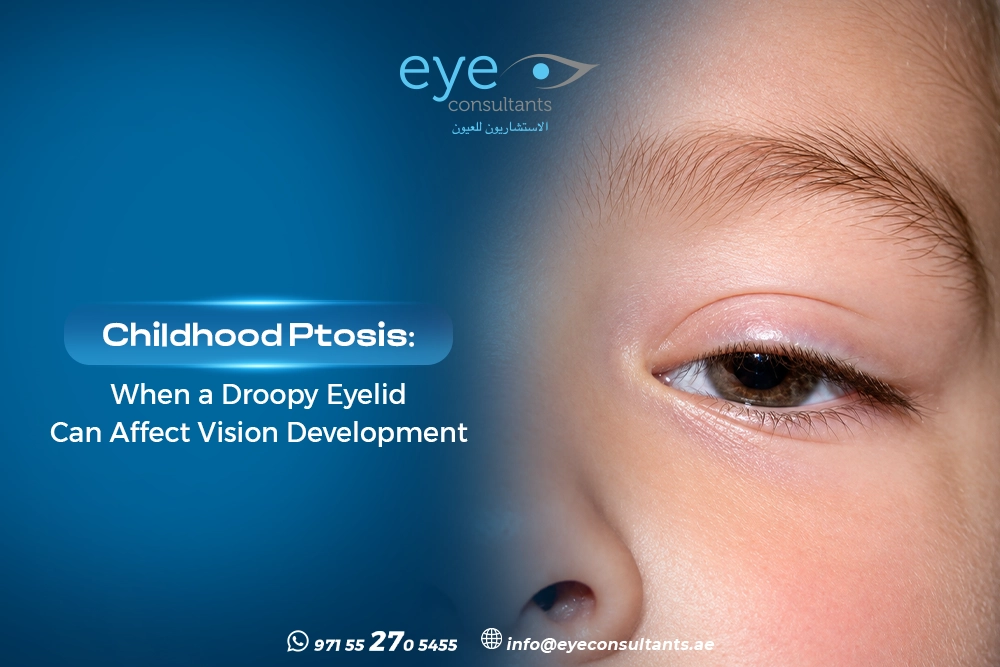
Childhood ptosis occurs when one or both upper eyelids droop below their normal position. Although it may appear to be a cosmetic concern, it can sometimes interfere with a child’s vision development. Early assessment helps determine whether treatment or regular monitoring is needed.
What Is Childhood Ptosis?
Also known as ptosis in children, this condition occurs when the upper eyelid sits lower than expected and may partially cover the pupil. It can affect one or both eyes and range from mild drooping to significant obstruction.
Congenital ptosis is present from birth and is commonly associated with weakness or underdevelopment of the levator muscle, which lifts the eyelid. Ptosis may also develop later due to muscle or nerve conditions, injury, or other health issues.
Common signs include:
- One eyelid appearing lower than the other.
- Frequently raising the eyebrows to see.
- Tilting the head backward to improve vision.
- Difficulty keeping the affected eye fully open.
When Is It More Than a Cosmetic Concern?
Not every droopy eyelid child needs surgery. The main concern is whether the eyelid blocks the pupil or interferes with clear vision.
Children may compensate by raising their chin or eyebrows. Some may not recognize or communicate vision problems, making an eye examination important even when they have no obvious complaints.
Effect on Visual Development
Childhood ptosis can affect visual development when the eyelid significantly covers the pupil during the early years of life. Clear visual input is essential for the brain and eyes to develop normal vision.
One possible complication is ptosis and amblyopia. Amblyopia, commonly known as lazy eye, occurs when vision does not develop normally in one or both eyes.
Other concerns may include:
- Reduced visual input to the affected eye.
- Abnormal head posture.
- Refractive errors, such as astigmatism.
- Associated eye alignment problems.
The risk depends on the degree of drooping, the child’s age, and whether the pupil is obstructed.
Pre-Treatment Assessment
A pediatric ophthalmologist evaluates eyelid position and checks the child’s vision to determine whether visual development is affected.
The examination may include:
- Measuring eyelid position and muscle function.
- Checking visual acuity in each eye.
- Evaluating eye movements and alignment.
- Checking for refractive errors and amblyopia.
This assessment helps determine whether childhood ptosis requires monitoring, further investigation, or treatment. (Watch this)
When Is Observation Appropriate?
Mild cases may only require regular monitoring when the pupil is not covered, vision develops normally, and the child maintains a normal head position.
Follow-up appointments help the ophthalmologist monitor eyelid position and visual development. If vision becomes affected, the treatment plan may need to change.
When Surgery May Be Considered
Pediatric eyelid surgery may be recommended when the eyelid blocks the pupil, threatens visual development, or causes significant abnormal head posture.
The procedure depends on the severity of drooping and the function of the levator muscle. Surgical techniques may involve strengthening or repositioning this muscle, or using another approach when its function is limited.
Childhood ptosis surgery aims to improve eyelid position and the visual field. Some children may also need treatment for amblyopia or refractive errors before or after surgery.
Why Choose Eye Consultants Center?
Eye Consultants Center provides comprehensive eye care, supported by over 14 years of experience as a center and ophthalmologists with more than 30 years of experience.
Services include pediatric eye assessments, eyelid and oculoplastic care, retinal treatment, glaucoma management, and refractive surgery. Modern diagnostic technologies and individualized treatment plans help the team recommend appropriate care for each patient. (Watch this)
Book an eye assessment to discuss your child’s symptoms and available treatment options.
Contact us
or visit Al Razi Building 64, Block C, 1st Floor, Unit 1017 – Dubai Healthcare City – Dubai – United Arab Emirates.
FAQ’S About childhood ptosis
Can a drooping eyelid affect a child’s eyesight?
Yes. If the eyelid covers the pupil, it may interfere with visual development and increase the risk of amblyopia.
Does every child with ptosis need surgery?
No. Mild cases may only require monitoring when vision is developing normally.
When is surgery recommended?
Surgery may be considered when the eyelid obstructs vision or affects visual development. Timing depends on the child’s individual condition.
Conclusion
Childhood ptosis is not always a cosmetic concern. Early assessment helps identify its effect on vision and determine whether monitoring or treatment is needed to support healthy visual development.