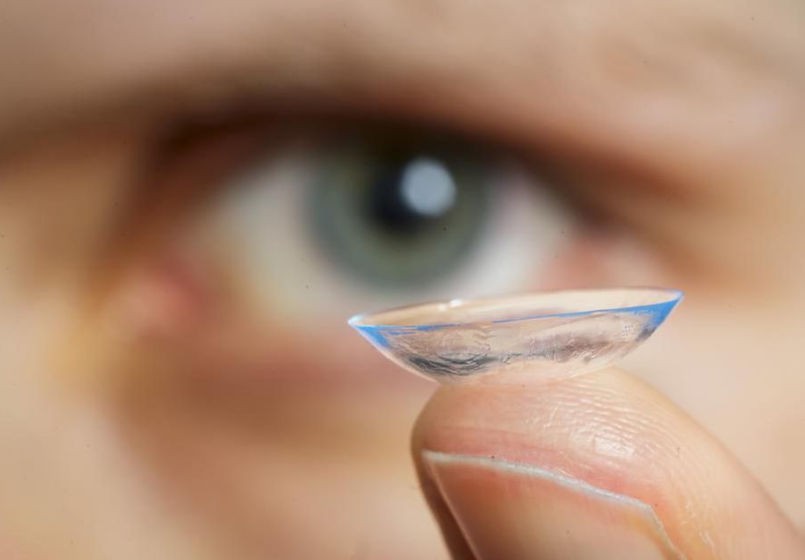



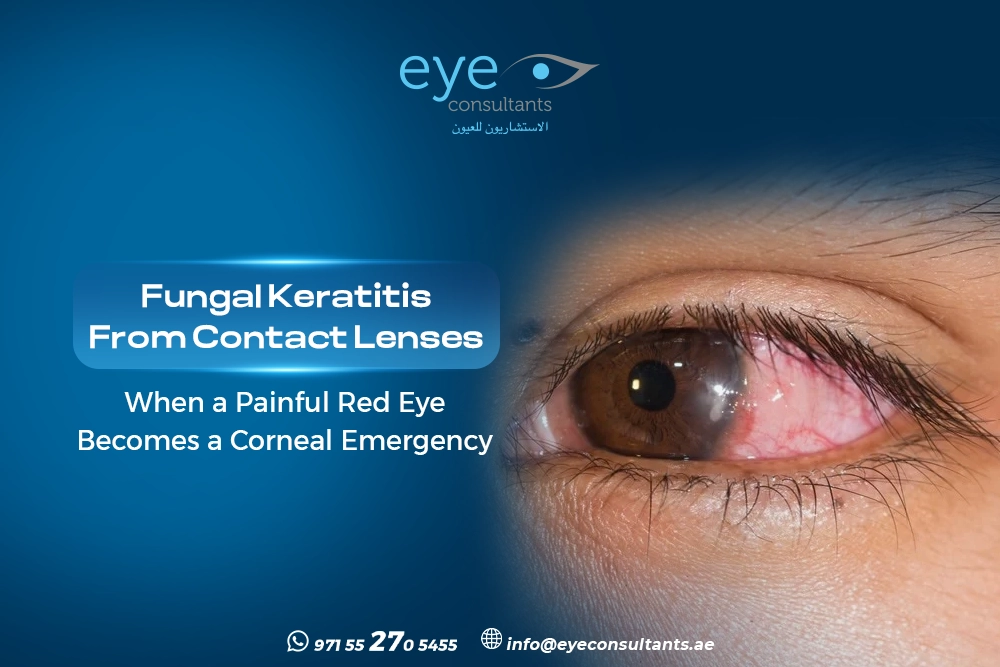
Fungal keratitis from contact lenses is a sight-threatening corneal infection that requires urgent medical evaluation. If you wear contact lenses and develop severe eye pain, persistent redness, blurred vision, or unusual sensitivity to light, these symptoms may indicate more than simple irritation. Because fungal infections can progress quickly and damage the cornea, early assessment by a cornea specialist is essential to protect vision. Understanding the warning signs can help you seek timely care before complications develop.
What fungal keratitis from contact lenses is and how contact lens habits increase the risk
Fungal keratitis from contact lenses develops when fungi invade the cornea through microscopic surface injuries, often associated with unsafe contact lens practices. Although fungal eye infections are less common than bacterial infections, they are frequently more challenging to diagnose and may require specialized treatment.
Everyday habits that can increase the risk include:
- Sleeping while wearing contact lenses.
- Swimming, showering, or using hot tubs with lenses in place.
- Rinse or store lenses in tap water.
- Using expired or contaminated lens solution.
- Wearing disposable lenses longer than recommended.
- Continuing to wear lenses despite redness or discomfort.
These habits can increase the likelihood of a fungal eye infection from contacts, particularly if the corneal surface has already been compromised.
Symptoms that are more serious than ordinary irritation or dryness
Mild discomfort after wearing contact lenses often improves after removing the lenses. However, fungal keratitis from contact lenses usually causes symptoms that persist or worsen and should never be ignored.
Seek urgent ophthalmic assessment if you experience:
- Severe or increasing eye pain.
- Persistent redness. (Watch this video)
- Blurred or reduced vision.
- Marked sensitivity to light.
- Excessive tearing or discharge.
- A white, gray, or cloudy spot on the cornea.
- Symptoms that do not improve after removing your contact lenses.
Unlike routine dryness, a painful red eye lenses wearer experiences alongside worsening vision may signal a serious corneal infection requiring immediate specialist care.
Why delayed treatment can threaten the cornea and vision
A fungal infection may spread deeper into the cornea within a short period, causing progressive inflammation and tissue damage. Without prompt evaluation, a corneal infection due to contact lenses may lead to corneal scarring, thinning, ulceration, or even perforation, all of which can significantly affect vision.
Because fungal keratitis often resembles bacterial or viral eye infections during the early stages, delaying specialist assessment may postpone the correct diagnosis. Early examination by a cornea specialist provides the best opportunity to identify the underlying cause and determine the most appropriate management plan.
Tests and cultures cornea specialists may use to confirm the cause
Accurately diagnosing fungal keratitis from contact lenses requires more than identifying a red eye. A comprehensive corneal examination helps determine whether the infection is fungal or caused by another condition.
Depending on your clinical findings, your ophthalmologist may perform:
- Slit-lamp examination to evaluate the cornea in detail.
- Fluorescein staining to identify corneal damage.
- Corneal scraping for laboratory culture and microscopic analysis when indicated.
- Advanced corneal imaging to assess the depth and extent of the infection.
- Additional investigations to distinguish fungal infection from bacterial, viral, or inflammatory eye disease.
An accurate diagnosis is essential because treatment differs according to the organism responsible for the infection.
How treatment differs from routine antibiotic eye-drop advice
Many patients assume that any red eye can be treated with antibiotic drops. However, fungal keratitis from contact lenses requires a completely different clinical approach because antibiotics alone do not treat fungal infections.
Treatment decisions depend on several factors, including:
- The type of fungus identified.
- The size and location of the corneal ulcer.
- The depth of corneal involvement.
- The patient’s response during follow-up.
Some patients require close monitoring, while others may need additional procedures if the infection progresses. Because every case is different, urgent cornea treatment should always be guided by a cornea specialist after a thorough examination.
Why Choose Eye Consultants Center?
Serious corneal infections require rapid diagnosis, advanced technology, and experienced specialists.
At Eye Consultants Center, patients benefit from:
- More than 14 years of excellence in ophthalmology.
- Consultant ophthalmologists experienced in diagnosing and managing complex corneal diseases.
- Advanced diagnostic technology supporting accurate diagnosis and personalized Corneal Treatment planning.
- Personalized treatment and follow-up plans based on each patient’s condition.
- Comprehensive corneal care delivered at Dubai Healthcare City in a modern, patient-focused environment.
If you are experiencing symptoms suggestive of fungal keratitis from contact lenses, our cornea specialists can provide a comprehensive same-day assessment and recommend the most appropriate management based on your examination findings. (Watch this video)
Book your appointment today at Eye Consultants Center for a comprehensive assessment by our experienced consultant ophthalmologists.
Contact us:
or visit Al Razi Building 64, Block C, 1st Floor, Unit 1017 – Dubai Healthcare City – Dubai – United Arab Emirates.
Working Hours:
Monday to Thursday and Saturday: 8 AM to 8 PM
Friday: Closed
Sunday: 9 AM to 8 PM
Frequently Asked Questions
Can fungal keratitis from contact lenses cause permanent vision loss?
Yes. If left untreated, fungal keratitis from contact lenses can lead to corneal scarring and permanent vision loss. Early specialist evaluation is essential.
How is a fungal eye infection different from a bacterial infection?
The symptoms may appear similar, but fungal infections require different diagnostic tests and treatment approaches. A cornea specialist can identify the exact cause.
Should I remove my contact lenses if my eye becomes painful?
Yes. Remove your contact lenses immediately and seek urgent ophthalmic assessment if pain, redness, blurred vision, or light sensitivity develops.
Can good contact lens hygiene reduce the risk?
Yes. Proper lens care, approved cleaning solutions, and avoiding water exposure help reduce the risk of corneal infections.
When is a painful red eye an emergency?
If a painful red eye is associated with blurred vision, worsening redness, or a white spot on the cornea, seek urgent evaluation by a cornea specialist immediately.
Conclusion
Fungal keratitis from contact lenses is an ophthalmic emergency that should never be mistaken for routine eye irritation. Persistent pain, redness, blurred vision, or light sensitivity may indicate a serious corneal infection requiring urgent specialist evaluation.