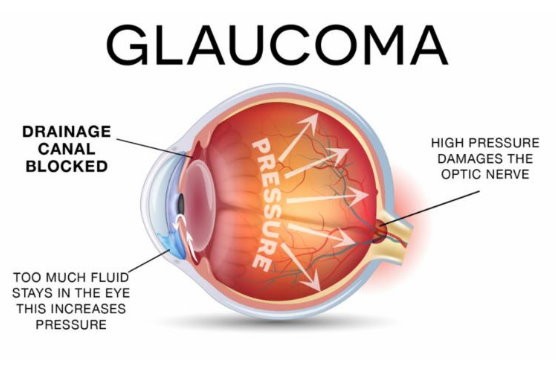



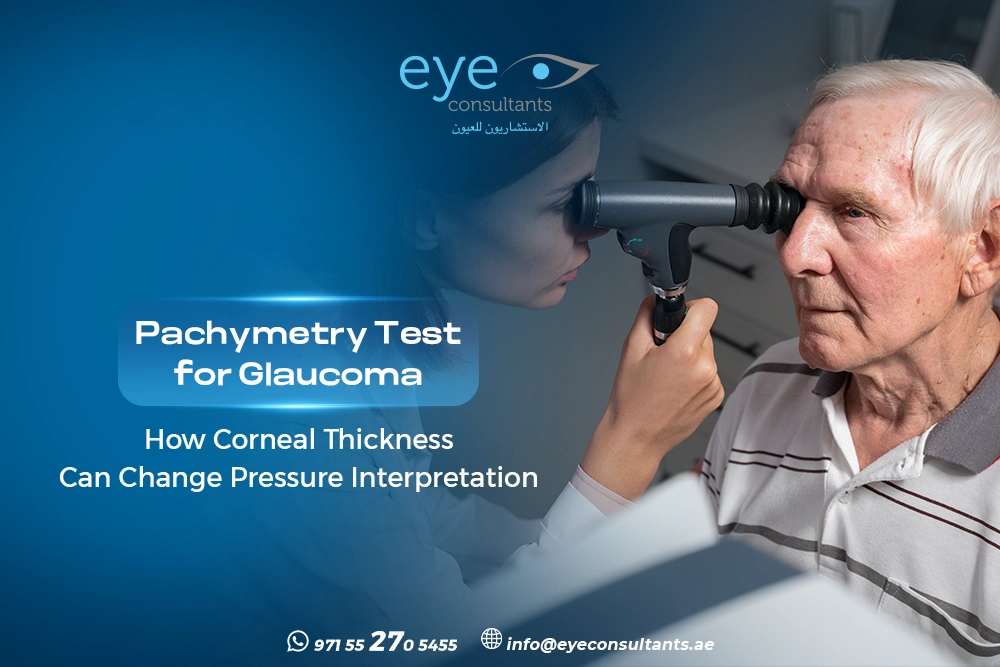
Pachymetry test for glaucoma plays an important role in glaucoma evaluation because corneal thickness can significantly influence eye pressure measurements. A pressure reading that appears normal or elevated may not accurately reflect the true pressure inside the eye if the cornea is unusually thin or thick. For this reason, glaucoma specialists interpret eye pressure together with corneal thickness and other diagnostic findings rather than relying on a single test. Understanding how pachymetry contributes to diagnosis helps patients appreciate why comprehensive glaucoma assessment is essential.
What Does a Pachymetry Test for Glaucoma Measure and Why Does Corneal Thickness Matter?
A pachymetry test for glaucoma measures the central corneal thickness using a quick, painless examination. Although the test does not diagnose glaucoma by itself, it provides essential information that allows ophthalmologists to interpret intraocular pressure more accurately and estimate glaucoma risk more reliably.
The examination helps doctors:
- Measure central corneal thickness precisely.
- Improve interpretation of eye pressure readings.
- Support glaucoma risk assessment.
- Guide long-term monitoring.
- Complement other glaucoma investigations.
Because corneal thickness glaucoma assessment plays an important role in clinical decision-making, pachymetry has become a routine component of modern glaucoma evaluation. (Watch this video)
How Can a Thin or Thick Cornea Distort Pressure Readings?
Eye pressure measurements are influenced by the physical properties of the cornea. A thinner-than-average cornea may produce pressure readings that are lower than the true intraocular pressure, while a thicker cornea may lead to artificially elevated measurements.
Understanding the relationship between corneal thickness and eye pressure helps ophthalmologists avoid overestimating or underestimating glaucoma severity.
A thin cornea may:
- Mask elevated intraocular pressure.
- Increase the likelihood of underestimating glaucoma risk.
- Be associated with a higher thin cornea glaucoma risk in some patients.
Conversely, a thicker cornea may make pressure appear higher without reflecting the actual pressure inside the eye.
When Is a Pachymetry Test for Glaucoma Combined with OCT, Visual Field Testing, and Tonometry?
No single investigation is sufficient to diagnose glaucoma accurately. Instead, ophthalmologists combine multiple diagnostic tests to assess both eye structure and function.
A pachymetry test for glaucoma is commonly performed alongside:
- Goldmann applanation tonometry.
- Optical Coherence Tomography (OCT).
- Visual field examination.
- Optic nerve evaluation.
- Comprehensive slit-lamp examination.
Reviewing all these findings together allows the specialist to determine whether pressure measurements accurately reflect the patient’s glaucoma risk.
Which Patients Benefit Most from a Pachymetry Eye Test?
Not every patient requires the same level of glaucoma investigation. A pachymetry eye test is especially valuable for individuals whose pressure readings require additional interpretation.
The examination is commonly recommended for patients who:
- Have ocular hypertension.
- Are glaucoma suspects.
- Have a family history of glaucoma.
- Show suspicious optic nerve changes.
- Require long-term glaucoma monitoring.
By measuring corneal thickness, the ophthalmologist can personalize both diagnosis and follow-up planning.
How Does a Pachymetry Test for Glaucoma Influence Risk Assessment and Follow-Up?
A pachymetry test for glaucoma provides information that helps ophthalmologists place eye pressure measurements into the proper clinical context.
The results may help physicians:
- Estimate glaucoma risk more accurately.
- Decide how closely a patient should be monitored.
- Interpret pressure changes during follow-up.
- Evaluate whether treatment decisions remain appropriate over time.
Pachymetry findings are always interpreted alongside optic nerve examination, OCT imaging, visual field testing, and the patient’s overall clinical picture. (Watch also)
Why Choose Eye Consultants Dubai?
Accurate glaucoma diagnosis depends on advanced technology and experienced glaucoma specialists. Eye Consultants Center Dubai provides:
- More than 14 years of experience in ophthalmology.
- Consultant ophthalmologists with over 30 years of combined clinical expertise.
- Advanced glaucoma diagnostic technology, including OCT, visual field analysis, tonometry, and pachymetry.
- Individualized glaucoma assessment and follow-up.
- Comprehensive care tailored to each patient’s clinical findings.
If you have elevated eye pressure, a family history of glaucoma, or have been advised to undergo further testing, a comprehensive examination can determine whether a pachymetry test for glaucoma should be included in your evaluation.
Book your appointment today at Eye Consultants Dubai for a comprehensive glaucoma assessment by our experienced consultant ophthalmologists.
Contact us:
or visit Al Razi Building 64, Block C, 1st Floor, Unit 1017 – Dubai Healthcare City – Dubai – United Arab Emirates.
Working Hours:
Monday to Thursday and Saturday: 8 AM to 8 PM
Friday: Closed
Sunday: 9 AM to 8 PM
Frequently Asked Questions
What is a pachymetry test for glaucoma?
A pachymetry test for glaucoma measures the thickness of the cornea to help ophthalmologists interpret eye pressure more accurately. It is an important part of comprehensive glaucoma assessment but is not used alone to diagnose glaucoma.
Does a thin cornea mean I have glaucoma?
No. A thin cornea does not automatically indicate glaucoma, but it may affect pressure measurements and is considered one of several factors used when assessing glaucoma risk.
Is the pachymetry eye test painful?
No. The pachymetry eye test is quick, safe, and generally painless. It usually takes only a few minutes and forms part of a routine glaucoma assessment.
Why isn’t eye pressure enough to diagnose glaucoma?
Because eye pressure is only one piece of the puzzle. Ophthalmologists also evaluate corneal thickness, optic nerve health, OCT findings, and visual field results before making diagnostic or treatment decisions.
How often should pachymetry be repeated?
For most patients, corneal thickness remains stable throughout adulthood, so repeated testing is not routinely required unless clinically indicated by the treating ophthalmologist.
Conclusion
A pachymetry test for glaucoma provides valuable information that improves the interpretation of eye pressure and supports more accurate glaucoma risk assessment. When combined with OCT, visual field testing, tonometry, and comprehensive eye examination, it helps ophthalmologists develop personalized monitoring and treatment plans. Early evaluation remains the best way to protect long-term vision.