


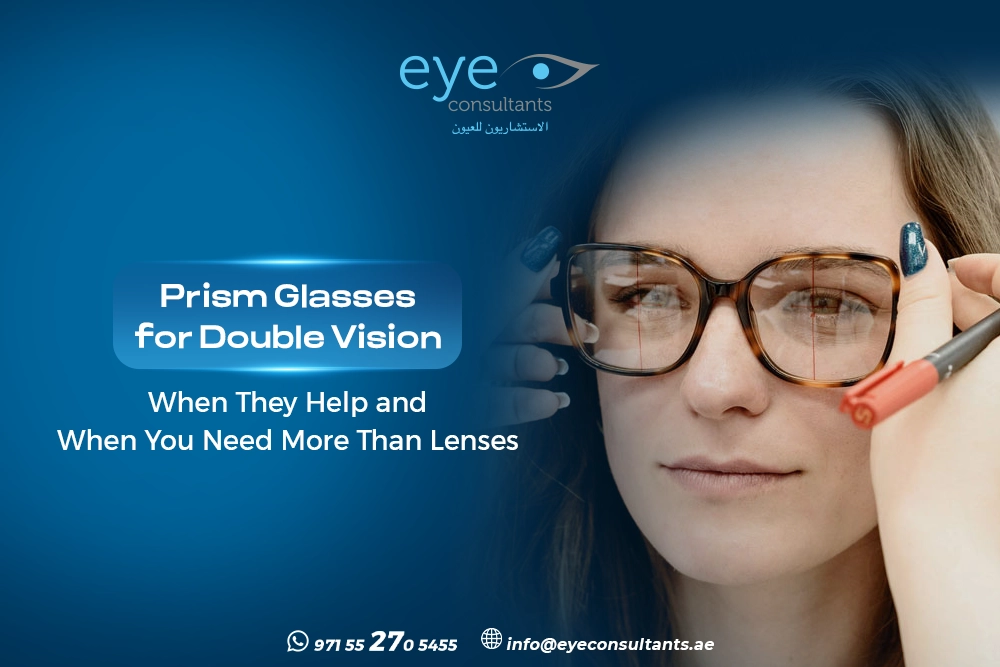
Prism glasses for double vision can reduce or eliminate double vision for many patients by helping the eyes work together more comfortably. However, they are not the right solution for every cause of double vision. If you suddenly begin seeing two images or your symptoms become persistent, a comprehensive binocular vision assessment is essential to identify the underlying cause and determine the most appropriate treatment. Understanding when prism glasses help and when additional care is needed can guide you toward the right next step.
✆ WhatsappWhat prism glasses for double vision do for double vision and eye misalignment symptoms
Prism glasses for double vision are specially prescribed lenses that redirect light entering the eyes, allowing the brain to combine two separate images into a single, clearer image. They improve visual comfort rather than treating the underlying cause of eye misalignment.
They may help reduce symptoms such as:
- Double vision during reading or distance viewing.
- Eye strain and fatigue.
- Difficulty focusing for long periods.
- Headaches related to binocular vision problems.
- Mild eye misalignment that affects daily activities.
For many patients, double vision glasses improve visual function and make everyday tasks more comfortable while further evaluation or treatment is planned.
Which causes of diplopia may respond to prisms and which need further workup
Not every case of double vision can be managed with prism correction. The effectiveness of prism glasses for double vision depends on the underlying condition causing the symptoms.
Prisms may benefit patients with:
- Small-angle strabismus.
- Stable binocular vision disorders.
- Certain nerve-related eye muscle problems after medical evaluation.
- Residual double vision following previous treatment in selected cases.
Further investigation is usually recommended if double vision is:
- Sudden in onset.
- Associated with neurological symptoms.
- Progressively worsening.
- Caused by unstable eye muscle conditions.
- Related to trauma or other underlying eye diseases.
Knowing when prisms help strabismus requires a detailed examination by an ophthalmologist experienced in binocular vision disorders. (Watch this video)
The testing process before prescribing prism correction
Prescribing prism glasses for double vision begins with a comprehensive eye examination rather than simply measuring a glasses prescription.
Your assessment may include:
- Visual acuity testing.
- Eye alignment measurements.
- Binocular vision evaluation.
- Ocular motility assessment.
- Prism testing to determine the amount of correction required.
- Additional investigations if another eye or neurological condition is suspected.
These examinations help determine whether prism lenses for diplopia are appropriate or whether another treatment approach should be considered.
Limits of prism glasses and when surgery or specialist treatment is considered
While prism glasses for double vision can significantly improve visual comfort for many patients, they are not suitable for every individual or every type of eye misalignment.
Specialist treatment may be considered when:
- The eye deviation is too large for prism correction.
- Double vision changes significantly over time.
- Eye muscle function continues to deteriorate.
- The underlying condition requires medical or surgical management.
Treatment recommendations depend on the underlying cause, the stability of the eye alignment, and each patient’s visual needs. While some individuals achieve satisfactory symptom relief with prism glasses for double vision, others may require additional therapies or surgical management following a comprehensive specialist evaluation.
How follow-up is used to refine comfort and alignment
Successful binocular vision management often requires ongoing follow-up. Eye alignment and symptoms may change over time, particularly after neurological conditions, eye muscle disorders, or surgery.
During follow-up visits, your ophthalmologist may:
- Reassess binocular vision correction.
- Evaluate changes in eye alignment.
- Adjust the prism prescription if needed.
- Monitor visual comfort and daily function.
- Recommend additional treatment if symptoms persist.
Regular reviews help ensure that the management plan continues to meet your visual needs.
Why Choose Eye Consultants Center?
Managing double vision requires accurate diagnosis and careful assessment of binocular vision by experienced ophthalmologists.
At Eye Consultants Center, patients benefit from:
- More than 14 years of excellence in ophthalmology.
- Consultant ophthalmologists experienced in diagnosing complex eye movement and alignment disorders.
- Advanced diagnostic technology for comprehensive binocular vision assessment.
- Personalized management plans based on each patient’s clinical findings.
- Comprehensive Squint & Pediatric Consultation services in Dubai Healthcare City within a patient-centered environment.
If you are experiencing persistent double vision, our specialists can perform a comprehensive binocular vision evaluation to determine whether prism glasses for double vision or another treatment option is the most appropriate choice based on your individual condition. (Watch this video)
Book your appointment today at Eye Consultants Center to receive a comprehensive binocular vision evaluation by our experienced consultant ophthalmologists.
Contact us:
or visit Al Razi Building 64, Block C, 1st Floor, Unit 1017 – Dubai Healthcare City – Dubai – United Arab Emirates.
Working Hours:
Monday to Thursday and Saturday: 8 AM to 8 PM
Friday: Closed
Sunday: 9 AM to 8 PM
Frequently Asked Questions
Can prism glasses for double vision completely cure double vision?
Not always. Prism glasses for double vision help align images and reduce symptoms, but they do not treat every underlying cause. The most appropriate management depends on a comprehensive eye examination.
Who is a good candidate for prism lenses?
Patients with stable binocular vision disorders, small-angle strabismus, or selected eye muscle conditions may benefit from prism lenses for diplopia after specialist assessment.
Can prism glasses replace strabismus surgery?
In some cases, yes. However, patients with larger or progressive eye deviations may require surgical or other specialist treatment. The decision depends on the underlying diagnosis and eye alignment measurements.
Can prism glasses be added to my existing prescription?
Yes. In many cases, prism correction can be incorporated into your existing glasses prescription after a comprehensive binocular vision assessment. The exact prescription depends on your eye alignment and visual needs.
How long does it take to adjust to prism glasses?
Most patients adapt within several days to a few weeks, although adjustment varies from person to person. Regular follow-up helps optimize comfort if changes are needed.
When should I seek medical evaluation for double vision?
Any new, persistent, or worsening double vision should be evaluated promptly, especially if it develops suddenly or is associated with pain, neurological symptoms, or recent trauma.
Conclusion
Prism glasses for double vision can provide significant visual relief for carefully selected patients, but they are only one part of managing binocular vision disorders. An accurate diagnosis is essential to determine whether prism correction is appropriate or whether additional treatment is required.