


Toric ICL for astigmatism may be an option for adults seeking an alternative to glasses or contact lenses, particularly when they have myopia combined with astigmatism. This specialized implantable lens corrects refractive errors while preserving the eye’s natural crystalline lens. However, suitability depends on prescription stability, corneal health, and detailed eye measurements. Understanding these factors helps patients make informed decisions about their vision correction options.
What Is a Toric ICL for Astigmatism?
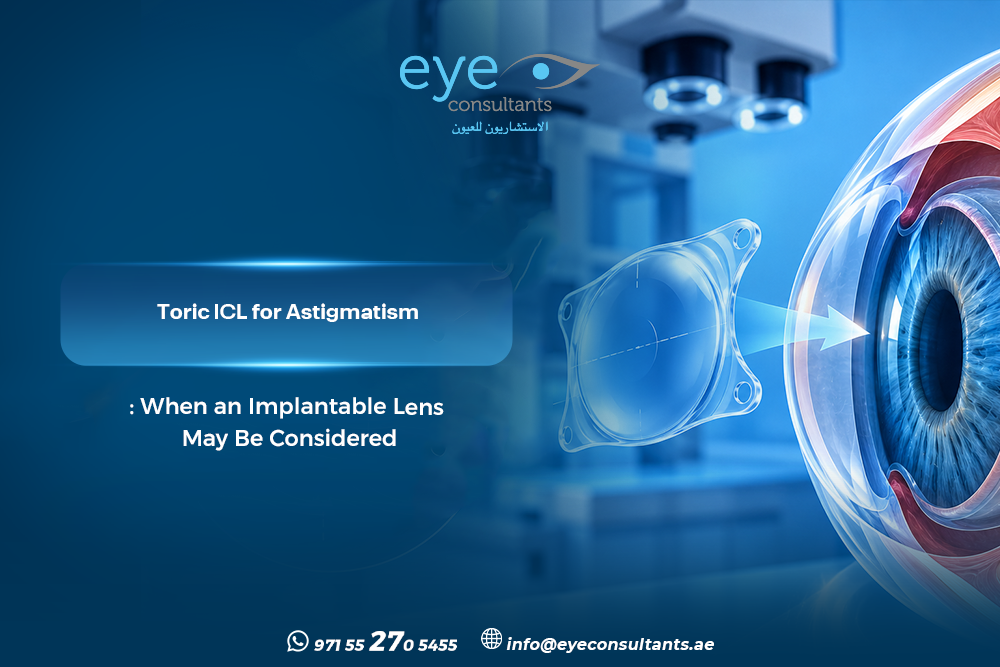
A toric implantable collamer lens is designed to correct myopia and astigmatism without removing the natural lens or reshaping the cornea with a laser.
The lens is positioned inside the eye, behind the iris and in front of the natural crystalline lens. Its optical design addresses two components of the refractive error:
- Myopia: Helps focus distant images more clearly.
- Astigmatism: Corrects differences in the eye’s focusing power across different meridians.
Unlike LASIK, this procedure does not remove corneal tissue. Patients considering Phakic IOL treatment require a specialist assessment to determine whether this approach suits their eyes.
Which Refractive Errors May Make It Relevant?
A toric ICL for astigmatism may be considered for selected patients with myopia and clinically significant astigmatism, particularly when their prescription falls within the available lens specifications.
Factors that influence eligibility include:
- High prescriptions: Some patients with high myopia may be candidates when corneal laser surgery is unsuitable.
- Combined refractive errors: A toric lens can address myopia and astigmatism together.
- Stable vision: A stable prescription is important before elective refractive surgery.
Not every prescription can be corrected with every lens. The surgeon must confirm that the required correction falls within the approved range for the specific device.
Why Does Corneal Health Matter?
Although a toric ICL for astigmatism does not reshape the cornea, corneal health remains essential when evaluating candidacy.
The assessment may consider:
- Corneal shape and thickness.
- Signs of keratoconus or other corneal disorders.
- Dry eye and ocular surface health.
- Overall eye health and visual potential.
Identifying corneal abnormalities helps the ophthalmologist determine whether an implantable lens or another vision correction approach is more appropriate.
Which Measurements Are Required?
Accurate measurements help determine candidacy, lens size, and the appropriate optical power. For a toric ICL for astigmatism, the preoperative assessment may include:
- Refraction: Establishes the prescription and confirms its stability.
- Anterior chamber measurements: Help determine whether there is sufficient space for the lens.
- Corneal evaluation and endothelial cell count: Help assess suitability for implantation.
- Intraocular pressure measurement and retinal examination: Identify conditions that may affect treatment planning.
The ophthalmologist considers these findings together before recommending a suitable approach.
What Should Patients Expect During Recovery?
Recovery after toric ICL for astigmatism varies between individuals. Temporary visual disturbances or discomfort may occur, and postoperative monitoring is necessary.
Patients should understand that:
- Vision may improve relatively quickly, although stabilisation varies.
- Halos, glare, or blurred vision can occur.
- Follow up visits help assess healing, eye pressure, and lens position.
- New pain, significant redness, or sudden vision changes require urgent medical assessment.
Following the surgeon’s instructions is essential for safe recovery.
When May ICL Be Preferable to Corneal Laser Surgery?
For patients with astigmatism, choosing between an implantable lens and laser vision correction requires more than comparing prescriptions. The condition of the cornea and the eye’s overall suitability are central to this decision.
A toric ICL may be considered when:
- Corneal limitations: The cornea’s thickness or shape makes laser correction unsuitable.
- Higher prescriptions: The required correction falls within the available implantable lens specifications but may not be suitable for corneal laser treatment.(Watch this video)
- Preserving corneal tissue: The patient may benefit from an approach that corrects vision without removing corneal tissue.
However, ICL surgery is not suitable for everyone and involves its own risks. A comprehensive examination helps determine which option offers the most appropriate balance of visual goals, safety, and long term eye health.
Why Choose Eye Consultants Center?
Choosing the right centre for refractive surgery means looking beyond the procedure itself. At Eye Consultants Center in Dubai Healthcare City, patients benefit from specialised corneal and refractive care, supported by detailed diagnostic investigations and experience in Phakic IOL procedures.
- Specialist Refractive Surgery Experience: Dr. Sherif Emerah, Consultant Cornea and Refractive Surgeon, has performed more than 7,000 refractive procedures and specialises in Phakic IOL surgery.
- Detailed Corneal Assessment: Investigations such as Pentacam and corneal topography help evaluate corneal shape and support decisions about suitable vision correction options.
- Treatment Based on Individual Suitability: The assessment considers prescription, corneal condition, and relevant eye measurements before determining whether an implantable lens or another refractive procedure may be appropriate.
The goal is to help each patient understand their options and make an informed decision based on their eye health and visual needs.
Book your consultation to explore the most suitable vision correction options for your eyes.
Contact us
or visit Al Razi Building 64, Block C, 1st Floor, Unit 1017 – Dubai Healthcare City – Dubai – United Arab Emirates.
Frequently Asked Questions
Does a toric ICL permanently correct astigmatism?
It is designed to provide long term correction, but residual refractive error or changes in vision may still occur.
Is everyone with astigmatism suitable for an implantable lens?
No. Eligibility depends on the prescription, eye measurements, corneal health, and other clinical factors.
Will I still need glasses after the procedure?
Some patients may still need glasses for certain activities or if residual refractive error remains.
Can an implantable lens be removed?
The lens can generally be removed or exchanged surgically when clinically necessary. However, removal requires another procedure and does not guarantee that the eye will return to its previous state.
Conclusion
Choosing the right vision correction method begins with understanding your prescription and evaluating your eye health. Toric ICL for astigmatism may suit selected patients, but a comprehensive examination is essential before making a decision.